Here are the occasional reflections of a joyful traveller along the strange pathways of fantasy and adventure. All my reviews are independent and unsolicited. I read many books that I don’t feel sufficiently enthusiastic about to review at all. Rather, this blog is intended as a celebration of the more interesting books I stumble across on my meandering reading journey, and of the important, life-affirming experiences they offer. It is but a very small thank you for the wonderful gifts their writers give.

Tuesday, 15 October 2019

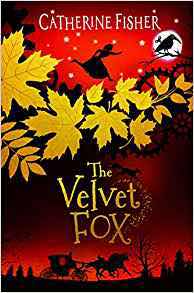
The Velvet Fox by Catherine Fisher


Cover: Anne Glenn

Faery interlude

I am actually in the middle of reading Philip Pullman’s The Secret Commonwealth, (along with half the reading world, of course), but I had to travel to London by train yesterday, and the thought of carrying that particular tome around with me was daunting, however eager I was to read on. So I took this instead and read the whole thing over the two legs of the journey. A most diverting and enjoyable interlude it was too.

Having interjected one story into my reading of the other, it did not take long to realise a commonality. Although far more complex, Philip Pullman’s concept of the ‘Secret Commonwealth’ is, on at least one level, much the same as the dominant presence in Catherine Fisher’s Welsh-myth-based tale: the ‘Fair Family’ or Tylwyth Teg, that world of faery folk that exists beneath the surface of our own reality, and can sometimes be glimpsed at the periphery of our vision, if we are sufficiently attuned to it.

Old fashioned - in a good way

When I read The Clockwork Crow at about this time last year (see my review from then) I warmly welcomed this fine writer back to MG fiction after many years of her writing outstanding, if sometimes decidedly scary, YA fantasy. I have long been a huge fan, and think her early Garneresque works, like Fintan’s Tower and The Conjuror’s Game still well worth seeking out as well as later ones for older readers, like Incarceron and the Chronoptika series. 

The Velvet Fox is a truly splendid sequel to her triumph of last year. If I call it a piece of old-fashioned children’s fiction, then I mean this in the most positive of senses. It eschews some of the more fashionable trends and styles of many current children’s fiction offerings, but rather tells a splendidly engrossing, not to say spine-tingling, story through simple yet effective language. It is never less than accessible, but always imaginative, sensitive and thoroughly engaging. It could, in a sense, have been written at any time in the last forty or fifty years, and is none the worse for seating itself firmly in what might be considered the golden age of children’s literature.  Sometimes it reminded me a little of the likes of Joan Aiken and I even caught vague echoes in places of Frances Hodgson Burnett. There are times, of course, when we want contemporary and ‘relevant’, but there are also times when what is needed is simply a good story, beautifully told. And that The Velvet Fox certainly is.

More faery than fairy

But if all this sounds like it is simply a cosy read, then think again. Catherine Fisher’s fantasy worlds can be very dark, and although, here, she has rightly and successfully moderated this for her younger audience, her Tylwith Teg are still a very long way from Cicely Mary Baker’s Flower Fairies. Definitely not the sort of creatures you would wish to meet on a dark night, or, in this case, an Autumn afternoon.  Sinister figures escape a disquieting toy carousel, a tormenting drummer, a  dangerously beguiling dancer, a vicious juggler - and there is worse to come, far worse. No plush toy fox will every feel quite the same again.

In fact, for me, the highlights of this book are a series of chilling dreamlike evocations of the evil faery world into which hero Seren and her cantankerous clockwork companion are drawn to save her friend Tomos. As I might expect from this author both characters and settings are evocatively drawn, with just enough feeling of Welshness and snippets of its wonderful language to feel authentically steeped  in Celtic magic. Of course the good characters are brave, kind and loyal and the evil ones scarily malevolent, and that is exactly as it should be in this type of book.

This is one for young readers everywhere to curl up with, and temporarily escape the realities of everyday humdrum into imaginatively conceived and skilfully crafted fantasy.

Monday, 30 September 2019

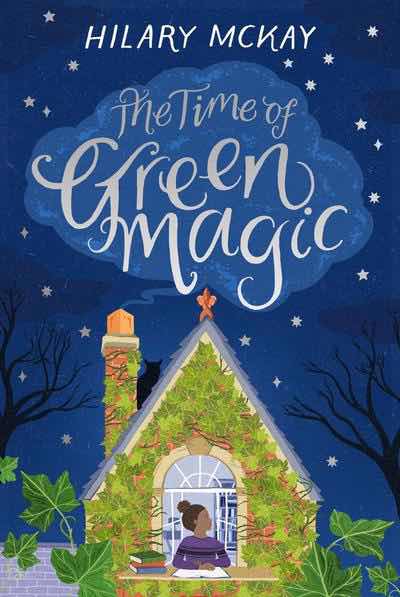
The Time of Green Magic by Hilary McKay


Cover: Dawn Cooper

In parenthesis 

If I didn’t already know (which I do because I have read The Skylarks’ War) I would have identified Hilary McKay as a truly fine writer within the first pages of reading this book.

At grammar school, fifty-odd years ago, our English teacher Bernard D***** (commonly referred to as ‘Nard’) taught us many rules for writing English prose, amongst which were: Never start a sentence with ‘And’, ‘But’ or ‘Because’ and Never use brackets; for parenthesis use enclosing commas. An inveterate rebel against such constraints, I have always taken delight in the likes of William Blake (‘And did those feet, in ancient times . . .’). And I now have the example of the breathtaking writing  of Hilary McKay (who strews her opening pages of text  with brackets like sprinkles on a trifle ) to add to my conviction. She seems to respect only one rule of writing (to me, the only correct one), that the language used should  communicate effectively. And that she achieves superbly. 

And there (right in the first paragraph) comes the mind-expanding phrase: ‘Abi herself, hunched over her book like a diving bird on the edge of a pool, poised between worlds.’ (p 1) Well, what more need be said?

The Time of Green Magic is quite simply another unspeakably wonderful book, from a superb children’s author. It has sentence after sentence, page after page, image after image of breathtaking writerly skill evoking equally intoxicating readerly pleasure.

Follow that? Why try?

The Skylarks’ War, Hilary McKay’s most recent book prior to this, is unquestionably one of my favourite children’s titles of recent years. (See my post from November, ‘18.)  It is in many senses a huge, and hugely important book. Although it explores events through the lives of only a relatively compact cast of characters, they are animated on the huge stage of the First World War, and carry with them all the life-shattering issues, all the devastating disruptions and and heart-rending conflicts, all the love and loss, that engulfing  war involves. The book is a microcosm or a macrocosm - and is deeply affecting.

The Time of Green Magic is no less a book, albeit in a somewhat gentler, more domestic vein. Its canvas is far more limited - but not its import.

Profoundly simple

It is, superficially, a slight, simple story about a girl (who happens to have dark skin) and her two new step-brothers. Throw in a caring (step-)father, an absent (step-)mother, a beloved grandmother on the other side of the world, an attractive, young French babysitter, a friend lost and found, and you have almost the complete personae of the book. The core characters move into a strange new house (strange in both senses) and what they find there is a magic that is both real and unreal. This ‘green magic’ is simultaneously what precipitates the story and what provides some of its most potent images. Few books can have a more apt or telling title.

But what is this ‘green magic’? That is for readers to discover, alongside some of the most beautifully drawn, most lovable and most profoundly human characters in recent children’s fiction. To read this little book is to make friends for life; friends to grow up with; friends to come back to again and again.

Words on paper

Towards the end of the book, the youngest boy, Louis, writes a letter, and Hilary McKay says of it:

‘It was words on paper, It opened a door, it made a friend, it told a story.’ (P 213)

All these truths apply to equally to The Time of Green Magic. Simple truths. Deep truths. Simple magic. Deep magic. The best sort. But, at the same time, what words they are, what a door, what a story! This is a ‘Tardis’ of a book: its small exterior opens into a huge interior. It is a wise book, full of encouragement, and no little humour. It is a book for families and about families; a book about new starts, new places, and new people (even if they are not always sought). It is a book about books and the magic of books. It is a book about insecurity and need, about love, and the need for love. So many children’s books are about being ready to grow up; this is, perhaps, a book more about not (yet) being ready to grow up. Somehow (I can’t  quite say how)  it is, to me, a twenty-first century equivalent of Edith Nesbit’s ground-breaking magical children’s adventures. But in this book the children’s adventure is to find the magic in each other.

It is a story to read as summer comes to and end and winter draws in. It is a perfect book to read in the run up to Christmas. It is a book for all time. It is a joy.

Once again, Dawn Cooper’s striking cover beautifully echoes the tone of the story as well as subtly pointing up some of its key elements. 

Wednesday, 11 September 2019

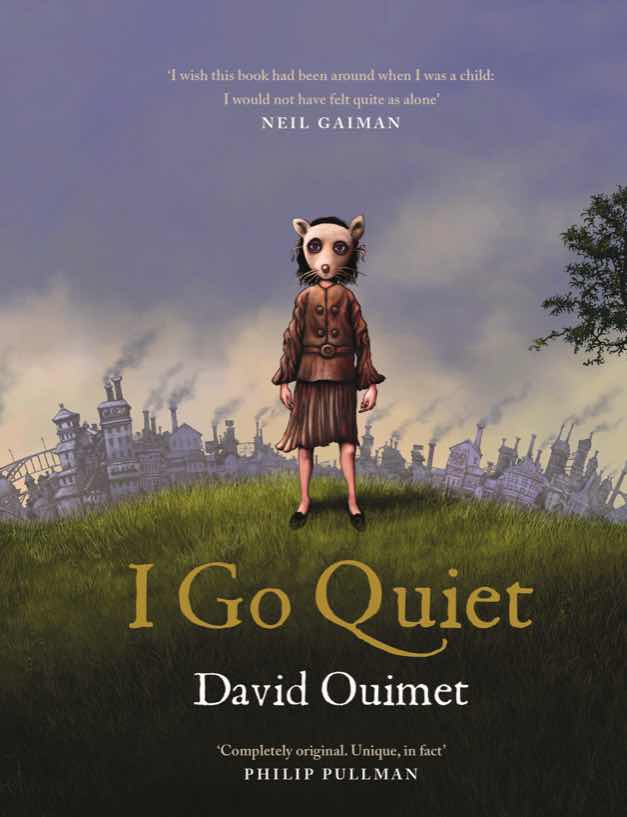
I Go Quiet by David Ouimet


‘When I read I know that there is a world beneath my branches. I read that every living thing is a part of me. I think I may be part of everything too.’

Words and pictures 

There are a comparatively small number of hard to classify books, by highly talented artist/writers, that seem to me to fall somewhere between the graphic novel and the older children’s picture book. They are generally characterised by few words, if any at all, yet often deal with very sophisticated subject matter, brilliantly explored through stunning artwork.Too often overlooked as being unchallenging for more able readers (which is most certainly not the case) they not only provide a rich and stimulating independent reading experience but also make wonderful resources for imaginative, thoughtful teachers and their classes. David Wiesner and Shaun Tan are prominent amongst artists-authors who have produced some truly mind-blowing books of this type. And David Ouimet’s recently published I Go Quiet is a particularly outstanding example.

Words

The very short text is superficially simple, but is actually profound in its ideas and implications. It shows perfectly how a few words can say a very great deal. A young girl feels herself alienated from a noisy world, and so turns inward; literally and metaphorically, she goes quiet. Yet she frees herself through imagination. This book is itself a compelling testament to all books, to their power to liberate, to educate in the fullest send. And, in the end, the loud, clear message of I Go Quiet is superbly positive, supportive, encouraging. Silence will find its voice in good time, and what a voice that will be.

Pictures

Yet it is David Ouimet’s detailed, idiosyncratic and compelling illustrations which carry the greatest power within this work, adding multiple layers of both meaning and mystery to the text. Primarily monochrome, yet playing mesmerisingly with darkness and light, they are often disturbing, hauntingly surreal. The countless people who populate this world all carry masks of conformity, which they sometimes do and don’t t wear, yet their faces are mask-like either way. Across one double page spread, these hordes seem to pass through some vast, dark machine, like product on complex conveyors. In another they are arrayed as a vast ancient army, malevolent terracotta warriors. At what appears to be school, ranks of desks with their masked/unmasked pupils stretch, towards infinity, multiple indoctrinated clones. It is no wonder our girl goes quiet. Yet, when her imagination is freed, the drawings rush, swoop and soar towards flight in exhilarating abandon. And, in the vast library, the girl climbs and climbs up the dark stacks of books until her hand reaches towards the light, the sky, the grass.

Images

These are images that ask questions, many questions, questions in their wholeness and even more in their detail, more questions than answers. But therein lies their power and their potency.

This is a book to disquiet, but ultimately one to comfort and support too. Support for those who feel intimidated , those who feel alienated, and perhaps do not even want to belong, for those who go quiet, for those who read and learn and imagine. It provides the encouragement, the hope, the certainty, that someday they will make a ‘shimmering noise’.

Thursday, 5 September 2019

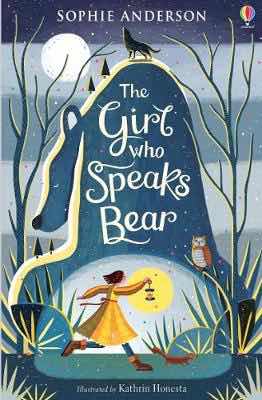
The Girl Who Speaks Bear by Sophie Anderson


Illustration: Kathrin Honesta

‘We don’t have to be the same to fit together.’ (p 376)

At last

After what has seemed like an interminable wait, I have finally managed  to buy a copy of the new Sophie Anderson. (I won’t say from where, as I think they sold it to me a bit before the official release date, and I’m certainly not going to dob them in, as I was so desperate to read it.). Inevitably I dropped everything else and raced through it in a couple of days. 

The Girl Who . . .

Probably the first and most important thing to say about this book is that it is categorically not the next in the Stig Larson Dragon Tattoo series.  (The Girl Who Played with Fire, The Girl Who Kicked the Hornet’s Nest,  etc., etc.) Anyone expecting the further exploits of Lisbeth Salander will be sadly disappointed.

However,  those who know better will be hoping for a captivating follow-up to this author’s justifiably lauded children’s debut, The House With Chicken Legs (see my review from July ‘18). And they will most certainly not be disappointed. Not one jot. 

That first book was a highly original tour-de-force that managed simultaneously to be excitingly readable, deeply moving and richly though-provoking. It was always going to be a hard act to follow. The Girl Who Speaks Bear is not exactly a sequel as such, but it is set in the same Russian folklore-inspired world, and, indeed, another house with chicken legs does put in a notable appearance, together with its ‘Yaga’ inhabitants. Whilst it is in no way essential, it is perhaps advantageous for young readers to have experienced  the earlier title first, so that they understand the background of what happens inside this animated dwelling.

However, this new book not only turns out to be a worthy successor to its illustrious predecessor, but in many ways exceeds its remarkable achievements.

Grown from the rootstock of folklore

I have always loved and admired children’s books that have their roots in both particular place and the folklore of that place - what I think of as the Alan Garner tradition. Not only is The Girl Who Speaks Bear one such book, but it has the added advantage that the particular tradition of old Russian tales on which it draws will be novel ground to many young readers in the West. It makes for an intriguingly fresh quality of  ‘fairy tale’ experience whilst still evoking, albeit unconsciously, those deep archetypes and universal emotions that resonate with the humanity of us all.

Form and content dancing together

But, for me, it is the fact that this book is a veritable masterpiece of narrative form, that most completely sets it apart. Many of the finest examples of literature (children’s or otherwise) are those where form and content work in perfect harmony to reflect and complement each other. Again, this book is one such. And, because of this, I am confident, it is destined to become a classic of the children’s fantasy canon.

Superficially, the book alternates between a principal narrative, in the present tense, and past tense retellings of what are nominal folk tales, each with its ‘Once upon a time’ opening. Yet it is really not as simple as this, for, from an opening that seems to find its setting in a credibly ‘real’ picture of village life in the far north of Russia, the main narrative itself soon takes on elements of the recounted fairy tales, so that these two elements of the structure move closer and closer together. The folk tales become more like flashbacks in the personal history of protagonist, Yanka, or, to put it another way, her story becomes a living out of the consequences of the the folk tales. It is all most cleverly handled by a wonderful writer already hitting superb form.

So many delights

All this is not to mention beautifully crafted language, evoking vividly the landscapes of village, forest and legend. These, too, are peopled with rich and engaging characters, human and animal. And, through all, distinctive Yanka, a protagonist far from the clichés of storybook ‘heroine’, is engaging, admirable and lovely in the very best sense. She is a character fascinatingly torn between the pulls of society and nature, civilisation and wildness, life and story, and many children, girls and boys, will be honoured to know her and call her their friend. She seeks to belong, despite being different, and her dilemma is shared by many, so her story’s ultimate celebration of home and family (whoever they may be) will comfort and encourage.

The book is quite a long one, but the time taken to read it will repay children a hundredfold. Its cumulatively exciting incident is mixed with gradual revelations about the book’s central mysteries, and its extended climax is thrillingly compulsive. Yanka’s tale will enrich their reading, and their lives, immeasurably. Many will learn to speak bear too, discovering the language of the bear from the forest, the bear from story, and the bear that will always be somewhere within themselves. If a story can have a soul, then this one does.

‘(I wonder) what other stories from my past lie in the forest. My heart races and my toes twitch. But . . . more important than the stories of my past are the stories of my future. And those - with a little help from my family and friends - I can write for myself.’

Wonderful writers like Sophie Anderson help a little too.

. . . and ravishing visually as well

I cannot finish with out adding a word in praise of Kathrin Honesta’s enriching illustrations, which themselves manage beautifully to hover in the hinterland between realism and fairytale, the very place of magical adventure that is the very heart of this life-enriching tale.

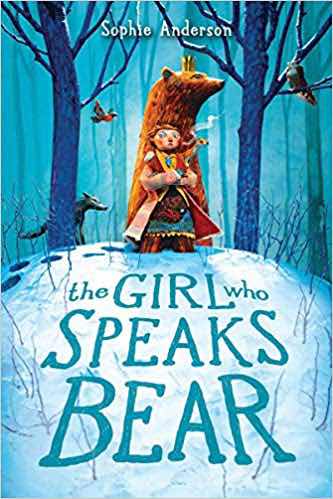
US readers can rejoice in the fact that The Girl Who Speaks Bear is coming your way next March. (And book collecting fanatics, like me, will be able to buy an additional hardback edition.)


US cover

Monday, 5 August 2019

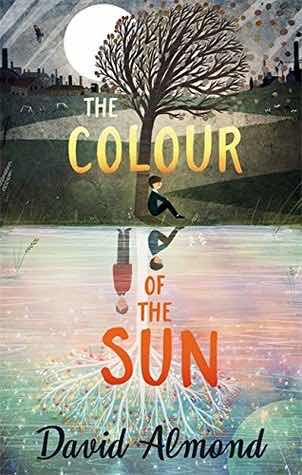
The Colour of the Sun by David Almond


Cover: David Litchfield

‘Get yourself out into the sun, lad,’ 

Over the course of twenty years or so, I have read David Almond’s books with frequent intakes of breath at his remarkable writing skill, his honest sensitivity, his consummate artistry. I  tried to say as much when I reviewed The Dam, his picture book with artist Levi Pinfold, back in my post from September of last year. However, seeing his endorsement on the cover of Chloe Daykin’s Fish Boy, brought to mind that I hadn’t yet caught up with his own most recent full-length  novel, The Colour of the Sun

Once the thought had landed, it couldn’t be postponed one (sunny) day longer. 

Within a few pages of returning to this author’s writing, the phrase that was burning in my mind was one from Gerard Manley Hopkins’ poem The Windhover: ‘the achieve of, the mastery of the thing.’

His first children’s novel, Skellig, probably remains his best known, and it is a very fine work. However, he has written many other great books since, and to chart his journey from that first novel to this one is to delve ever deeper, ever more richly and rewardingly, into the potential of literature for young readers. 

So what, makes David Almond so special? What makes this book so breathtakingly wonderful? I can only offer tentative thoughts and fumble clumsily for some of the vivid colours.

Perhaps

it is the way that every single word he uses seems to be the right one, in the right place. His language is superficially simple, yet every sentence he crafts transports you, every image he conjures, every small action of his tale, takes you right to the heart of his narrator, Davie, to the heart of the author, and to the heart of yourself. Davie’s life, past, present and future, is caught in his wandering on a single, particular day, and so is your own, even though you have never before seen it though his eyes.

Perhaps

it is the way that this superficially slight narrative is redolent with images, depths, and resonances, with folk memories, with ghosts and portents, with things real and unreal, with enigmas. It is profoundly rich, even in its beautiful simplicity of form. It is extraordinary in its ordinariness. Davie wanders to the top of a hill and down again, and neither he nor you will every be quite the same again. Literally? Ah! That’s the question.

Perhaps 

it is that there are precious few, if any, other writers who can make a highly significant moment out of the sharing and eating of a dusty fruit gum. Perhaps only he notices its potential to glow in the sunlight.

‘Davie chews the green gum, mixed it in his mouth with the remnant of the purple gum. It’s so sweet, so delicious. He thinks of the multi-coloured light inside him and the thought pleases him.’ (p 43)

Perhaps 

it is because he can capture with tender poignancy the thoughts and feelings of a boy on the cusp between childhood and early adulthood, belonging to both and neither; that he understands so completely how the first loss of a parent can be the most devastating event in a young life; and that he can explore these things with deep honesty, and profound empathy, yet not one jot of over-sentimentality.

Perhaps

it is because he can write a whole book where almost nothing happens - a young lad spends a single sunny day wandering about the places he has known all his life - and yet leave you desperately turning pages to know how it all ends. (Although he does throw in the discovery of a murdered body, and the ever present possibility that the lad will encounter the murderer - which I suppose you might consider takes the edge off this just a bit.)

Perhaps 

it is  because he can tell you very near the beginning of his book what the whole thing is about,

(‘This is a world of wonder. And some folk stroll through it with their eyes down to the dirt like it’s all nowt but a great big bore! Look around you! You should be running around dancing and singing your head off at the glory of it all! )

not to mention telling you again on the back flap, and yet leave you desperately turning pages to know how it all ends. (Although the same qualification applies as above, which you might still think is a bit of a swizz.)

Perhaps

it is because a very particular place is the heart of his book, and this is a book of his heart; because he is that place, and Davie, and both are everything he writes, and has ever written.

‘It’s a place, like all the places he passes through today, all the places he has passed through since he was an infant, that seeps deep into Davie’s dreams. It’s a place, like all the places, that feeds the tales he writes, that infects the sentences and pages that fall from his pen as day comes to a close and night comes slowly on.’ (p 125)

Perhaps 

it is  because he sees nature, becomes nature, in the city, in the streets, in the fields, everywhere,

‘Amid the gorse and the bees and the exploding seed pods, below the blue sky and the yellow sun and upon the blazing earth, he loses himself, finds the fox and the deer inside himself, and he is wild.’ (p 177)

Perhaps

it is because of the way he says bollix to stultifying religion, bollix to the need for two sound legs, and bollix to ingrained prejudice and violent hatred.

Perhaps

it is because his book is suffused with generous, understanding, forgiving, accepting humanity; because it is profoundly optimistic.

‘And the larks sing high in the sky as they always do, no matter what dreadful things might have occurred on the earth below.’ (p 113)

Perhaps

it is because he doesn’t just write this book for young readers, but writes it for old men too, as he and I are; for the children we were and are.

‘This is a world of wonder. And some folk stroll through it with their eyes down to the dirt like it’s all nowt but a great big bore! Look around you! You should be running around dancing and singing your head off at the glory of it all!  . . . There’ll come a time when you have to leave this wondrous place, you know?’ (p 12)

Don’t I know it. 

And what’s that got to do with the price of fish?

Well, this book is a master’s masterpiece. It is profound and profoundly beautiful. It stands in relation to David Almond in something of the same relationship as The Stone Book Quartet does to Alan Garner. They are very different, of course, because the two writers are very different people. And very much the same, because the two are very much the same.

Why have I never read it until now? Sometimes a book finds you when you need it. This is a book to read when you are thirteen or fourteen, and wandering without quite knowing where you want to go.  But it is is book to read and re-read later too.  Every year?  Every month? Every day? Every day when the sky is grey. Every day when the yellow sun shines. (Which is every day.) 

Walk on.Walk on. . . . and don’t tread on the fairies.


Friday, 2 August 2019

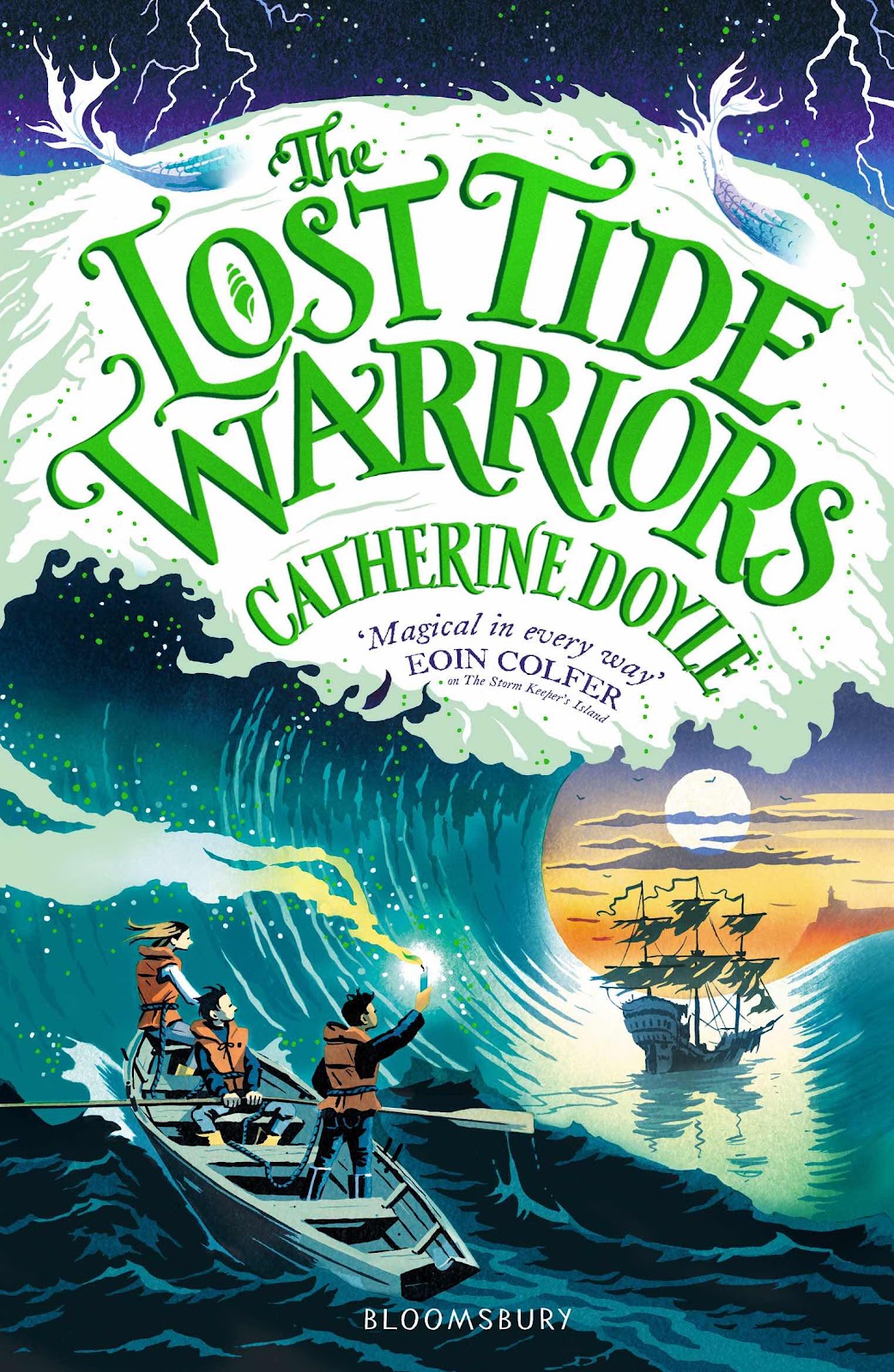
The Lost Tide Warriors by Catherine Doyle


Cover: Bill Bragg

‘It was always a storm.’  (p 194)

Now number two

I warmly welcomed the first in this series, The Storm Keeper’s Island, as one of the most original and exciting of recent children’s fantasies, and it easily made it onto my list of Children’s Books of the Year for 2018. (See posts from July and December, 2018.) 

This follow-up does not disappoint in any way. In fact, it builds most thrillingly on all the promise of its opener. Catherine Doyle most successfully combines four ingredients. Primarily her setting on the remote island of Arranmore off the Atlantic coast of Ireland has a completely authentic feel in terms of both landscape and people. The sea, which plays a prominent role in this story, is an ever powerful presence and the inhabitants who live under the influence of its bounty and its dangers, its waves and its storms, are a vividly drawn group of families. Credibly for such a small, isolated community they exhibit both longstanding loyalties and equally in-bred rivalries. Against these, the three friends, Fionn, Sam and Shelby, who are the book’s protagonists make for ready empathy and compulsive reading. Their various  interactions are not without humour too, and, in fact, Chapter 10, where the ‘Third Musketeer’ rejoins the other two after enforced absence on the mainland, is one of the most entertainingly amusing I have read for some time.

Storms and candles

Into this context the author has dropped  her own very original fantasy concept, where storms and other weathers are ‘caught’ in wax candles, which, when burned, transport the holder into different layers of Arranmore time. These phenomena, and other magical powers for the defence of the island, are in the control of the ‘Storm Keeper’, a role that in the previous volume fell to young Fionn These promising plot devices are mesmerisingly exploited in this sequel. To come up with original magic ideas for a new children’s book sequence is quite a feat, and Catherine Doyle’s candle magic is a triumph of invention, different, yet convincingly compelling. 

Under and around this, the author ties her tale in to the resonances of Ireland’s mythic heritage by building into her drama some of the legends and ancient beliefs of her location. This allows her to weave real richness and potent threat into her narrative and build it into a furiously exciting race to to thwart the forces of  ancient malevolence.

Irish English

In some ways most powerfully of all, Catherine Doyle continues to conjure all this through often startlingly skilful and evocative language, that thrills and excites sentence after glorious sentence.

‘Dionne and Shelby stepped over the old waterline, and the smell slammed into them. It was like opening an old can of tuna and drowning in that first, pungent whiff.’  (p 193)

What is it about Irish writers and the English language?

Magical potential

Perhaps less original, yet still important, within these inventions are embedded some of the rightly timeless themes of children’s literature: friendship, loyalty, courage, and, of course, the determination to save the world from unspeakable evil. Protagonist, Fionn, is discovering in himself a power (for magic) which he has not yet mastered, and this is a frustration that will chime pertinently with many pre-adolescents, even those whose burgeoning potential is not so overtly magical, 

So, what we end up with is the second part to a classic children’s fantasy adventure, moulded in the finest Alan Garner tradition, in that it draws heavily on particular place and its legends, yet refreshed in the fullest possible way, vibrant with new energy, vivid imagination and evocative language. After two such thrilling additions to the children’s fantasy canon, we can surely look forward with impatient confidence to a triumphant Part Three. The sky is already black with ravens!

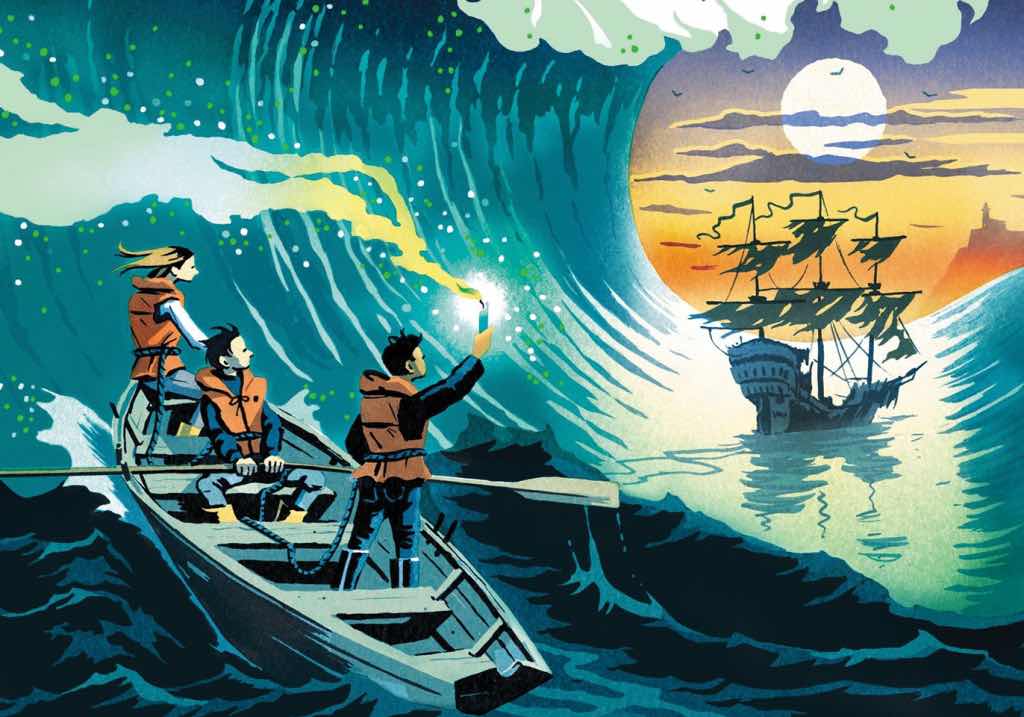
Bill Bragg’s cover art is wonderfully dramatic too and will help attract numerous young readers to discover this storming read.


Wednesday, 31 July 2019

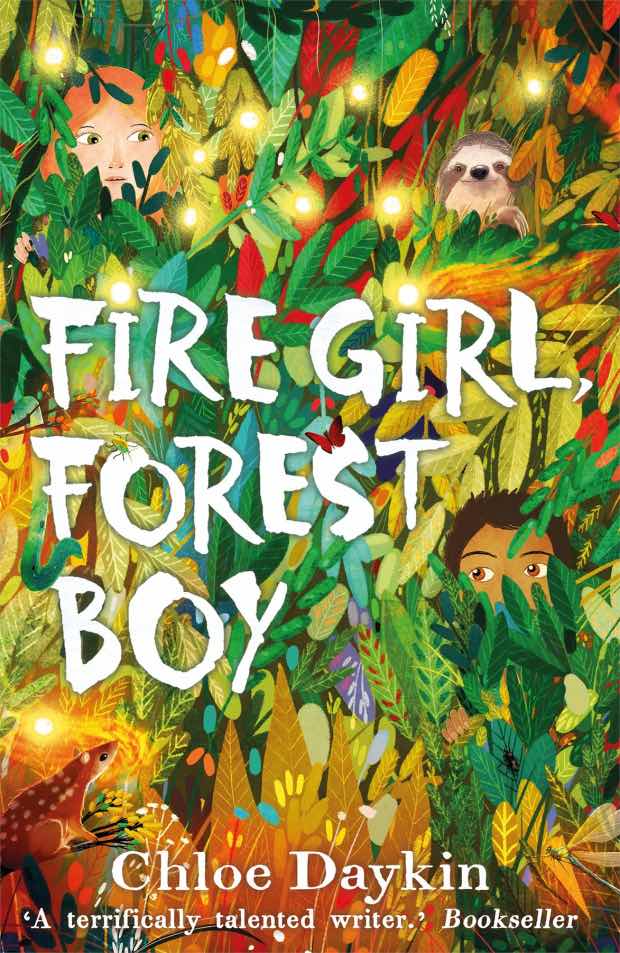
Fire Girl, Forest Boy by Chloe Daykin


‘Sometimes you have to pull the strings of your heart and go.’ (p 25)

The two before this one 

In a totally metaphorical (non-violent) way, Chloe Daykin’s debut novel Fish Boy took children’s fiction by the scruff of the neck, shook it until its teeth rattled and left its brain swimming. (That last bit is almost literal - kind of.) 

There are a lot of books around about kids with ‘issues’, and some of them are great, but none of them are anything like this one - and few are quite as special. This upstart author virtually invented a new style of writing children’s fiction (a sort of stream-of-consciousness-with-added-talking-mackerel). Her book is just devastating in language, concept, form and depth. (Is Chloe Daykin the James Joyce of  Middle Grade? Well, kind of.) It shows just how surreal reality is. It is, consequently, not the easiest of reading for children (although easier than James Joyce) but it is something close to the most rewarding. It sensitively shows us much about some of the other people who share our world, and consequently allows us to understand ourselves better.*

How can you resist writing like:
He looks at me like I’m crazy, Hurt. Like a cat that you’ve just offered a fruit pastel to.’ (p 35)

I have to admit that I was somewhat late discovering Fish Boy, much to my regret. However, if I had read it when it first came out in 2017, it would have been one of my Books of the Year, for sure.

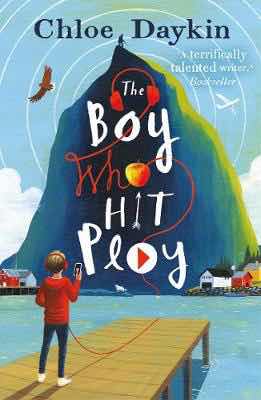
Her second novel, The Boy Who Hit Play, came within a whisker of maintaining the same level of brilliance (always a huge ask) and developed her stunningly idiosyncratic style into something more of a road-trip adventure whilst retaining its focus on individual and family issues. She was still The Author Who Hit the Spot for hyper-imaginative insight into the thoughts, feelings and needs of touchingly human characters.

Even if just slightly in the shadow of her first, it is still a highly recommendable book. Oh, and its very funny too. And has accompanying music - kind of 


Covers: Richard Jones, David Dean

Now number three

Interestingly, her most recent book, Fire Girl, Forest Boy, manages to represent both a radical departure and a strong consistency in her writing.

The continuity comes from what I now think of as her trademark writing style, which still defines the new title and makes it unmistakable hers: short, sometimes very short, ‘chapters’; a use of the present tense that in her skilled hands feels totally credible; an ability to take you right inside the heads of her protagonists and share every thought and feeling with sometimes shattering intensity. In this new book, the narrative is shared between the girl and boy of the title, with their (generally) alternating perspectives enriching the telling immeasurably. Although cleverly very different, each is a strong and complex character, and readers will be able to identify strongly with both children - this author allows us to know and understand the two so well. 

Quirky language 

Then, through everything, Chloe Daykin threads a vibrancy and originality of language that can be quite breathtaking.

Iquitos is the city in the jungle. The furry piece of mould in a cracked piece of cheese.’ (p 34)

‘Memories creep out of the shadows and run out at me with their arms up.’ (p 88)

‘The silence feels like a visitor that comes in and sits with us. Hey, I’m silence. We don’t shake its hand. No one smiles at it.’ (p 98)

Both her language and her thought somehow manage to be quirkily original and at the same time tellingly universal.  Beneath her oddness lies truth that touches us deeply, even as it makes us laugh, puzzle or squirm. 

Same but different 

Where this new book represents a fairly radical departure from its predecessors is in the nature of the story itself. Whilst the earlier two novels treated primarily of individuals and their immediate families, Fire Girl, Forest Boy is passionately concerned with a major global issue, the deforestation of the Amazonian cloud forests, with its disastrous impact on both indigenous peoples and planet Earth itself.  This story develops into a full-blown rollercoaster adventure, with dastardly villains from corrupt corporations, and the two protagonists swept into a desperate mission to help the local ‘resistance’ prevent humanitarian and environmental disaster. Within this theme are layered the author’s more familiar, sensitive concerns for identity, family and friendship (‘Friendship is a kind of magic. Fragile and lovely.’, p 266) but her narrative canvas is essentially large scale. 

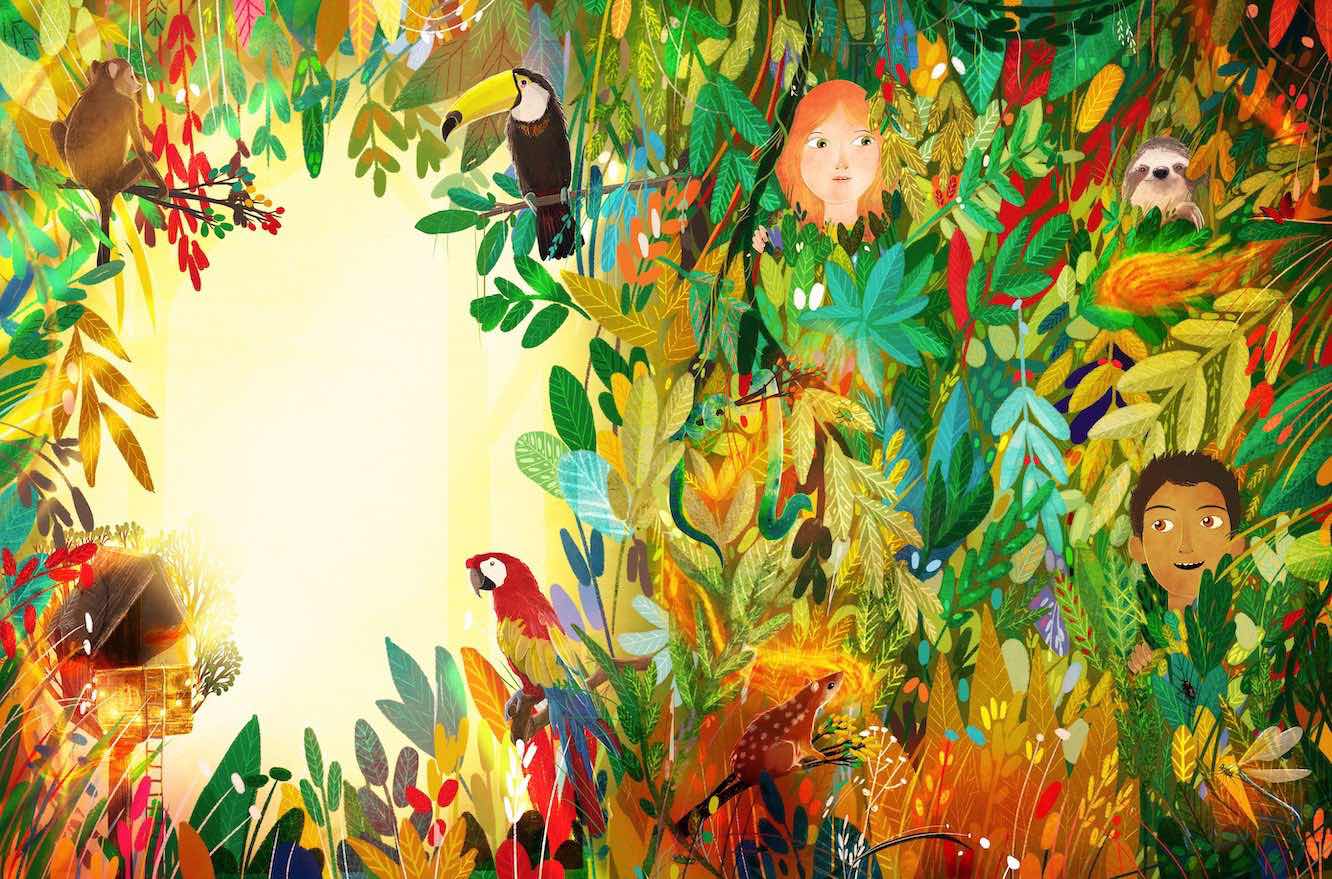
Again, it has to be said that using children’s fiction to explore rainforest issues has been done before, and done well, by other authors. Once more, though, it is the way that Chloe Daykin tells her story, and gets her message across, that makes this book so fresh, original and exciting. Her writing is littered with wonderfully evocative word-painting of both the jungle itself and the lives lived within it. But, over and beyond this, what makes her narrative so particularly distinctive is her introduction of a fantasy element. Amidst all the realistic action, against such credibly drawn backdrops, Fire Girl, Maya, develops the ability to conjure ‘creatures’ of light, entities of intense heat that can both devastate enemies, and guide the way towards discoveries.

Fantasy, but not as we usually know it

Although the term can be overused in fiction generally, it is perhaps helpful here to call Fire Girl, Forest Boy ‘Magical Realism’ for children. This is perhaps particularly appropriate since the origins of that genre and the setting of this story are both Latin American. Of course, there are many children’s books set in fantasy worlds and possibly even more where children pass through some form of portal from the real world into a fantasy one. However, I can think of few which introduce magic directly into an otherwise (disturbingly ) real world in quite the way that this book does. And I am certainly aware of none that does it as effectively and powerfully as this one. As in the best magical realism, Maya’s magic fire/light is both reality and symbol. It is spirit manifest; the spirit of the forest; the spirit of those who have sacrificed their lives in ‘the cause’; the spirit of Maya herself; the spirit of righteous anger, justice and truth. Take your pick. Possibly it is all of these. But, as it becomes more powerful in Maya’s life and in the climaxing narrative, it is a spirit that flares and glows with illuminating force.

It is delightful that, in deference to her young readership, Chloe Daykin balances the terrifying power of Maya’s light ‘creatures’ with friendly eyes and even chubby little arms. Nevertheless this will be a challenging read for those who expect their stories to be accessible, straightforward entertainment. But, for those who can take it (and we far too often underestimate the potential of children to respond to more sophisticated texts, consequently feeding them far too prosaic a fictional diet) it will be all the more rewarding. This is a powerful read in very many different ways.

Come December, Fire Girl, Forest Boy will get onto my Books of the Year for sure. Moreover, I ask those responsible for more significant accolades and awards to, please, pile them on. This author has now proved herself to be one of our finest contemporary children’s writers.

An adventure awaits

These three books together provide a most wonderful adventure into the potential of children’s fiction, and demonstrate just  how fully it can deserve to be called children’s literature. At its best, it is possible for it to to be both hugely entertaining and highly stimulating. It can be thrillingly original in concept, language and form and add immeasurably to young readers’ understanding of themselves, of others and of their world. It can challenge, stretch and grow young minds at the same time as engaging and delighting them. And Chloe Daykin shows just how.

If our children are able to create a better world in the future, and I am optimistic that they might, then books like these could well have helped them.

‘With time we can change the future.’ (p 271)

Stunning artwork 

Extra accolades too, please, for David Lichfield’s glowingly wonderful cover. What an author/illustrator he is. (Picture book enthusiasts look out for Lights on Cotton Rock this September. And if you don’t know The Bear and the Piano, well . . . )


Note:
* After all,  e e  cummings did write,  ‘It’s always ourselves that we find in the sea,’  in his poem ‘Maggie and Millie and Mollie and May’.