Here are the occasional reflections of a joyful traveller along the strange pathways of fantasy and adventure. All my reviews are independent and unsolicited. I read many books that I don’t feel sufficiently enthusiastic about to review at all. Rather, this blog is intended as a celebration of the more interesting books I stumble across on my meandering reading journey, and of the important, life-affirming experiences they offer. It is but a very small thank you for the wonderful gifts their writers give.

Thursday, 10 February 2022

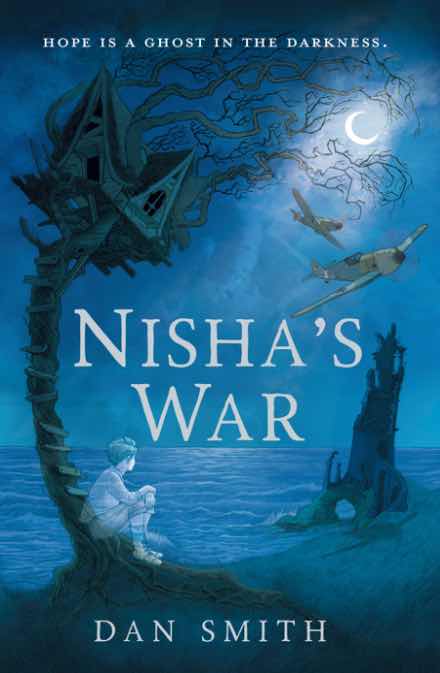
Nisha’s War by Dan Smith


Cover: Matthew Land / Steve Wells

Joining the ranks

The Second World War, especially the UK ‘Home Front’, has served children’s fiction very well as subject matter. Or perhaps that should be vice versa. Whichever, it would be easy to compile a substantial list of wartime-set books that not only provide outstanding reads but also serve to sensitively bring awareness of this terrible period to new generations. ‘Lest we forget.’ It is important.

However the sheer number of already existing great books in this area make it difficult for authors today to offer true originality and provide fresh perspectives and insights into the period. One recent offering that succeeded brilliantly in exactly this was Phil Earl’s When the Sky Falls. Now, in a quite different, but equally affecting way, we have another.

Best yet

Dan Smith has previous written two MG wartime novels, My brother’s Secret and My Friend the Enemy. Both are outstanding reads and very effectively raise questions about who is or isn’t an enemy. Yet both could justifiably be called conventional war stories. Nisha’s War is markedly not conventional and is a particularly fine novel as a result. It is a strange amalgam of elements, but that is its strength, its power. It is in many ways more sensitive than this author’s  earlier work, more nuanced, more layered. 

The main strand of the narrative is set on an small island off the Northumbrian coast which owes much to the geography of Lindisfarne, especially in its tidal causeway to the mainland, although in many respects fictionally transformed. At this remote and rather desolate place a young girl, Nisha, arrives as a refugee from her previous home in war-torn Malaya, having escaped through Singapore. In a darkly lyrical story, she attempts to ensure a favourable outcome for her herself and her desperately ravaged  family through interaction with the island’s mysterious child ‘ghost’. This not so much a supernatural story, though, as a mystical one that explores Nisha’s journey towards acceptance and hope through a multi-layering of metaphor and emotional reality.

More than just a war story

The novel is, however, yet richer. The island narrative  strand is counterpointed by a horrifically realistic diary account of Nisha’s evacuation from Singapore which involves scenes that very strongly pre-echo recent news images of the appalling desperation at Kabul airport. This gives the story both grounding in the grim events of WWII and considerable contemporary resonance and relevance. Nisha’s War is a story about a refugee, and the need for acceptance in a new country,  as much as it is about the war itself.

The mixture of historical and specultive fiction (almost magical realism) could be a confusion for young readers, but here it is so well handled by Dan Smith that distinctions are perfectly clear. The imaginative elements of this story only serve to enhance and extend the impact of it underlying reality. It is insightful, engaging and deeply moving.

As befits a novel for young readers, the outcome is positive and encouraging, without being over-sentimental. The whole is a triumph of intelligent fiction, made accessible for children, and Nisha’s War joins the finest examples of children’s literature on these important themes.


Final note:
Dan Smith is a prolific writer and his output is a smorgasbord of fiction for different audiences and tastes. Also in the children’s category, his She Wolf , set in Viking-invaded Northumbria, is a great read and a brilliant choice for bringing this distant period of our history to vivid life. Very different, but outstanding of their type, his Crooked Oak Mysteries would be excellent for enticing less experienced or reluctant readers. Indeed, they will provide exciting escapism for any children needing it, as most do at some time or other.

Friday, 4 February 2022

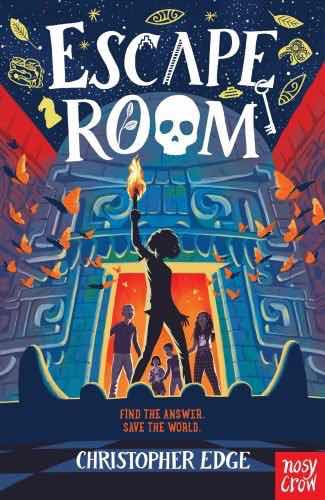
Escape Room by Christopher Edge


Cover art: David Dean

‘The Neanderthal stares blankly at me. In the darkness of his eyes all I can see is my own reflection.’ (p153)

Game on

This Escape Room has many levels.  As a game it is puzzling, fast-paced, engaging, unexpected, and intensely thrilling. Yet the story’s protagonists are participants as well as players, and, for them and the empathetic reader,  it is perplexing, disturbing, terrifying, devastating and literally a matter of life and death. Further still, Christopher Edge is no writer of simple pot-boilers. Through a whole sequence of recent brilliant novels, he has more than proved himself as an ingenious, imaginative and deeply concerned writer, asking some of life’s biggest questions. This book is also a journey through ideas, provoking and probing at levels far deeper than those of the arcade.

Like others of his recent titles, it holds many surprises, shocks, twists and revelations, that it would be wrong to reveal in a review. It is tempting to say simply that this game is not what it seems, but even that is not completely true, because, as the reader of the book, and the players of the game, are repeatedly told, there are clues to be found throughout by those who have eyes (and minds) to see.

And the winner is

Every stage of the story is loaded with the most vivid and powerful images, products and stimulants of rich imagination. Images of what? That is for each reader to decide. But who, for example, can miss the butterflies. They not only crop up unexpectedly in the text, but it is they, and not vicious monsters or resurrected corpses. that swarm across every chapter head. Are they fluttering towards Escape?

For Christopher Edge Escape Room is a multiple triumph. It will fly from the shelves and into children’s imaginations as a crazy, thrilling, rip-roaring ‘Indiana Jones’ adventure game. (Supported by David Dean’s outstanding cover.) However this new novel also further confirms this author’s already outstanding reputation as one of our finest contemporary children’s writers, original, thoughtful, provocative - truly psychedelic. Having been drawn in by the game, many young readers will understand that it isn’t a game at all; that it isn’t about finding the answer and saving the world, it’s about finding the answer and saving the world.

Christopher Edge is a certain winner here, but even more so are his young readers.

Tuesday, 1 February 2022

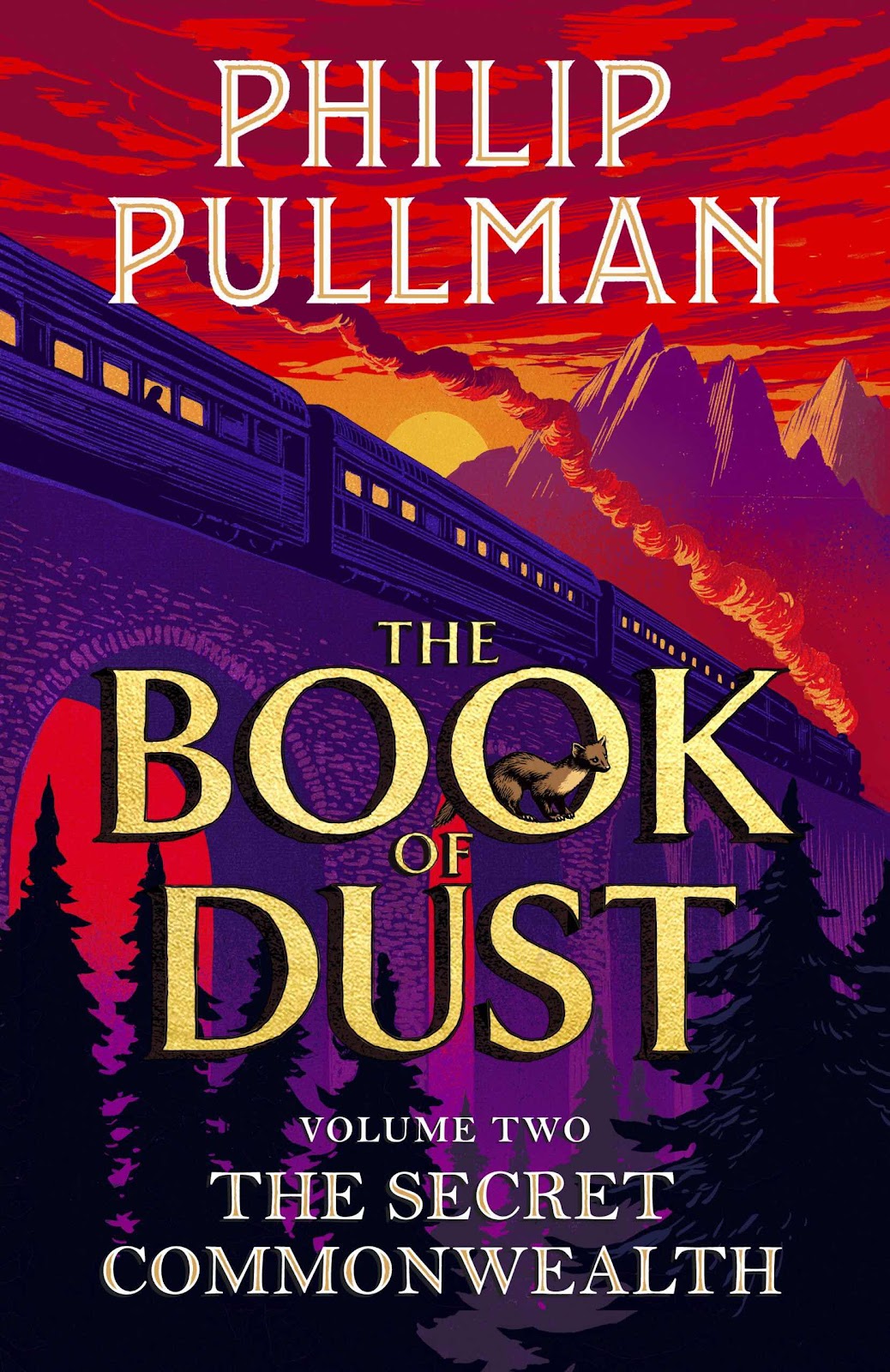
The Secret Commonwealth (The Book of Dust 2) by Philip Pullman


Cover illustration: Chris Wormell


We may need food to stay alive, but we need stories to stay whole.

Not sticking with it 

Yes. It has taken me over two years to get around to writing up my thoughts on this second part of The Book of Dust. I have to admit that for a long time I found it difficult to get into. With countless others, I am a huge admirer of His Dark Materials and I regard La Belle Sauvage in some ways even more highly (See my review from October 2017 ). So I eagerly bought a copy of The Secret Commonwealth as soon as it came out. But after several attempts to start it, I left off part way through and read other things instead.

Thankfully, I am experienced enough to know that this sometimes happens, even with good books, and that the issue can be with the reader not the story. Books have the ability to find you at the right time (or maybe vice versa) and sometimes the time just isn’t right. Then, unexpectedly, for me the right time came for this book just after Christmas; I read it right through with intense involvement and enormous enjoyment. Even then, I spent a good while reflecting on it before I felt ready to write my responses.

I think my initial problem was that, after all my emotional and intellectual investment in Lyra’s previous story, her conflict with her own dæmon was so disturbing that it was easier just to leave off dealing with it. Despite all her previous experiences, Lyra’s total abandonment of anything magical or mystical in favour of hard, narrow rationality was just too depressing to live with. I knew that this was a big part of what Philip Pullman was seeking to explore, an aspect of her developing adulthood, but for some inexplicable reason, at that time I wasn’t ready to face it. The story felt meandering and, compared to the earlier books, somehow flat, even despite the early drama (melodrama?) of the murder on the riverside path. 

Sticking with it

This time I was still disturbed by the breakdown of Lyra’s relationship with Pantalaimon, still surprised by a plot that seemed sometimes to belong more to Sally Lockhart than to Lyra Silvertongue. However, the sheer quality of writing soon pulled me into the intrigue. This time I wanted to discover exactly where this story (and its characters) were heading. In persisting, I came to recognise this as another very fine development of Philip Pullman’s epic, no longer as an intellectual expectation but as a deeply engrossing reading experience. 

Full appreciation of The Secret Commonwealth does really need familiarity with His Dark Materials, now its back story. However, despite the original trilogy coming  between the first and this second part of The Book of Dust, this volume does feel more like a direct sequel to La Belle Sauvage, than might initially be imagined. Although His Dark Materials does involve a good deal of travel, it feels primarily an ‘adventure’, albeit often a rather dark one. Both parts thus far of The Book of Dust are essentially a journey, a kind of Homeric Odyssey, with multiple distinct and disparate encounters strung together along its way. The first part is the rather more straightforward journey, with its principal protagonist swept down the flooded river towards Lyra’s future, aboard Malcolm’s canoe. This second part, reflecting its far more adult characters and concerns, is a more fragmented journey. Its three protagonists, with this time Pan playing a major role separately from Lyra and Malcolm, are each travelling independently towards more uncertain destinations. True, the source of the ‘attar of roses’ is held out as a possible ultimate goal, but it is not (yet?) principally in the minds of any of them. Pan is purportedly seeking Lyra’s imagination, without knowing exactly how or where he will find it, whilst Lyra is seeking Pan and Malcolm is seeking Lyra, in both cases similarly thrashing around with uncertainties about whether destinations are going to be the right ones.

A fractured narrative 

The theme of Pan’s departure and quest, the separation of Lyra from her imagination, and the associated opposition of rationality with intuition (fantasy, magic, ‘the secret commonwealth’) is strongly compelling. However other thematic undercurrents have become more diverse and complex too. Alongside (anti-)religion, this books explores politics, with added commentary on current affairs. The Magisterium seems now to represent not only religion and extreme prejudice but also totalitarian domination of the most insidious kind. Much of this chimes with our own world, as most certainly do the issues around migrants and the disastrous sea-crossings of fleeing refugees.

There are other ways in which the telling of this story of a fractured, diverse journey reminds me of an Odyssey, this time in the specific form of James Joyce’s Ulysses. Narration not only switches between the different characters and locations, but it also segues (and even sometimes jolts) between reality and fantasy, between ‘straight’ narration and lyricism, between something near objectivity and different subjective viewpoints. Metaphor and allegory fade in and out. True Philip Pullman flags his switches far more clearly than does James Joyce, so he does not leave his readers quite so befudled. Even so, this kaleidoscope of viewpoints can be disconcerting. (The episode of Lyra’s encounter with the alchemist seems particularly so.) However once you have committed  to go with the flow of the book, this writerly complexity it is both exciting and engaging. The view may be fragmented but the picture that emerges is revelatory.

Understanding not understanding

Like La Belle Sauvage, but even more so, this is a readers book (for readers of whatever age) not a children’s adventure. Of course, much more so than my own parallels with the Oddesy, Philip Pullman’s own acknowledged reference is of another great epic. That he sees a relationship to Edmund Spenser’s The Færie Queene is pointed up by the terminal quotes of the text. As Spenser himself said of his own work, it is ‘Cloudily enwrapped in Allegorical devices.’ But it is not necessary to ‘get’ every allusion in The Secret Commonwealth intellectually. It may not even be a good thing. Philip Pullman has often said that he does not see his fiction as having an absolute’meanng’, or at least that what he intended is not what he intends. Whatever it means to each reader is what it means. This book, like the first of this trilogy, requires personal response rather than intellectual understanding. My advice to any reader would be to go with the flow. 

Wavewhite wedded words shimmering on the dim tide.’

It may take years to unfathom, re-readings, reflective revisits, but it is a wonderful, wondrous journey. Enjoy.

Notwithstanding, The Secret Commonwealth, and the developing trilogy, is ultimately narrative, a story.This is the middle book and it has understandably not got to wherever its journey is going. It most certainly leaves us on tenterhooks. The author has also often said that his stories are not meticulously pre-planned. His ability to allow a tale to invent and unfold itself is part of his genius, in no small part what makes his stories so special. They don’t hurtle towards some inevitable, totally predictable end. 

However, I hope Philip Pullman discovers soon where this story is taking us all. We are desperate to know.

Meanwhile there is The Imagination Chamber to look forward to. When this author promises to take us further and deeper into the world he has already shared we must  allow ourselves to be drawn there, knowing there will room for our imagining too.


My only regret about Chris Wormell’s stunning artwork for The Secret Commonwealth is that there isn’t a great deal more if it. I am, however, much enjoying the sumptuous illustrated editions of His Dark Materials currently being brought out. 
Thursday, 27 January 2022

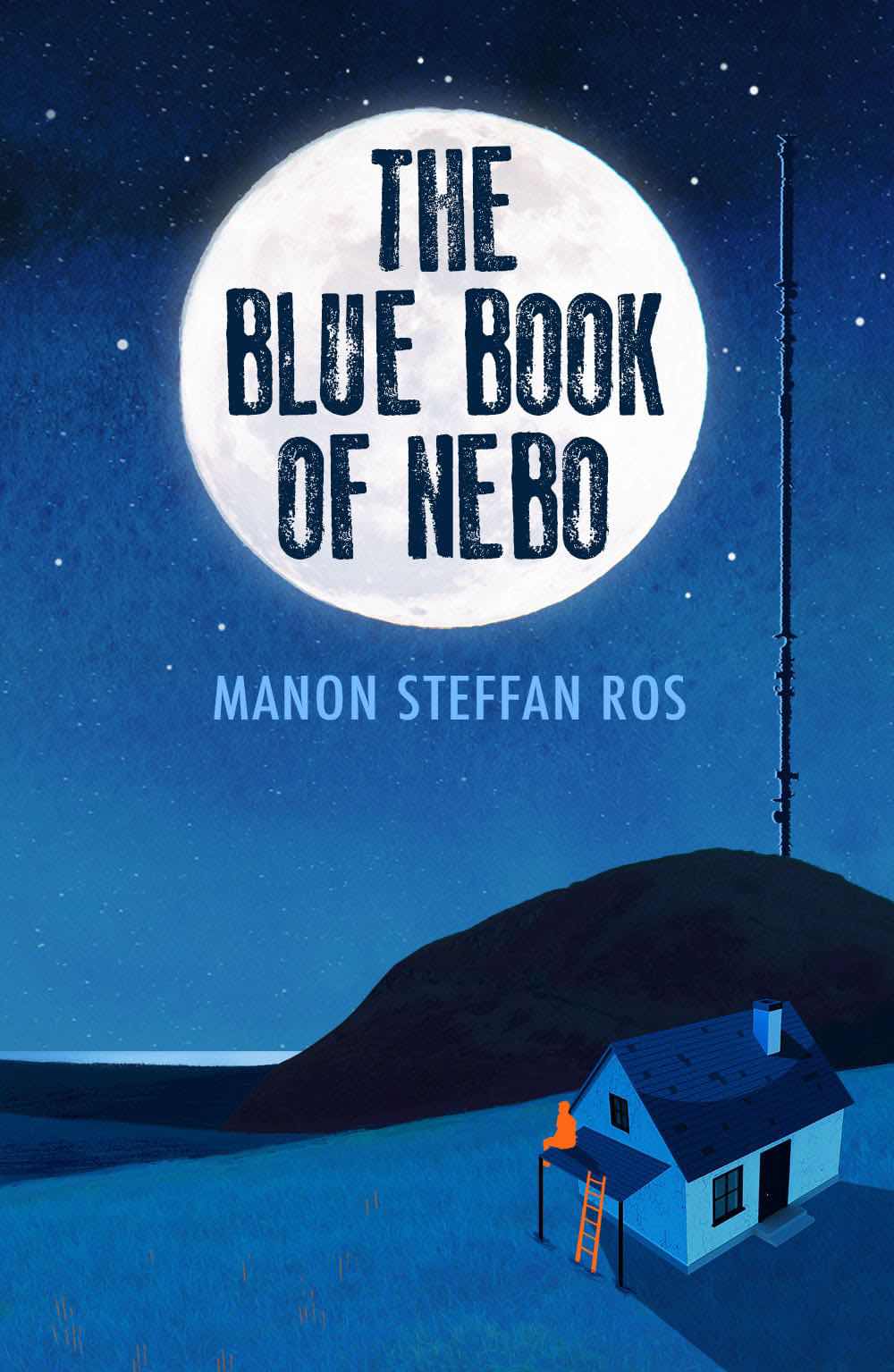
The Blue Book of Nebo by Manon Steffan Ros


Cover: Becka Moor

‘I took them, as many books as I could carry in the back seat of my car. I drove home with the smell of paper distracting me from my anxiety, the weight of the words like a family in my back seat.’ (p 45)


Welsh wonder shared 

It isn’t even the end of January and along comes the first title for my list of potential ‘Best Books of 2022’.

The Blue Book of Nebo was originally published in the Welsh language as Llyfr Glas Nebo in 2018 and won a whole clutch of awards in Wales. It has now been translated into English by the author herself and published this month by Firefly Press. Even as a non-speaker of Welsh, I fully understand and support the need for literature in the national language. However, this book most certainly deserves the widest possible readership and this translation is most welcome. It is a short novel, probably best suited to readers from early teens upwards. But be warned; short as it is, it is emotionally and intellectually devastating; its impact is huge and its hold much longer than its page count.

Manon Steffan Ros, is clearly every bit as fine writer in English as she reputedly is in Welsh. The language craft of this translation is superb. Her apparently simple, straightforward prose is richly evocative in its conjuring of people, places and situation and is woven through with verbal imagery that is tellingly fresh. It shocks like stepping under a cold shower.

Nothing familiar 

These days, the prospect of yet another post-apocalyptic, dystopian novel can be as depressing as it’s likely content; so very got-the-T-shirt. However, decidedly not in this case. This tale’s background scenario may be worryingly familiar, but not so a single sentence of its telling. Cities may be contaminated, most of humanity annihilated, but this story is as alive and invigorating as the Welsh stream from which its protagonists draw their water. This is not to deny that Manon Steffan Ros’ narrative has many deeply disturbing implications. But through all the gritty, isolated  existence of a young boy and his mother shines a profound humanity, expressed in a myriad acutely observed moments, complexities of character, ambivalence of relationship and exquisitely caught emotions. 

Simply rich

The core premise of the novel is simple. Dylan and Rowena live an isolated and increasingly self-sufficient existence, as far as they are aware the only survivors of ‘The End’. They each record their thoughts and experiences in a found blue exercise book, jointly creating the work we read. However the result is as far from simple as the way rain falls from the sky.

A good many times whilst reading this piece, I found myself almost breathless with wonder at its perceptiveness, the ability of its author to communicate such affecting profundity through such simple choices of  character action and response. For example, Dylan’s thrill at the first germination of his vegetable seeds, and his subsequent crying when faced with eating the resultant potatoes are hard indeed to forget.

‘They were happy tears, I was seven and I had created food, and somewhere, in my little boy mind, I knew who I was and who I was meant to be.’ (p 54)

The picture the author paints of the time before The End is so poignantly familiar and mundane as to be almost heartbreaking. Her depiction of the climactic moments of the apocalypse itself is truly chilling, conveyed with her usual literary brilliance through two unforgettable images of invading slugs and of departing birds. She then leaves us with a picture of life after The End which may be hard, is sometimes heartbreaking, but is more honest, more richly experienced and, ultimately, deeply loving. 

Living and learning

What she displays in this book is a response to life that can only be compared to the finest writers of the past; a sensitivity to the human and natural world, to what it is, to what it has been and to what it could become.

She asks us who (or what) are or aren’t monsters. She accuses us of much, but without bitterness. She has much to teach us, but without pretension. She leaves us humbly mumbling,  in her mother tongue or ours, (and with apologies to Welsh poet Aled Lewis Evans), ‘Maddau i ni ein difrwader.’ / ‘Forgive us our apathy.

But guilt is not what I have most been left with by this book. Over and above, I take away two things: first, that Dylan and Rowena found far more than they lost; second, a thought that Dylan borrowed from another Welsh poet, T. H. Parry-Williams, that doesn’t even specifically relate to The End as such, but nevertheless speaks volumes, ‘Pieces of me are scattered across the land.’  For Dylan, and for me, it is comfort enough.

Here is a story simultaneously very Welsh and completely universal; by one person, of one people, for all people.

Covering it all

At first glance Becka Moor’s arresting, prominently blue cover is refreshingly different. However, reading the story reveals just how pertinent and potent an image it is: simple, stark, unsettling, yet strangely beautiful.The tiny figure in startlingly complementary orange, with its equally diminutive ladder, is, like the text within, unspeakably moving. 

Tuesday, 25 January 2022

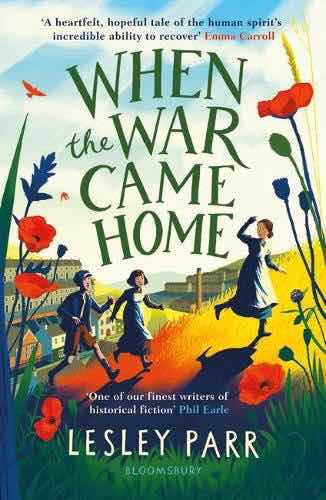
When the War Came Home by Lesley Parr


Illustration: David Dean

Wonderfully told (again)

I greatly enjoyed Lesley Parr’s first book The Valley of Lost Secrets. This, her second, is even better and confirms my admiration for her as one of our finest new writers for children. Historical fiction for young readers has rarely been served better. 

Here is a wonderful example of how, in the right hands, simple, clear writing and direct storytelling can communicate so much so powerfully. Set convincingly in our relatively recent past (just after the end of WWI) , the result of Lesley Parr’s second story is, remarkably, very much of our own time. This is a writer who knows that the most convincing evocations  are conjured not by extended exposition or florid description but by telling details introduced casually into action and dialogue. The thoughts and hence the personality of protagonist Natty are vividly and poignantly portrayed here and the dialogue between the characters in this tale of small town Wales (particularly the flow of chat from cousin Nerys) is so cleverly and convincingly caught that I could frequently hear the lilt and inflections of their musical accent escaping from the printed page. 

About then, for now

This story perfectly immerses children in a particular time and place  in the past, gently but poignantly highlighting its differences, yet simultaneously opens the door on many relevances to our own times. Without ever being inappropriate for its young readers, the tale conveys some of the dire personal consequences of war more tellingly that almost anything I have read., perhaps particularly the debilitating effects of what is now known as PTSD, but was then called ‘shell shock’. There are also some important, resonant themes about the rights of women, of workers and indeed of children. The potential potency of strikes is, for example, tellingly explored in a way that also chimes with the recent protests initiated over climate change by Greta Thunberg. Interestingly invited too are comparisons between the education of children a hundred years ago and now.

All’s well that ends well

All of this is sensitively explored through the very personal, and involving, narrative of a totally credible young girl, whose personal thoughts, feelings and actions are what give windows into larger issues. She, as well as the world in which she lives, is dealing with change and needs courage and resilience, tempered with kindness and understanding, to adapt successfully. And if the concluding ‘Railway Children’ type positive resolution borders on sentimental, then I think this view of the brightness of love and hope emerging through the greys of a troubled world is absolutely the right one for this readership. Whatever disturbing paths a story has lead them along, children need to leave a book, as they will here, feeling warm and comforted. 


Sunday, 9 January 2022

Children As Artists

And now, for once, something completely different.

If anyone is interested, I have just started a new blog where I will be building up an archive of (I think) breathtaking artwork by KS2 children, collected during my many years of teaching. Over time, I will also be developing a bank of notes pages, explaining the teaching approaches and principles that lay behind this work.

I have always believed that children deserve to be considered artists in their own right. I hope this blog will go some way towards demonstrating their truly amazing potential as well as perhaps inspiring other teachers to have high expectations of their own young artists.

The new blog can be found at ChildrenAsArtists.blogspot.com. I hope you will enjoy it.


Monday, 6 December 2021

My recommended (children’s) reads for Christmas


Here is a small selection for anyone seeking to read or share books that have a seasonal feel without being overtly connected to specific religion; for children’s fiction enthusiasts who, perhaps, want to explore a little further than the titles currently piled up in the high street bookshops.

These are not reads for those seeking edge-of-the-seat adventure, nor heart-on-the-sleeve sentiment. But they are, to my mind, richly imaginative, highly sensitive escapism, that will bring thoughtful connection to aspects of the winter holiday season that are generally older, and perhaps deeper, than those of Santas, elves, glow-nosed reindeer, or (dare I say it) talking pigs. 

A ‘modern classic’

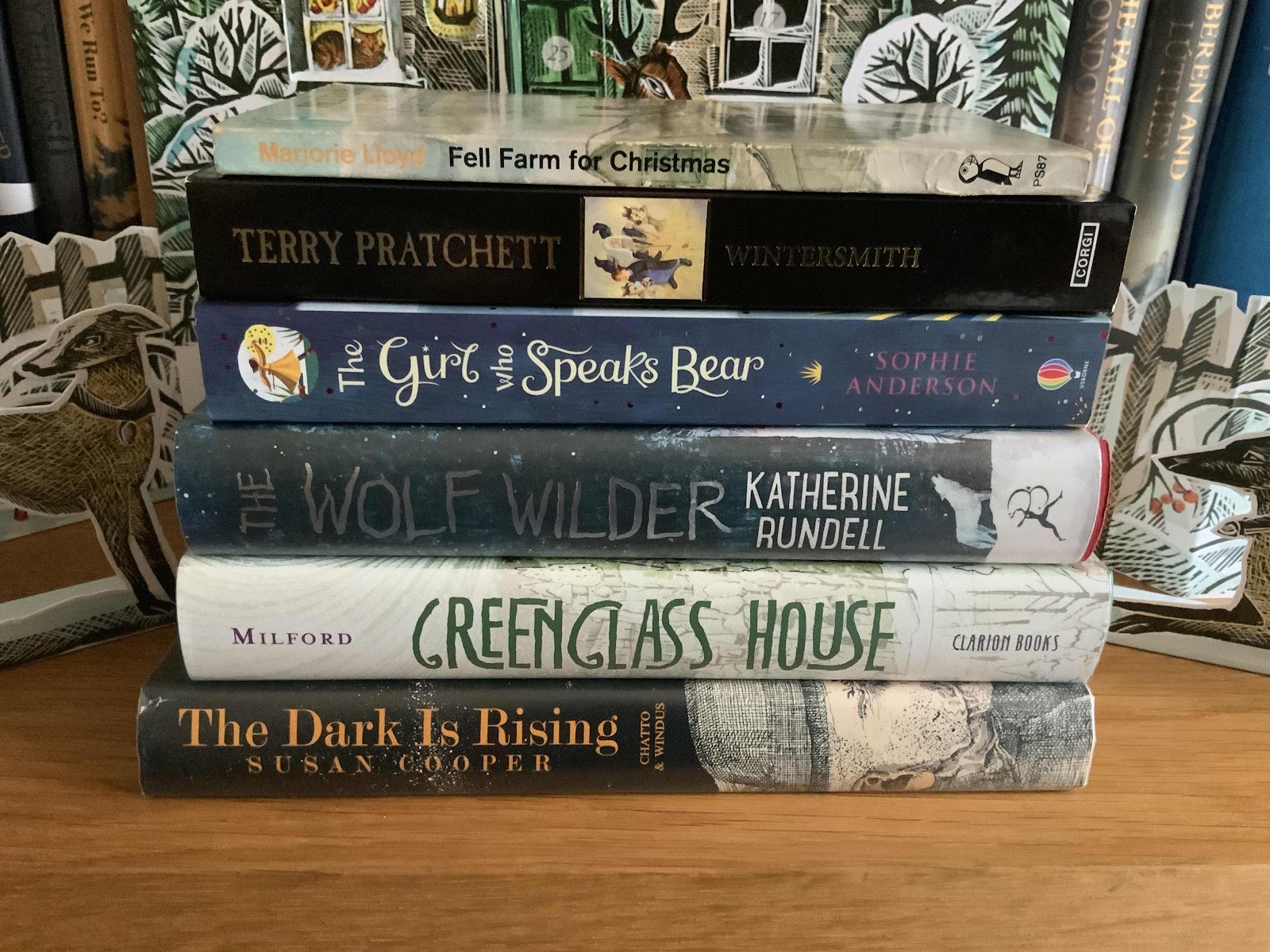
Far and away my top pick would be Susan Cooper’s The Dark is Rising. I know this title is often recommended, but rightly so. For any who haven’t read it, or those who wish to return to it, it is a near-perfect Christmas fit. Tapping into the imagery of ancient belief and custom, this remarkable fantasy spans the days from Midwinter’s Eve through Christmas. It delves far beneath the modern commercial celebration into the underlying need to survive the darkest days of the year and look for the return of the light. Both terrifying and uplifting, it is a breathtaking piece of writing. The whole sequence of novels of which this is the title work is well worth reading, but it is this particular volume that is the transcendent masterpiece. 

Cozy intrigue

Another strong recommendation is Greenglass House by Kate Milford. This is a much gentler book than the previous one, but still combines intriguing mystery with ancient traditions. American in origin, its action takes place through the period of winter ‘holidays’ and involves a fascinating cast of diverse characters. It is a delightful read in itself and a great introduction to the strangely wonderful world of this remarkable author. 

Two recent wintery gems

In this seasonal post I am not trying to cover the latest releases, so I am happy to pick out again two books from a couple of years ago. Neither Sophie Anderson’s The Girl Who Speaks Bear nor Katherine Rundell’s The Wolf Wilder are about Christmas as such, but they each have a pervading wintery setting that makes them very fitting reads for these holidays. They also happen to be two of the finest children’s novels of recent years, richly imaginative, compelling and enriching.

Pritchett magic lives on

One of my all time favourite fantasies for children (upwards) is Terry Pratchett’s Tiffany Aching series. It has everything: humour in spades, charm, charms, deep roots in folklore and important, but gently communicated, messages about life. In short, it has real humanity. All of the series is magnificent and, if anything, it gets better as it goes along. However Wintersmith is the one particularly appropriate to the season, and, like all the books in the sequence, can be read as a one-off. Wintery magic for sure.

Nostalgia choice

I admit my final choice is pure nostalgia.  Marjorie Lloyd wrote three Fell Farm books in the 1950s which were among the reading joys of my own childhood. Clearly, Fell Farm for Christmas is the one pertinent to this list. It can really only now be read as a period piece. Yes, it is about a family of white, middle-class children having holiday ‘adventures’, and I am mightily glad that today’s young readers are offered fiction with much more diverse content and representation. But at least this one avoids the preoccupation with thwarting villains or finding treasure, so ubiquitous at the time, and is deeply (and fairly authentically) rooted in the farms and fells of The Lake District. For those who just about remember, or those who wish to discover more about it, here is the simpler, more seasonally rooted, Christmas (and childhood) of the past. Whether it was better or not is a matter of viewpoint.