Here are the occasional reflections of a joyful traveller along the strange pathways of fantasy and adventure. All my reviews are independent and unsolicited. I read many books that I don’t feel sufficiently enthusiastic about to review at all. Rather, this blog is intended as a celebration of the more interesting books I stumble across on my meandering reading journey, and of the important, life-affirming experiences they offer. It is but a very small thank you for the wonderful gifts their writers give.

Saturday, 4 July 2020

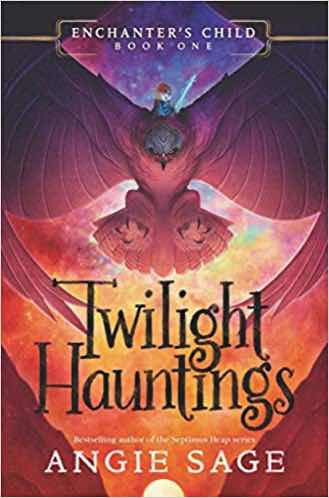
Twilight Hauntings by Angie Sage


Cover: Justin Hernandez

Septimus Heap . . . and then

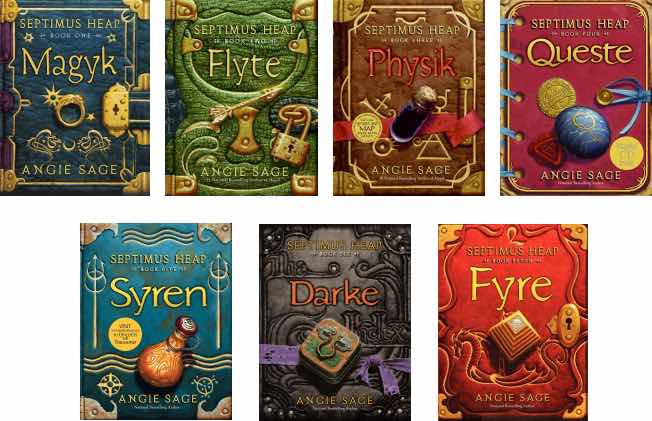
Angie Sage’s Septimus Heap series (Magyc, Flyte, Physik, Queste, Syren, Darke, Fyre) is one of children’s literature’s finest long fantasy sequences. It may not be the same massive cult phenomenon that is Harry Potter, but then what is? It is every bit as engaging, building a rich and highly imaginative magical fantasy world over seven wonderful stories, each as captivating as the last and building into an overall epic tale, that, whilst huge, never looses its accessibility or appeal for young readers. It is filled with engaging characters and wonderfully grotesque villains and bursts alive with both highly entertaining humour and thrilling storylines. It manages to be spine-tinglingly scary with out ever being disturbingly macabre; dark fatasy with a light touch, if you will. Septimus himself is one of the most endearing, if humanly fallible, of fantasy protagonists, and the whole saga is spot on for a readership of around 8-12. It is a children’s fantasy writing triumph.. 

Todhunter Moon . . . but too little of her

When Angie Sage rounded off  Septimus Heap it in 2011, with a seventh and seemingly final title, Fyre, it left a huge whole in many children’s reading lives, as well as the hanging question: how do you follow that? However, she soon succeeded. By continuing the world of Septimus into a new new generation, with former characters as adults and a brilliant new cast of young characters, this time led by a girl, Todhunter Moon, she kept her wonderful creation alive, whilst invigorating with a totally fresh feel. It was the perfect solution, delighting her many fans that they could come back to her books, whilst completely banishing any feeling of staleness. This new series (Pathfinder, Sandrider, Starchaser) retains all the many qualities of the first, whilst adding layers of vibrant imagination, to her hugely entertaining magical enchantments.
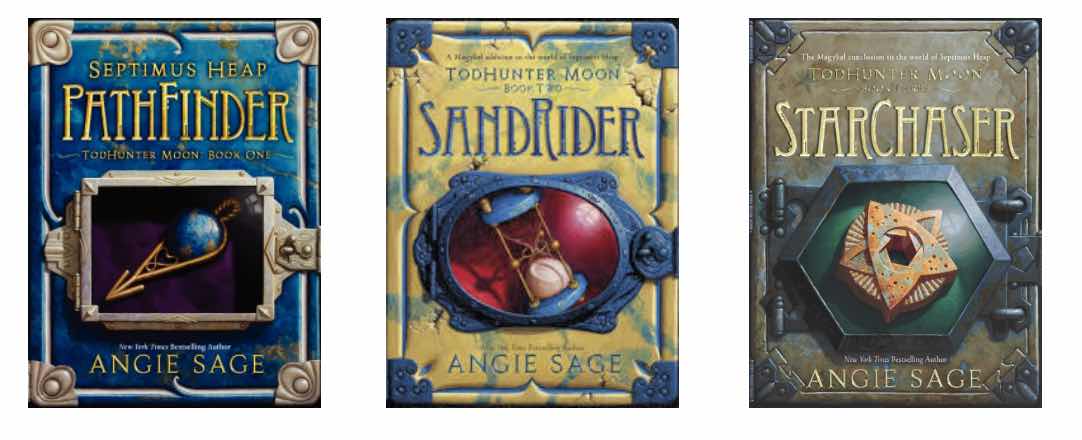

(By the way, the American editions, enriched with sumptuous illustrations by Mark Zug, are ravishing books to boot.)
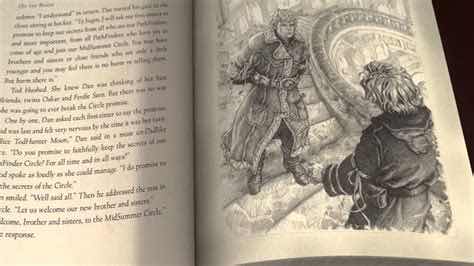

So what is very strange, almost incredible, is that the Todhunter Moon series, seems to have come to a halt, after just three books, when it gave every impression of having the potential for a sequence equalling the first in both length and quality. It is one of the biggest disappointments in recent children’s publishing.

Instead of more of these, the author went on to publish (in America) an interesting and enjoyable, but rather untypical, stand alone novel Maximilian Fly.

And now . . . Enchanter’s Child

However, now there is some very good news. It is doubly exciting that not only does Angie Sage have a new children’s fantasy novel out, Twilight Hauntings, but it is designated as Book 1 of  ‘Enchanter’s Child’, so there is definitely more to come. 

Here the author  has created a totally new high fantasy world. Although it perhaps does not have quite as much of the wicked humour and delightful caricature of the Septimus Heap books (though it does have its moments),it is otherwise classic Angie Sage, replete with all her engaging plotting and richness of imagination. In a land where enchantment (and especially enchanters) are not only outlawed but actively hunted by an array of malevolent creatures, a former king’s enchanter is now in hiding and forced to flee from the very ‘hauntings’ he was responsible for creating. Finding an unlikely sidekick in a reluctant young magic-hunter, he sets out to seek the daughter he was forced to give away at the time of his persecution. Meanwhile, said daughter, unaware of her true father, or her own magical heritage, has to grapple with the consequences of a rather less than ideal foster family, Betrayed by a malicious step-sister, she escapes with the help of a young lemon-seller and his entertaining donkey. This new cast of principal characters and the world in which they live are vividly evoked, along with the wonderfully chilling variety of creatures sent to haunt and hunt them. Angie Sage remains a consummate storyteller and understands just how to hook young readers in and keep them enthralled and entertained. Hers is exactly that sort of page-turning story where every time you think things are getting better, they only get worse - until, of course, they don’t. Together with her earlier books (for any who don’t already know them) Enchanter’s Child is most warmly recommended. Those who like their reading to provide thrills aplenty, but in a somewhat lighter vein, for example any who have recently enjoyed Michelle Harrison’s delightful fantasies, should respond to it enthusiastically.

Available here

Although Twilight Hauntings has an American publisher, they are distributing it over here too, so it should be easily available. Be sure to seek it out (preferably from an independent bookshop). And we now have Book 2 to look forward to as well. However, we could still do with more of Todhunter Moon and the world of Septimus Heap. Young readers are missing out hugely, and children’s fantasy literature is most definitely the poorer for its lack.

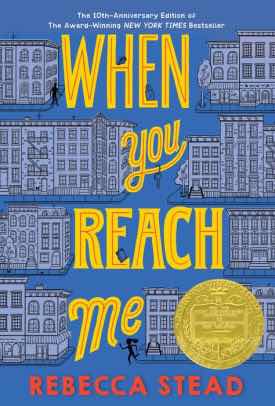
Three mind-bogglingly brilliant books exploring the dimension of time


Back in time (or not?)

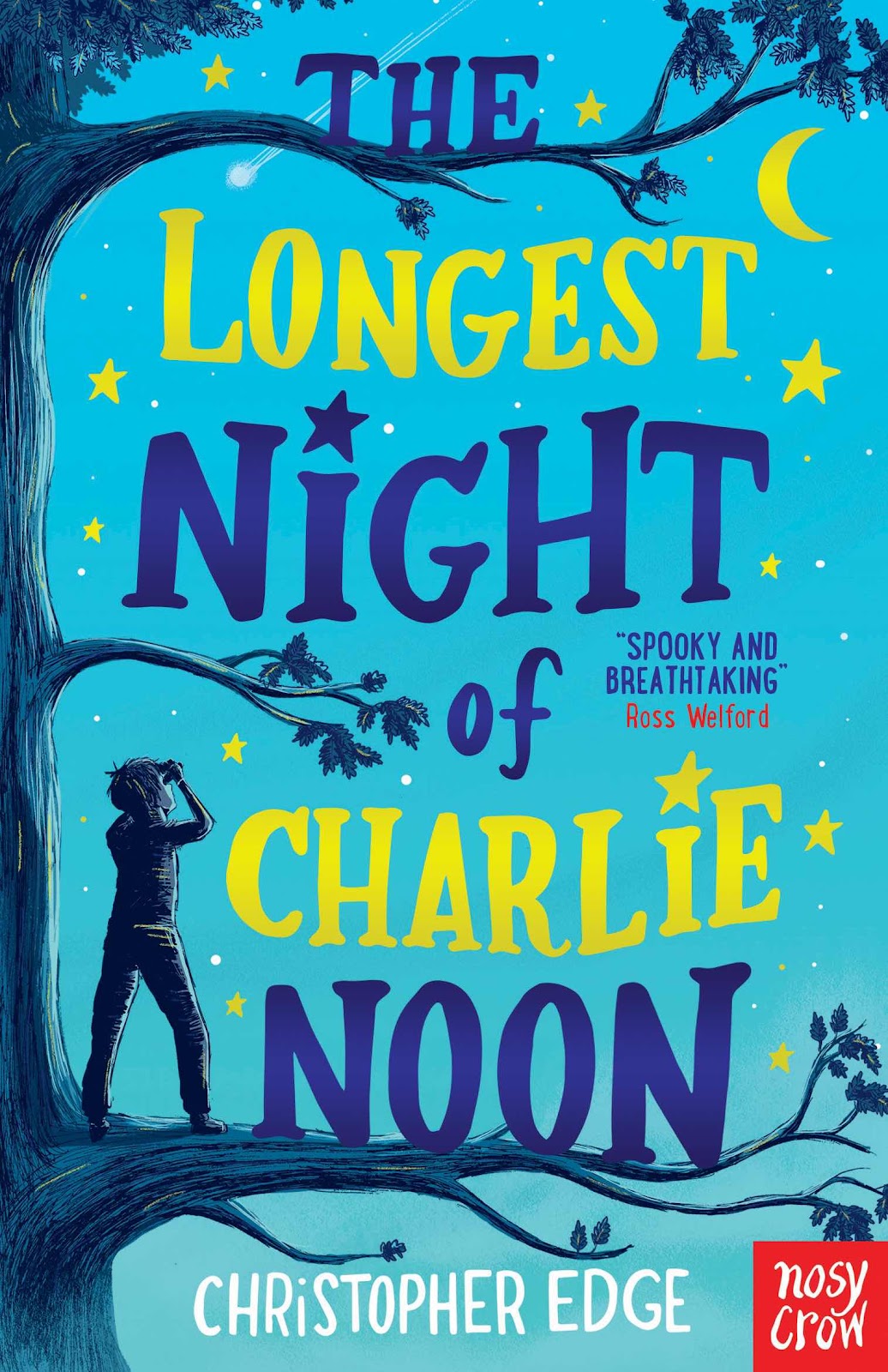
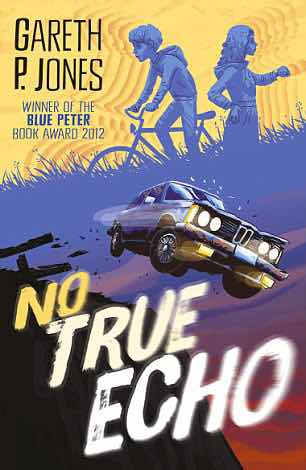
I read an excellent article in one of last Sunday’s papers, where children’s author Jennifer Bell, whose most recent story, Wonderscape*, features time travel, discussed her own favourite children’s books with a similar theme. Two of her suggestions were established classics, Madeleine L’Engle’s A Wrinkle in Time and Philippa Pearce’s Tom’s Midnight Garden. These are books I have known and loved for what feels like most of my life and I think any child who does not read them at some point will have sadly missed out. However, another of her suggestions, When You Reach Me by renowned American author  Rebecca Stead, is a much more recent title. I knew I had a copy around somewhere. Remembering  that I had enormously enjoyed it when I read it about ten years ago (before I started this blog) I sought it out to re-read. That led me on to revisit two other relatively recent books that explored something of the same concept and that I knew I had been equally blown away by, The Longest Night of Charlie Noon by Christopher Edge (which I reviewed in May ‘19) and No True Echo by Gareth P Jones  (reviewed Feb ‘16) ). I was no less enthralled by any of them second time around and back-to-back they provided one of the most thrilling, and mind-expanding, theme reads I have had for quite a while.

Reaching forward (or back?)

I was certainly right  about When I Reach You. It is one of the masterpieces of recent literature for young readers. Superficially, it chronicles the relatively mundane events of a short period in the life of a young New York girl. These include the loss of one friend and the making of new ones, the problems surrounding her walk to school and incidents while helping out in a local sandwich outlet. The author is brilliant in taking us right inside the thoughts and feelings of her protagonist, Miranda, and suffuses her first person narration with wit and insight. Yet much of what happens seems relatively unremarkable, with the only overt highlight of Miranda’s life an invitation for her single mother  to be a contestant on a TV game show. However, from the start, Rebecca Stead threads this story through with several deeply intriguing mysteries, seeding both clues and red herrings subtly through events and developments. Perhaps most remarkable of all is the way she eventually draws together what have appeared disparate narrative strands into a totally remarkable conclusion, that shakes the very foundations of many of our assumptions as a reader. It is such clever, imaginative, moving, enthralling and deeply humane writing. 

A long time (ago?)

Christopher Edge has done a superb job recently in creating imaginative fiction that explores with children some really very difficult concepts in contemporary science. His latest book, The Longest Night of Charlie Noon, remains in the same vein, but takes this even further by adding a philosophical, metaphysical, almost aesthetic, element too. It is his best book yet, which is saying a lot, because they are all outstanding. The long night of this latest title  is spent in a ‘wild wood’ where many things happen, in many ways and on many levels, whose dimensions most certainly include that of time. It is a rich story of staggering surprises, the meaning of which lies within the essence of the very tricks played on both characters and reader. It is a most important book, which carries within it an real challenge for young readers, in their lives as well as in their reading. (For a more extensive discussion of the book please refer back to my post in the blog archive.)

Echos of the past (or future?)

Gareth P Jones, has written a good number of highly entertaining children’s books, mostly in a lighter vein, and very funny they are too. However his rather more serious No True Echo, is, in my view, his finest novel to date. It explores big issues, essentially life and death, through a complex, multi-dimensional narrative, where time ‘distortions’ play a very prominent part. Yet it is not without humour and is highly engaging, as well as puzzling, shocking and moving. It is no easy, or altogether comfortable, read and is perhaps for a slightly older audience than some of his other titles. However, it rewards hugely and deserves to be far more widely read and accaimed than perhaps it has been so far. Appropriately, its time will come around, I am sure. (Again, for a much fuller appreciation I refer readers back to my original review.)

More or less?

Each of these novels is a wonderful example that ‘less is more’, even, or perhaps especially, in children’s fiction. They do not condescend one iota to their young audience, but understand children profoundly and reach the universal through the particular in ways that are deeply moving. They are each truly mind-boggling, both in their challenge to conventional thinking and in the consummate skill of their crafting. They are three of my favourite books. Although not completely new, they should still be available. In fact the Rebecca Stead title has just been reprinted in the UK. They are well worth seeking out and should have a prominent presence in homes, libraries and classrooms. 

*High on my TBR pile. Her Uncommoners books are a delight. 

Sunday, 24 May 2020

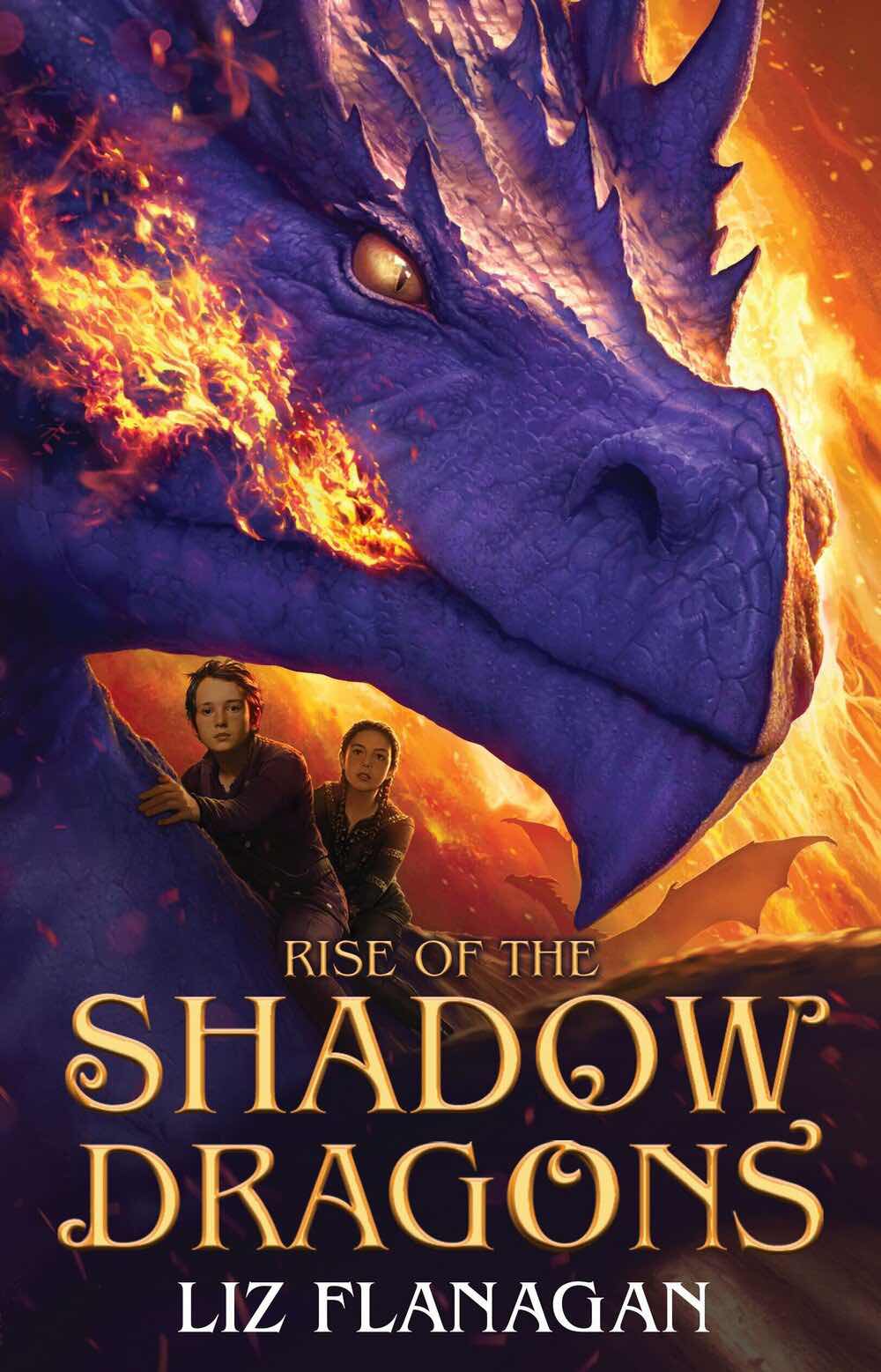
Rise of the Shadow Dragons by Liz Flanagan


Cover: Angelo Rinaldi 

And now Book Two

When I read Dragon Daughter, a couple of years ago, I recognised Liz Flanagan as a very special children’s writer. Her novel was deservedly one of my ‘Books of Year 2018’, and I felt she showed qualities that put her in the very top rank of children’s authors.

As a consequence, though, picking up the next in the sequence she is calling Legends of the Sky, I felt a certain trepidation alongside my eager anticipation. After the excitement and energy of the story that starts it all off, sequels can sometimes fall sadly flat, either so like the first as to be tiresomely repetitive or so different as to seem disappointingly unrelated. Happily Liz Flanagan has not fallen into either trap, and this book is every page a worthy successor to the first. In fact it has only redoubled my opinion that she is a very special voice indeed in children’s fiction.

Child appeal

So what is it that makes this book so very special. In trying to explain I can only repeat what I said about the first one: these are books that I know my eleven year-old self would have just adored. I remember well enough  how I felt about books back then to be absolutely sure. But I am also sure because the eleven year-old that is still inside me loves them equally. They are books to feed the imagination. They are books to loose yourself in. They have main characters who you want to spend time with, who you want to get to know and who  become your friends, albeit vicariously. At least one of them is, in a sense, someone you would like to be. They live, too, in world where you want to be, where you want to imprint a baby dragon, where you want to fly an adult one, where you want to show how brave you are (even though you don’t feel it) and where you want to help save the people and the things you love. Even though you quail and suffer through some of the terrible, and even traumatic, events of the story, it is the sort of book where you know everything will turn out all right . If fact you read on, desperate to get to the end where everything will feel good, at the same time as you don’t want to get there, because then the shared experience of the story will be finished. In that sense, it is a classic sequel, where you are delighted to get back to a world you feel know well, and see what things have changed. You hope there will be many, but not too many, and Liz Flanagan gets it just right.

There are instances where I find myself thinking, even with some perfectly fine books, ‘I really hope this writer doesn’t try to extend this into a series,’ but this is decidedly not one of those cases. I desperately hope there is a series coming on here, and I am sure countless young readers will too. 

Me and my dragon

Rise of the Shadow Dragons, continues to exploit the central theme from the first book, that of children imprinting a young dragon on its hatching, and becoming inextricably linked with them for life, but here with a new generation of young protagonists. Of course, those who know Anne Mccaffrey’s brilliant sci-fi fantasy series from the 1980s, will know that this is not a new idea, and, indeed, many other authors have also exploited it since. However, Liz Flanagan manages to make the concept both totally fresh and completely her own, setting it in a skilfully imagined high fantasy world that she evokes with vivid conviction. In doing so she brings together three highly potent  triggers that unfailingly illicit potent emotional response in children, that of  a strong bond between a child and a particular animal, that of the mythical power of dragons and that of flying through the air, here on the back of a powerful magical creature. It is a winning combination. 

To this Liz Flanagan adds thrilling multi-layered storytelling, involving both personal trauma, violent conflict within the world and society she creates, and natural disaster in the form of a volcanic eruption and consequent tsunami. 

Escaping from, escaping to

Yes, reading Rise of the Shadow Dragons is escapism. But it is an escape that many children need, whether it is an escape from difficulty and unhappiness, or merely escape from the humdrum, the ordinary. Further, though, like so many of the finest fantasy writers, Liz Flanagan uses the context of an exciting, imaginative narrative to explore so much more too.  She understands some of the deepest needs of children: the bonds of  family and the need for special friends; the need to feel important even though they often perceive themselves as inadequate; the need to save the world.  In fact, the actions that the young protagonists in her book take to save their world are in many ways ‘unrealistic’. But that is the whole point. Some stories elucidate the here and now, but others, like this, provide a wonderful place to go that is not here or now, but rather how things could be.  Through such books children can taste, as it were test out, the world as they wish it were. Such reimagining of ‘reality’ can be a wonderful thing and Liz Flanagan’s dragon stories are books of exactly this wonderful kind. In this sense they are the successors of Enid Blyton (although far better written), of Malcolm Saville, of JK Rowling, and their ilk. In envisaging themselves as having the ideal friends, as being more special than they currently feel, as saving their world, children are practicing for how things could be, imaginatively exploring their own potential. Living in a real world that in many ways very much needs saving, that is a very special thing. Flying dragons now, through these wonderful stories, who knows how many readers will fly their own dragons in the future?

Got it covered 

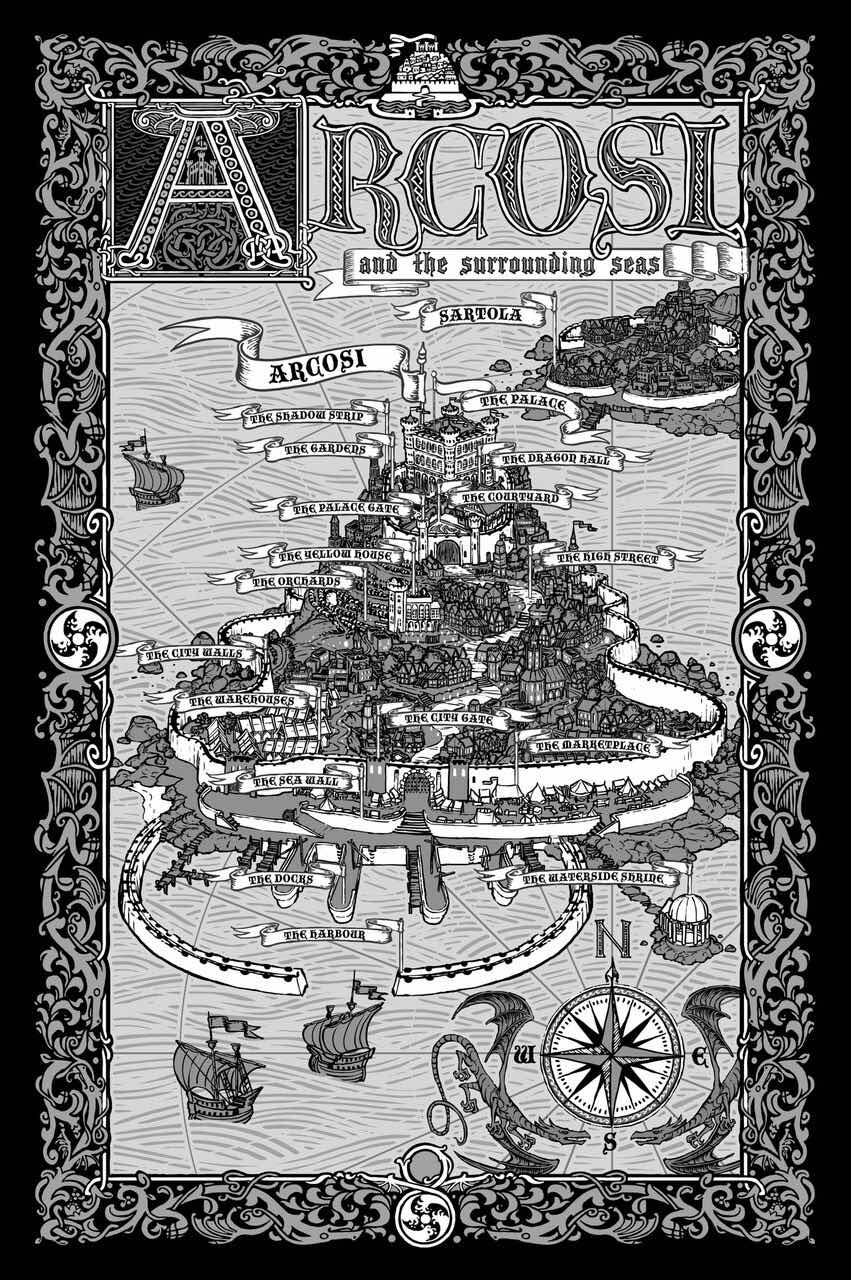
Yet again, Angelo Rinaldi’s compelling jacket illustration perfectly captures the spirit and power of the author’s engaging storytelling. Paul Duffield’s internal illustration of the island of Arcosi is very splendid too.

Paul Duffield

Girls and boys 

One final point. Although it is both wonderful and important to find strong girl characters playing the lead role in so many current children’s novels, feisty female protagonists have recently become so ubiquitous, that it is actually a refreshing change to have a boy as the principal character here, especially one as sensitive and caring as Jowan. Girls and women are far from neglected in this book and many are, quite rightly, in significant roles in both the story and the society depicted. However, whilst I frequently try to emphasise to potential readers that books about girls are not only for girls, we must remember that boys need to be able to find themselves in the stories they read too. A balance certainly needed to be redressed, but it now also needs to be maintained.

Saturday, 23 May 2020

Burn by Patrick Ness


Cover: Alejandro Colucci

If there were not humans around to create it, the unreality of dragons would cease to be.’ (p 379)

Rarely YA . . .

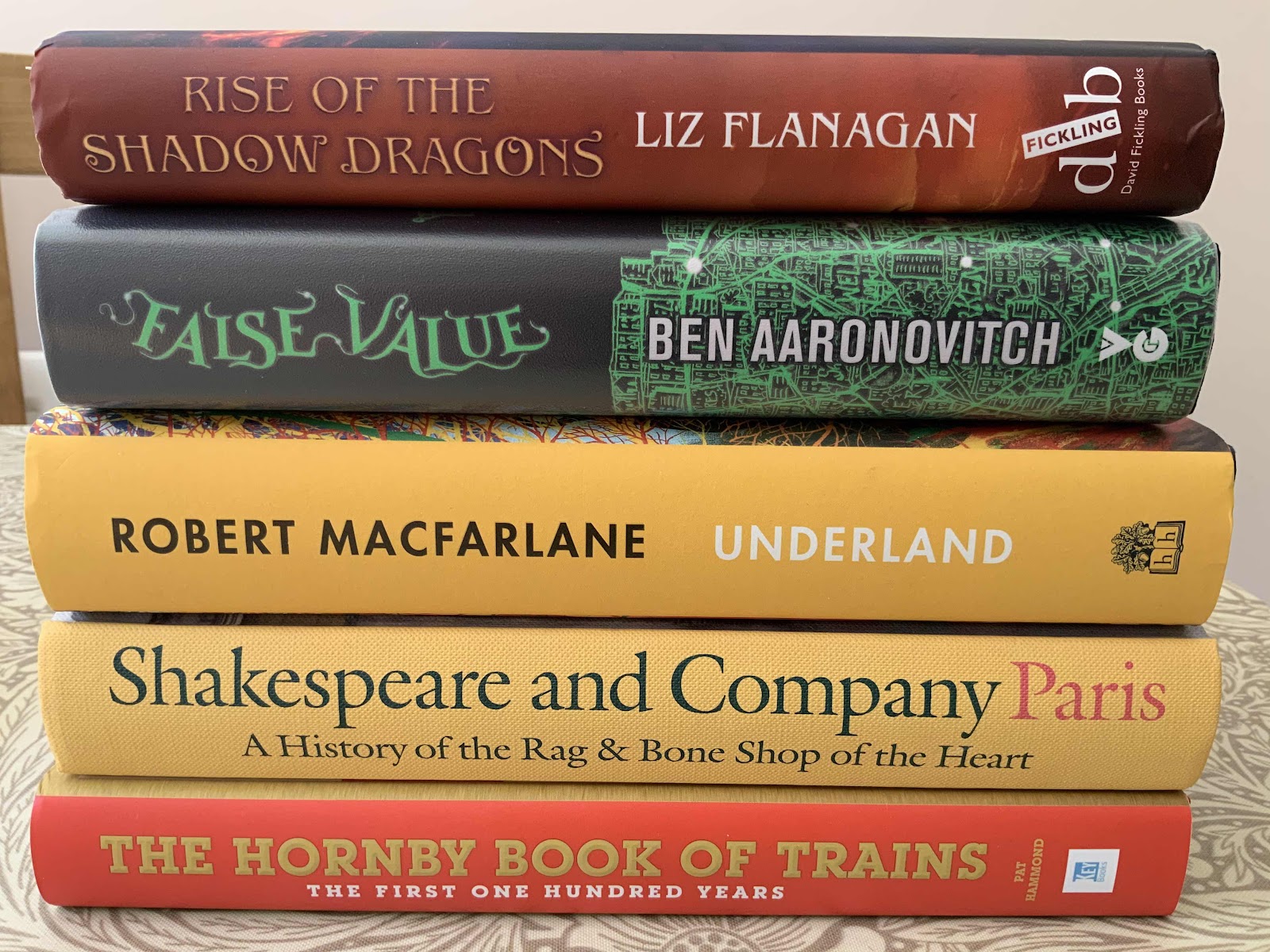
I generally read a very eclectic range of books and have to admit to what my wife considers the very bad habit of often having several different ones on the go at the same time. These generally include the children’s fantasy I continually enthuse about, but can also encompass sci-fi, thrillers, historical fiction, and much besides. Mick Heron and Ben Aaronovitch are amongst recently savoured lockdown delights.  I also enjoy non-fiction, everything from nature writing (I am a huge fan of Robert Macfarlane) to the Hornby Book of Trains (a bit niche, I know, sorry). At present I am much enjoying a history of the famous Parisienne bookshop, Shakespeare and Company; Paris and bookshops are two of my favourite  places. However, novels aimed at the ‘YA’ market rarely pique my interest, the frequent mixture of dark fantasy and adolescent romance, doesn’t much appeal.

. . . but just now and then 

However, there are a few very notable exceptions. Sally Green’s truly remarkable ‘Half’ trilogy (Half Bad; Half Wild; Half Lost) is one of the most compelling, disturbing and moving  works I have read in the past few years, as are some of the latest works from Marcus Sedgwick (I especially admired The Ghosts of Heaven) and from the brilliant  Frances Hardinge (A Skinful of Shadows and Deeplight). Each of these writers combines remarkably strong, fresh imagination, with compulsive storytelling, but also plumbs depths of feeling and meaning. Theirs are works of the highest quality literature for young adults and would be amongst my very top award winners, if the conferring of book prizes was in my gift. 

Burning bright 

Now, here is another in the same category. Anglo-American author Partick Ness has already won a deservedly high reputation through his ‘diverse zig-zag of books’, so his latest novel Burn was impossible to resist, in whatever bookshop section it was shelved. (Metaphorically speaking of course, bookshops currently being closed. Thank goodness for those independents still doing mail order). This latest novel of his did not disappoint. In fact it thrilled. This was my favourite read of the lockdown so far. (And, as I say, I have read a lot.)

The originality of Patrick Ness’s imagining is stunning, and both his evocative writing and his complex storytelling are equally breathtaking. To start, he places dragons into an otherwise historically plausible 1950s America, with the Cold War at its height and the threat of nuclear annihilation on everyone’s minds. Yet this is not ‘magical realism’, at least not as I expect it. His dragons are both accepted realities in this world, and strong metaphors at the same time. It is an incongruity that is at once implausible and challenging to our understanding of our own world. Dragons abound in contentempory fantasy. But not dragons quite like these. 

Pride and prejudice 

Another monster also stalks the rural American landscape of Burn, and that is an abominable, vicious prejudice. Although clearly engrained in its own place and time, it terrifyingly echoes across to our own world. These narrative elements rub shoulders with religion, cults and control, with destiny and prophesy, with devastating loss and grief, both immediate and longstanding. And, yes, here too are the pangs and pains of adolescence.

As his story develops, Patrick Ness draws increasingly on the concept of parallel worlds. This too is a conceit already extensively exploited in fiction, but his is a far more thoughtful and (again) realistic take than you will find in much sci-fi or fantasy. Whilst I would not label this book magical realism, I might just try to describe it as speculative reality. It plays with many of the tropes of fantasy, just as it plays with the real world of its readers, inside and outside their heads.

None of this prevents Burn from being a totally compelling story. Importantly, too, it is threaded through with the most sensitive exploration of close relationships, including young love, between both opposite and same sex couples. It is a passionate book, and an empowering one. It is deeply disturbing and deeply moving.  It is grotesquely violent and sweetly tender, It is a thoughtful book and a viscerally excitingly one. It is both fantasy and not fantasy. It is about worlds with dragons, worlds with no dragons and the reality of both. It is about worlds with magic and the magic of all worlds. It is about being special enough to save whole worlds; about being ordinary enough to save all worlds.  It is about war and devastation, annihilation. It is about prejudice, anger and hatred, hatred that burns with unimaginable ferocity. But it is ultimately about love; love that cannot vanquish . . . but that can, perhaps, thankfully, survive. 

All annihilation was mutual in the end.’ (p 379)
but
‘He stepped out of this world and into the next, intent on finding his love.’ (p 383)


Strange bedfellows?


My current lockdown miscellany 


Tuesday, 14 April 2020

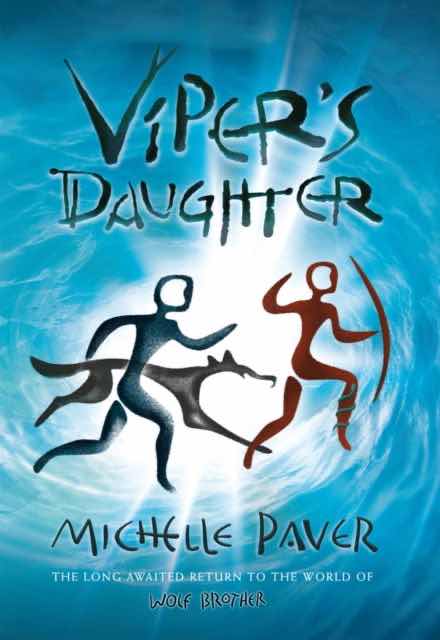
Viper’s Daughter (Chronicles of Ancient Darkness Book 7) by Michelle Paver

Cover: John Fordham.  Illustrations: Geoff Taylor

‘All his life the forest had helped him. It had given him everything he needed to survive, it had never let him down. And it was with him now, its green souls cleansing his spirit like clear water.’ (p 149)


Prehistory in children’s fiction 

The late, great Rosemary Sutcliff and other children’s writers (Kathleen Fidler and  Henry Treece, for example) used their considerable skill in historical fiction to delve as far back as the Bronze Age. However, there have been relatively few children’s books set in the very earliest times of our history. Even fewer have been fully successful. A period so far removed from our own knowledge and experience is perhaps difficult to relate to. Necessarily there is precious little known of the detail of life then and the relatively simple hunter/gatherer existence may seem to lack the potential for a good children’s story. There have, though, been a few exceptions that have overcome, and even revelled in, these limitations. In the 1970s John Christopher explored the timeless conflict between violence and reason within a pre-historic context. In the wonderful Dom and Va he brought together  a boy from a violent Palaeolithic tribe with a girl from a very different one; a sort of Stone Age ‘Romeo and Juliet’, if you like, that used pre-history as a canvas on which to paint images relevant to the world of contemporary  children.  The 1980s saw two equally remarkable books, Justin Denxel’s Boy in the Painted Cave and US author, Ann Turnbull’s Maroo of the Winter Cave. Perhaps even more, special, in the 1990s, one of the all-time great children’s writers, Peter  Dickinson, brought early prehistory vividly to life in a quartet of stories collectively entitled The Kin. What he did was to postulate, probably quite rightly, that the basic, emotional needs and experiences of children back then were not unlike ours, even though their lives were so very different. 

Wolf Brother hits the jackpot

I suspect most of these titles are sadly overlooked these days, but they  remain well worth seeking out for keen, able readers. However such successes with writing children’s prehistorical fiction are rarities, so it was a truly stunning achievement, when, between 2004 and 2009, Michelle Paver created, her Wolf Brother series (sometimes known collectively as The Chronicles of Ancient Darkness). Set around six thousand years ago, just after the Ice Age, these books were not only quite superlative pieces of children’s writing, but deservedly brought her a huge, enthusiastic readership, here and internationally.

Of course, it is not really appropriate to talk about historical accuracy in the recreation of a prehistoric period. However, drawing on the comparative little that can be deduced from archeology, together with knowledge of tribal behaviours in more recent times, Michelle Paver was able to use her own strong imagination to flesh out the detail of life in these harsh climes and times. The result is both credible and fascinating. 

Perhaps more than anything she vividly re-creates a world where the animals who share each landscape play a huge part in the lives of the people. Whether prey or predators, vital for sustaining life, but constantly threatening it too, wild creatures necessarily feature with heightened awareness in daily existence, and Michelle Paver handles this exceptionally intimate coexistence with as much sensitivity for the animals as for her human characters. Of course, central to her stories is the relationship between protagonist, Torak, and his ‘pack brother’ Wolf. This  often deeply moving pairing, plays no small part in bringing their remotely distant life into the understanding of  her readers, for what young person does not immediately empathise with an child-animal bonding, whenever or wherever it happens?

One of this authors many fine achievements is to add in the imagined voice of the wolf itself as an occasional commentator on the events of the story. She does this by creating a language for the creature that, whilst totally comprehensible, is distinctly different from our own and uses vocabulary that reflects its lupine understanding of the world. Such anthropomorphism is clearly a literary device, yet she knows enough about the behaviours and species-specific communication of the real creatures, to make this ‘wolf-think’ both convincing and revelatory.

To this mixture of vivid pre-historic life with great sensitivity to animals, Michelle Paver adds a third crucial dimension to her stories, that  of magic. Although  fantasy in itself, this too is sufficiently grounded in what we know of the superstitious beliefs of ancient peoples to make it totally credible. This is earth magic, concerned with the spirits of natural things, the influence of ancestors, the out-of-body journeying of the shaman, and the hideous threat of ‘soul eaters’. It is spine-tinglingly terrifying in context. 

Michelle Paver’s amalgam of pre-history, animals and magic in the Wolf Brother sequence of novels is literary creativity of the highest order.

Long awaited (?) return 

However the 2009 volume of these ‘chronicles’, Ghost Hunter, states quite clearly that it is ’the sixth and final book.’ Almost bereaved, countless fans, like me, took Michelle Paver at her word and had to say farewell to the adventures of Torak and his wolf brother. Presumably she meant what she said  at the time, and went on to write other successful books, most recently some very highly regarded fiction for adults. It was therefore a wonderful surprise to discover that, over ten years later, she has now extended her original series into a new novel, Viper’s Daughter. 

The cover of this recent title bears the strap line: ‘The Long Awaited Return to the World of Wolf Brother’. For me, and I suspect many others, this is not strictly accurate. I had not awaited this sequel, simply because I had no expectation whatsoever of it coming. Torak’s return belongs firmly in a category with that of Sherlock Holmes. However, this does not stop it being one of the most thrilling reappearances of contemporary children’s literature. 

Can it be as good?

Nevertheless, I did start this ‘return to the world of Wolf Brother’ with some trepidation. The question that hung in the air was whether Michelle Paver would be able to recapture effectively the riches of her world and characters after a gap more than ten years. I need not have worried, for within pages she re-immerses both herself and her readers in the ongoing narrative. Once again her recreation of the distant past leaps off the page through her vivid and engaging writing, and we continue to share in the life Torak, his mate Ren and, of course, Wolf, as if we had never left.

Indeed it can

Again too, Michelle Paver’s painting of the landscape of this time-distant world,  and her conjuring of its creatures, complement the adventures of her characters, with engrossing richness. In this book, her depictions of a herd of Mastodon, or ‘Mammuts’, their behaviour resembling that of hugely outsized elephants, are truly gripping. These creatures, believed to have long died out, even by the characters in the story, are discovered to have survived on a remote, isolated island, and prove to play a significant role in subsequent events.

Each of the Wolf Brother stories is an exciting adventure in itself, and Viper’s Daughter is no less so. In fact it hurtles the reader along from one viscerally exciting and vividly evoked incident to the next, and all within the context of a plot line that twists and turns, pulling emotions about and keeping the reader engrossed. Yet it is the profound connection with the natural world that for me is the powerful essence of both the series as a whole and this latest instalment in particular. In taking us back to a world long past, Michelle Paver re-kindles in us, a relationsip half lost, but also half remembered, a relationship with the pungent scents of the Forest, with the tugging currents of the sea, with the powerful spirit of natural things, sometimes benign, sometimes malevolent and sometimes merely indifferent. She reconnects us with the earth on which we live and in which our souls reside. It is a wonderful gift to give. 
 
Matching the set 


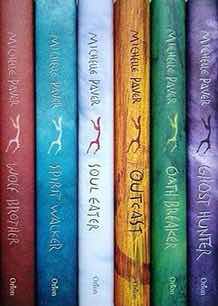
As a collector, as well as a reader, of children’s books of this quality, I am delighted that. Despite the intervening years, publisher, Head of Zeus,, have continued the format and design of the original set of novels, which came out under the’Orion’ imprint. This has given us a most elegant matching set of hardbacks, enhanced by the clever designs of John Fordham, which skilfully depict the characters with an extreme stylisation that captures something of the essence of cave paintings. Even more to be celebrated are Geoff Taylor’s internal illustrations. His superb chapter head vignettes have always been, for me, a vital and integral part of these volumes and it is a major regret that he has never been more prominently acknowledged on the cover. He evokes the world of the story, and particularly its creatures, with great sensitivity. He has a particular talent for capturing the body language and looks of the wild animals he depicts, expressing exactly the appropriate instincts and responses for the story, without ever in any way anthropomorphising them. That his drawings so perfectly and evocatively complement the essence of the narrative is a perfect testament to the quality of both.

We are now promised a further Wolf Brother novel to follow this, called Skin Taker, due, we are told, in 2021. Now that one, when it eventually arrives, will indeed be ‘long awaited’, by me and, I am sure, countless others.


Monday, 6 April 2020

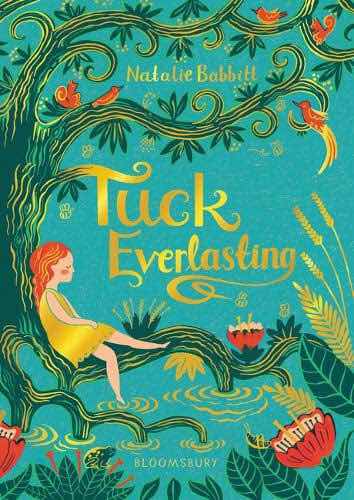
Recent reissue of Tuck Everlasting by Natalie Babbitt


A classic amongst classics

I am thrilled that Bloomsbury have just published a brand new edition of this book for the UK market, putting it in the way of a new generation of children. The phrase ‘timeless classic’ is probably overused, certainly in book promotion, but Natalie Babbitt’s children’s novel from 1975 fully deserves this title. I would, without hesitation, include it in my top ten works of children’s literature. It has a period setting too, so has not dated in the slightest.

Over and above innumerable other qualities, which have already been rehearsed many times, two, for me, stand out. Firstly, without being in any way pretentious, the author’s use of language is quite breathtaking. Her book contains some of the most stunningly evocative descriptions to be found in children’s literature. Secondly, and perhaps most important of all, Tuck Everlasting is one of only a very small handful of novels for a young audience that tackle human life’s biggest questions in a profound yet totally accessible way.*

It may not be a book for every child. It needs sensitive and thoughtful reading. Its deeply moving and lyrical narrative is compulsive, but by way of engrossing intrigue rather than visceral excitement. However, it is a novel that has enriched the lives of many children and I hope that it will now do so for many more. It probably should be on the ‘bucket’ reading list of many older readers too. Ignore the movie and musical theatre versions, which are travesties. Read the book. Here’s another chance.

Note 
* Others than come immediately to mind are:
The Giver by Lois Lowry
Once by Morris Gleitzman 
Bridge to Terabithia by Katherine Paterson 
Orphan Island by Laurel Snyder
The Blue Cat by Ursula Dubosarsky 
There May Be A Castle by Piers Torday
How I Live Now by Meg Rosoff

Thursday, 19 March 2020

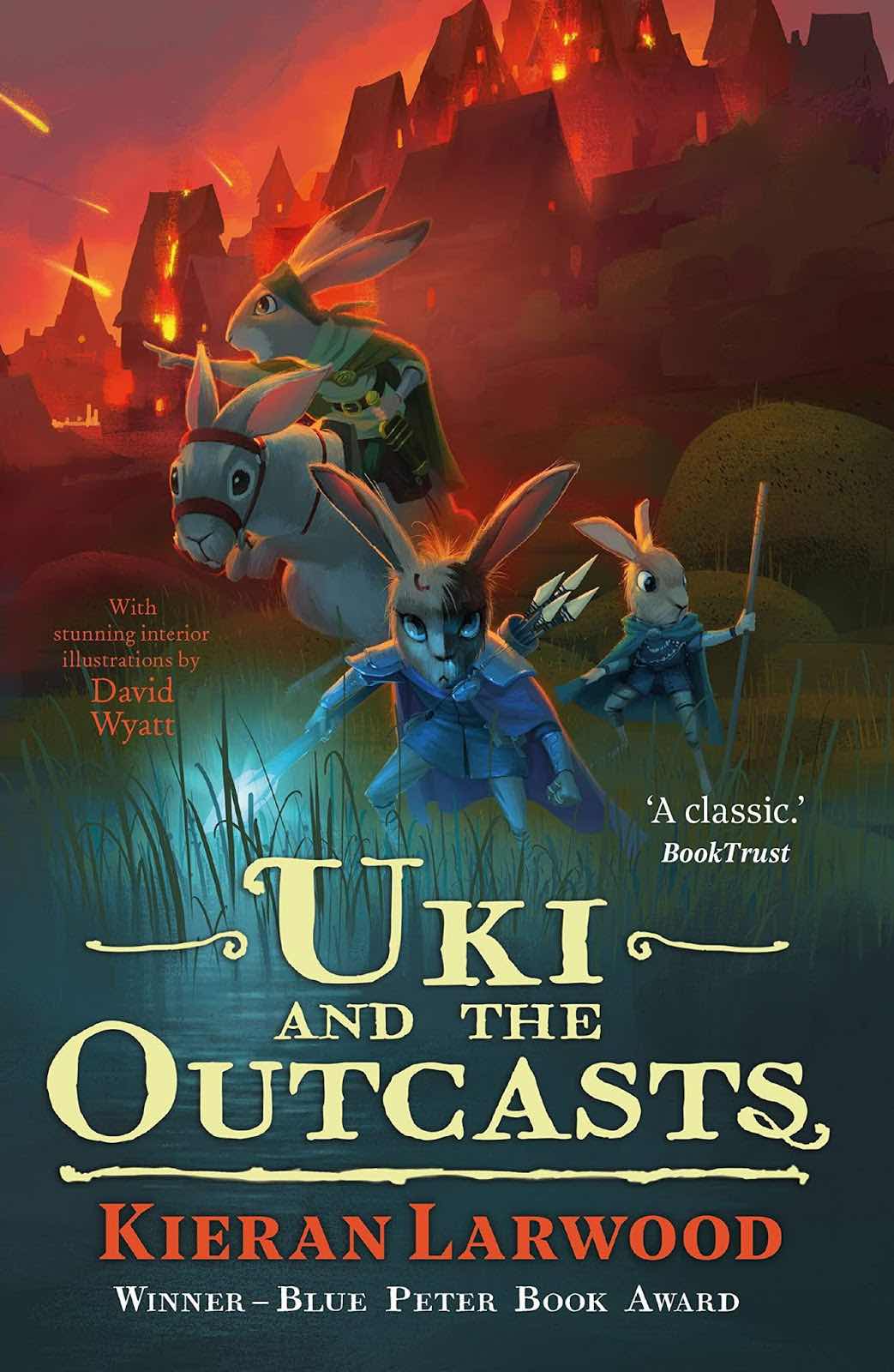
Uki and the Outcasts by Kieran Larwood


Cover: Fernando López Juárez      Illustrations: David Wyatt

‘We’ve all lost, or escaped, or been cast out by our real families. But we have each other. We take care of each other and worry about each other and protect each other. . . That’s what makes a family. Trust and love.’ (p 370)

What I know to be wonderful

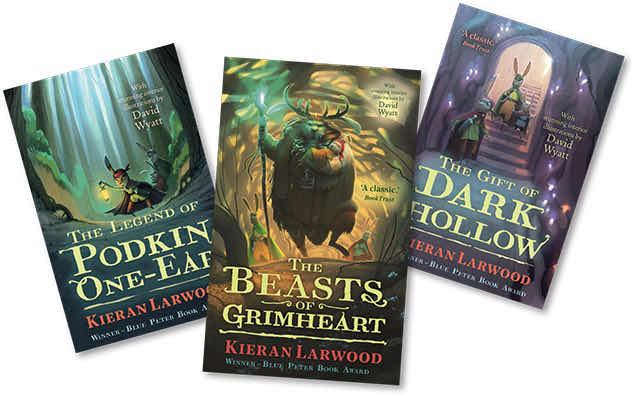
After finally reading a much anticipated new title from a favourite author (see previous post) I find it can be difficult to find the next special thing. So it has been this time. For several weeks recently I have thrashed about trying to read new children’s titles without finding any that really hit the spot for me. So I have ended up returning to another old favourite author, Kieran Larwood and his Five Realms. Actually ‘old’ is not strictly accurate, here, since the first in the series, award-winning The Legend of Podkin One-Ear, has only been around since 2016. What I suppose I mean is that I caught up with the latest title in a series that I have so far enjoyed enormously.

High fantasy rabbit style

I know of no other recent writer who has brought high fantasy so convincingly or so accessibly to a children’s readership as has Kieran Larwood. And how has he achieved this so successfully and so excitingly? He has done it by keeping many of the classic conventions of the ‘sword and sorcery’ genre (although moderating its violence appropriately) but replacing its human characters with rabbits. Make no mistake though, this world is nowhere close to Beatrix Potter or Jill Barker. This author very rapidly establishes his rabbits as totally credible characters in a totally credible, and engaging fantasy world. Nor either, though, is Kieran Larwood a successor to Richard Adams, whose rabbits, whilst endowed with anthropomorphic language and emotions, retain many of the instincts and behaviours of their lapine nature. If anything the Five Realms titles are closer to inheriting the mantle of the hugely entertaining series of Redwall books, written by Brian Jacques between 1986 and 2011. In just the same way as Kieran Larwood’s rabbits walk and talk and wear human-type clothing, including, many of them, armour and weapons, so they take on the qualities and characteristics  of high fantasy heroes, villains, bards, guards, and all the other types of humanity that typically inhabit high fantasy. So typically of this genre, they are convincingly to be found travelling the various lands of a hand drawn map that stretches from icy, saw-toothed mountains, past dark forest, mist marshes, and barren plains, down to the endless sea. 

Having made the comparison, though, it needs to be said that Kieran Larwood’s stories are in many ways both subtler and deeper that those of Brian Jacques’ rumbustious, epicurean and often belligerent rodents. He is the finer writer too, both in his command of language and in his manipulation of narrative structure. His central stories are framed by narration from a bard, and even though his mythology is invented, he is able to capture something of the language and ethos of oral storytelling, and make his culture of legends and magic feel authentic, at least for the time the reader is immersed in his world. And immersive it certainly is, engaging and exciting. Just immensely enjoyable reading.

Now a second trilogy begins 

Having essentially completed the story of Podkin-One-Ear, at least for the moment, over the first three books, in this latest instalment Kieran Larwood seems to be starting a new trilogy, within his overall ‘Five Realms’ series. Although linked by the framing narration, we are now introduced to a new set of heroes and a new quest. And a fascinating and engaging trio they are too. Their story immediately grabs  attention when protagonist, young Uki, starts the tale newly dead and buried. I don’t think it is too much of a spoiler, though, to  reveal that he doesn’t remain that way for long, and that his ‘ resurrection’ soon lands him with a magic quest, as well as some equally remarkable new powers. He is rapidly  joined by two equally endearing companions. One is the apparently self-confident reformed poisoner, Jodi, with a potential superpower of her own, albeit used at devastating cost. The other is the  even younger and tinier jereboa-riding Kree. Their adventure is an immediately engrossing one, and its  structure as a story orally told by the bard to his apprentice provides the actual author with opportunity to create dramatic cliffhangers, whilst he temporarily leaves off Uki’s take to developing the events of his framing narrative. This he cleverly weaves in, with the two levels of storytelling actually beginning to draw together in intriguing ways. It is all quite brilliantly done.

Important themes

What makes these books, including this latest, even more special is that there is actually a good deal more to them than just entertaining adventures. The author has considerable sensitivity and beneath the surface of high fantasy subtly introduces and develops several themes important to his young readers and their own world. ‘Magpie’ Uki has a outward appearance that is odd in terms of his own rabbit society. He is half white and half dark, his body fur literally divided down the middle, which makes him a scorned and rejected outcast. His two companions too are each outcasts in different ways, and all have to learn to respect and value themselves in the face of rejection by others. Friendship and loyalty play a strong part in the story’s development, and, although the situation in which they find themselves is one of developing war, their quest, and with it the underlying moral stance of the book, is about stopping war, not winning it. 

David Wyatt

For me, and, I suspect, for very many readers, David Wyatt’s superbly evocative interior illustrations have become an essential element of this series. The latest volume is no exception. His skilfully detailed greyscale images, succeed, in their own medium, in echoing the remarkable achievement of the text. That is, they populate a high fantasy world with rabbits with a convincing conviction that make suspension of disbelief remarkably easy. He avoids any hint of tweeness or sentimentality and makes Kieran Larwood’s rabbit characters come as alive as if they were human, sometimes evoking real empathy, at others quite terrifying. His is a prodigious talent, and both author and readers should be enormously grateful for his contribution. 

To be continued

Perhaps it is to be expected that this whole new book ends with a cliffhanger too. But whilst this is temporarily frustrating, it is overall a good thing. It means there is more to come in the story of Uki, just as there was with that of Podkin. I wonder, if, in fact, the two may end up being more closely related that as yet appears. The Five Realms series is a wonderful achievement by Kieran Larwood and a fine gift to young readers. Nine to twelve year olds who currently have time on their hands could do far worse than to spend some of it in this rabbity world - and perhaps some older readers too.