Here are the occasional reflections of a joyful traveller along the strange pathways of fantasy and adventure. All my reviews are independent and unsolicited. I read many books that I don’t feel sufficiently enthusiastic about to review at all. Rather, this blog is intended as a celebration of the more interesting books I stumble across on my meandering reading journey, and of the important, life-affirming experiences they offer. It is but a very small thank you for the wonderful gifts their writers give.

Sunday, 24 April 2022

News: ‘From the Story Chair’


Still some issues

From time to time I am asked by Primary teachers for recommendations of books to read aloud to their classes. I usually respond directly and suggest some of the excellent existing websites, blogs and other resources where recommendations can be found. 

However, several adviser and consultant friends, currently working in schools, continue to express concerns to me that some teachers are overwhelmed by the vast number of books available and still lack confidence in choosing them. Although reading aloud and supporting reading for pleasure are enjoying a wonderful renaissance, there are still some teachers who are hesitant to devote curriculum time to reading aloud and, when they do, only read from a very limited range of books.

New resource offered

I have therefore been persuaded to start a new blog of my own, aimed primarily at these teachers. It offers a small number of recommendations of great books to read aloud, together with my top tips for effective ‘Story Time’. It is based on over forty years of experience, very many as a teacher and adviser, but also as a parent and grandparent, who has consistently read hundreds of children’s books a year, and continues to do so. 

The blog can be found at FromTheStoryChair.blogspot.com

I have organised my recommendations into themes and age groups, but deliberately limited suggestions in each to just a small handful of titles, hoping not to overwhelm with choice. My aspiration  is to add further themes over time, but not to increase the number of suggestions within each theme, This means that the blog is intended as no more than a ‘starter’ resource. I am fully aware that there are so many other great books I have not included and many other fine recommendation sites available.  I simply hope that I might help to set a few more teachers off on the wonderful adventure  of discovery and enjoyment to be found in exploring the world of children’s books, as well as giving them confidence that sharing books with children needs to be a core experience of almost every school day.


Sunday, 17 April 2022

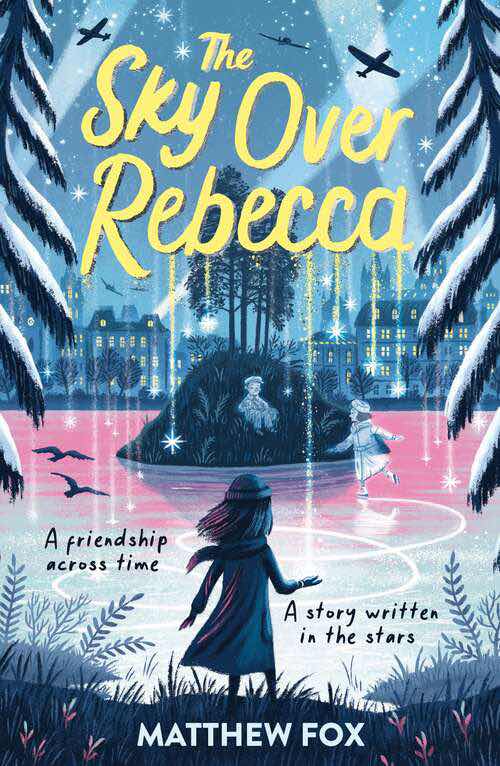
The Sky Over Rebecca by Matthew Fox


Cover: Ben Mantle

‘She knew what was going to happen because it already had happened.’ (p 176)

Refreshingly original

Sometimes children’s books, even good ones, can be rather unoriginal. Perhaps this is not surprising as publishers tend to follow trends. Nor is it altogether a bad thing. What children often want to read is ‘more of the same.’ Nevertheless it is good to come across something that feels refreshingly different. Its setting, in and around Stockholm, where its author now lives, certainly gives The Sky Over Rececca a distinct perspective and atmosphere. We may share the same sky, but here it is seen from unfamiliar ground, through colder air. Its light is light  on snow; sometimes daylight, sometimes electric light, even lamplight, candlelight, or starlight And the change is very welcome. Its buildings too, its environs, have a intriguingly different feel, and this seems to permeate the story itself. However,  location is far from the only thing that makes this a work of rare distinction.

I have seen this novel compared, on social media, to Tom’s Midnight Garden. This earlier title is also referred to in the text as a book much-loved by its protagonist, Kara, so I suppose that reinforces the connection. But, to me, the comparisons are relatively superficial. Yes, both involve time-slips, engender  a relationships with someone from an earlier generation, as well as a good deal of skating. However, rightly treasured though the Philippa Pearce classic is, this feels like a far more complex, multi-themed book. If anything it reminded me as much of Christopher Edge’s wonderful The Longest Night of Charlie Noon. Although, even saying this, I do not wish to detract from the deeply affecting originality of Matthew Fox’s debut.

Affectingly taught writing

The first thing to strike me about this book was the economy of its prose, its almost overly-abrupt style of writing, Much of it is composed in short, clear sentences with frequent line breaks. I am certainly someone who admires economy and precision of language, but initially what felt like the brittleness of this writing rather disturbed  me. It seemed almost as if it had been deliberately written for less confident readers. Yet, as the story unfolds, this rather  fractured prose starts to feel completely right. It begins to reflect the location and mood of the piece very potently. It catches the thoughts and feelings  of its young protagonist, both her uncertainties and her commitments, most affectingly. It evokes some startling events with a powerful immediacy. Ultimately, it develops human relationships with remarkable depth and sensitivity, despite, or more accurately because of, its directness of language and style.

The present past

The characters Klara meets when she slips into the past, Rebecca and her brother, are Jewish children in hiding from the Nazis during WWII. This theme is handled with compassion and strongly promotes the importance of remembrance. However, this is not essentially a war story, or even a story about war. It is a story about time, its mystery, its fragility, and the way the past is intimately interwoven into all aspects of life. The time jumps experienced by the characters in the story are not altogether logical, but then that is the point. This is not an intellectual exploration of the concept of time, it is rather a subjective, emotional experience of the power and presence of the past. It is almost metaphysical. As T. S. Eliot wrote, ‘All time is eternally present.’

Death and life

This is also a book about death. It explores both darkness and death. It contains several deaths of characters hugely significant in Klara’s life. But it is not a morbid book, nor a depressing one, and it is  certainly not a sentimental one. For, just as the past finds a way into the present, so do lives lost in the past, distant or recent. Those who have died are part of our now, whilst we remember them.

It is also a book about light and life, love and friendship; the love of mother and daughter, of a grandfather and granddaughter, the real friendship of two girls who meet across time, and of a girl and a former bully, who once fought each other, but do so no longer. 

Stardust

It is a very fine book. It has much to say to us that is beautiful, happy-sad, brilliant-dark. It tells us the time that separates us from the stars is vast. However, it also tells us that the time that separates us from the past is but a sheet of ice. Sometimes we can see through it vaguely, sometimes it cracks. The time of the stars and the time through the ice are the same time. They are our time, for we are all stardust. Parts of the past are here in the present. We must light a candle for them. The candlelight and the starlight are the same thing. The sky over Rebecca is the sky over us all.

‘Astronomical twilight.
The stars were out.
Lars held the candle. . . .
The flame shivered for a moment and guttered, and we thought we’d lost it, but it held.
It stayed alight, sheltered by our hands.’   (p 269-270)

Tuesday, 12 April 2022

Wished by Lissa Evans


Cover art: Sarah McIntyre

Classic in more ways than one 

Having already penned a couple of entertaining children’s books (as well as some very successful novels for adults), Lissa Evans hit the children’s fiction jackpot in 2017 with Wed Wabbit, a very funny, whimsical adventure with a good deal of heart that will be a much loved element of many a childhood for years to come.

Now this very talented and skilful writer has produced another strong contender for children’s modern classic status. There are many ways in which this book is reminiscent of the older classics of Edith Nesbit. Not that her works are at all similar in setting. Wished is markedly contemporary in its characters and their thinking, whilst the E. Nesbit titles are very much of their time, rooted in the style and social milieu  of over a hundred years ago. Of course, there is much that remains common to childhood, across time.But it is not really that.

It is more that a storyline where children discover a magic item (or meet a magical creature) that grants wished, leading to a series of fantastic and sometimes unintended mini-adventures, is very much the sort of plot basis for Edith Nesbit too. In fact, the wishes theme is actually one that can be found in far more ancient and traditional stories from around the world too. This is, however, very much not a criticism of Lissa Evans’s new book. Quite the contrary. It is wonderful for today’s children to have some of the traditions of children’s literature reinterpreted and explored for their own time, in fully contemporary idiom. In this, it creates a reading experience that is rooted and resonant at the same time as it is immediate, accessible and hugely enjoyable.

Enchanting read

This is exactly what this author very much provides - and she does it quite wonderfully. Her characters and their attitudes are ones with which a wide range of children will readily identify. In this tale, where the children use the wishes from a set of forgotten birthday candles, both action and dialogue are often very funny indeed, not least the contributions from Attlee, a cantankerous (and exceedingly smelly) old cat, who gains the power of speech after one of the wishes. Lissa Evans keeps the whole narrative moving and very much alive by establishing a pattern of action following each wish and then subsequently subverting it in surprising ways. The whole is excitingly unpredictable and a feast of quite delightful imagination.

Inclusion too

This story has another very significant plus, though, in that one of its main characters is a boy who uses a wheelchair. These days, the range of diverse representation in children’s books is, thankfully, improving all the time. However, whilst there are now some outstanding representations of neurodiversity especially autism, as well as greater ethnic diversity, physical ‘disability’ is perhaps still under-represented. I see illustrations of children with wheelchairs in a good few picture books (especially from publishers like Barefoot Books), but far less of them as protagonists in mainstream fiction.And here the behaviour of Ed, the boy in question, is not in any way presented as a ‘handicap’. Apart from a very few practical limitations, he is an active participant in all aspects of the story’s action, as well as a fully and naturally accepted member of the protagonist group of three friends (plus cat!). As with all such welcome examples of inclusivity it is important for similar children to be able to find themselves in books and their sensitive representation helps other children develop awareness and empathy. 

Hearts and minds 

Overall, this is not a story for readers seeking to explore the harsher realities of real-life experience. Rather it is delightful escapism, that nevertheless has much to teach, not didactically, but through truthful modelling of believable children and a denouement that is both warm and wise. If the book has a moral, then it isn’t simply, ‘Be careful what you wish for.’ It is, rather, a far more positive urging to life, courage, and determination: ‘Don’t end up regretting things you wished you’d done, and could have done, but never did.’


Cover: Sarah McIntyre

Monday, 4 April 2022

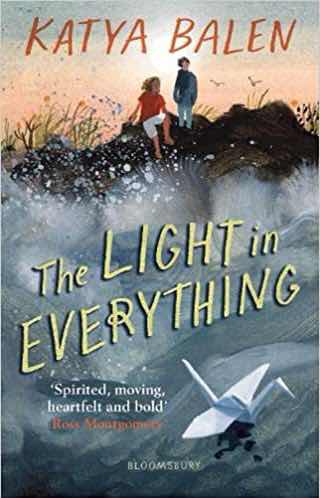
The Light in Everything by Katya Balen NOW OUT IN PAPERBACK


Cover: Sydney Smith

Quite some writer

You can very often tell from the first few pages of a book that you are in the presence of a truly wonderful writer. And so it is with this one.

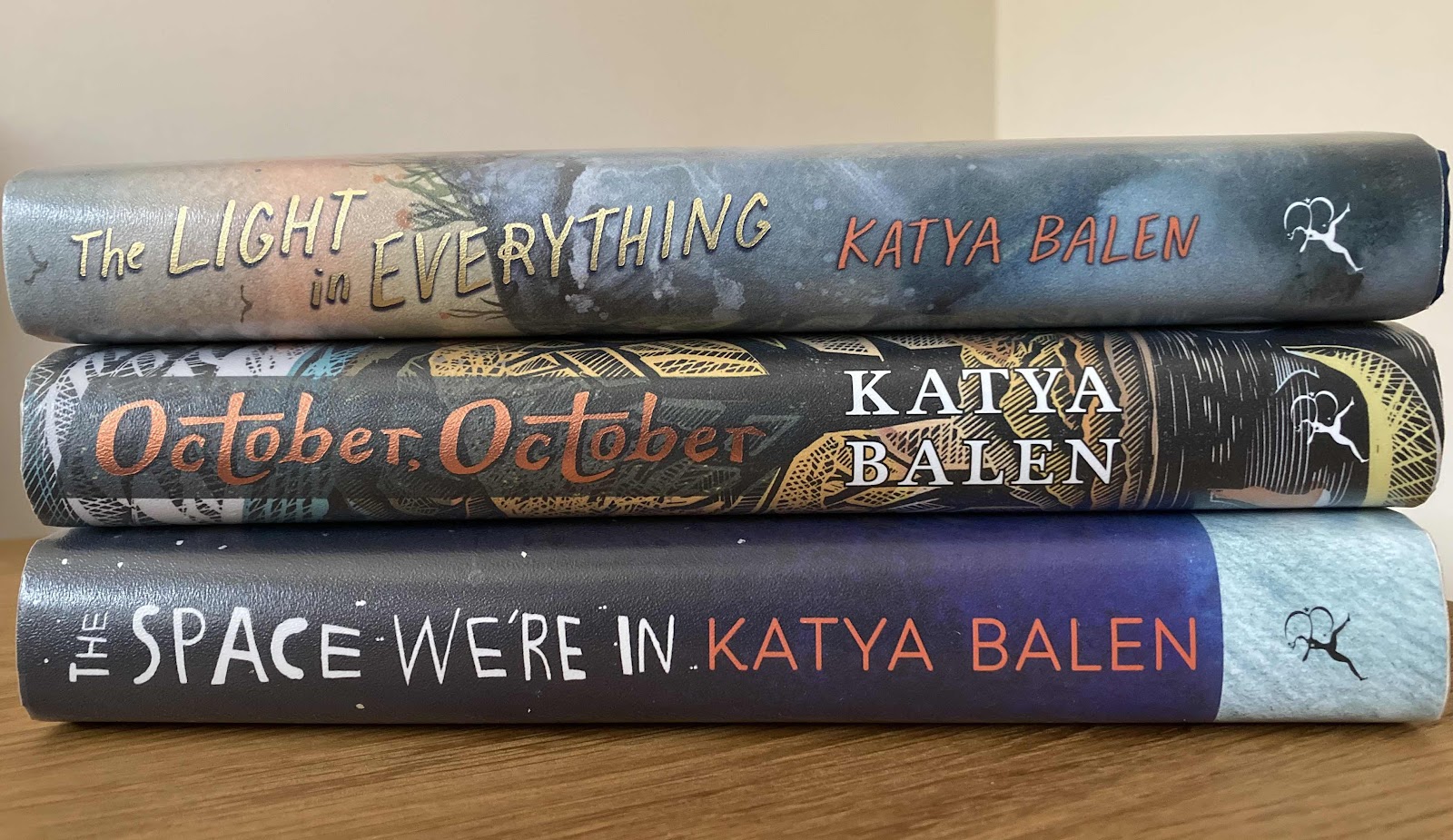
Katya Balen’s first book, The Space We’re In, is a heart-rending little masterpiece of sensitivity towards neurodiversity and family love; a celebration of specialness. Her second, October, October, is, in my view, one of the finest works of (children’s) fiction written in the past twenty years or so, a peon to nature and a profound exploration of what it means to live in balance with it, and ourselves.

I therefore opened this, her new third book, with almost breathless trepidation. I so desperately hoped it would be as good as the others, but was genuinely afraid that it was really too much to expect. Was I heading for disappointment? No such thing. Katya Balen has a rare ability to create economical prose that communicates with incredible power and effectiveness, crafting words that are simple enough in themselves in ways that spark novel, evocative and often very potent images. Combined with this, she has quite remarkable insight into the minds of children, particularly those undergoing trauma, and can lay their thoughts and emotions bare with devastating poignancy.

‘That new strange feeling is growing shoots and leaves and I try to scream it away.’ (p 39)

‘He shrinks back into his chair like he is made of liquid and will soon be smoke.’ (p 44)

Darkness 

The book’s two, initially unrelated, protagonists, Zofia and Tom, have each learned to cope with their very different issues in a single-parent context.When they are thrust unwillingly together through the partnering of their respective father and mother, it hugely exacerbates their  problems. Within this heightened context, Katya Balen explores, with great understanding and sympathy, some of the damaging consequences of violent domestic abuse that injures far more deeply than bruised skin or broken bones, as well, as issues around anger management, the trauma of change, and deep insecurity.

For those readers who identify strongly with the two protagonists (and given the quality of this author’s writing it is hard to imagine many who won’t) this is a hyper-intense and deeply affecting emotional journey. The alternating internal monologues of the two children allow us to appreciate both perspectives, even whilst understanding how and why they are in conflict. This, combined with the short sections, hurtles us through their story, with a desperation to seek resolution even as it combines with growing trepidation at the way each child’s issues only serve to aggravate the other’s. It is all quite brilliantly, if devastatingly, paced and developed by this breathtakingly skilful writer.

Light

Although it is in large part a disturbing and rather dark book, its conclusion is wonderfully uplifting, positive and reassuring, as is fitting for this age of readership. Although darkness permeates the story just as much as it seeps from the cracks between the floorboard of Tom’s bedroom, it does ultimately not only reveal, but also celebrate ‘the light in everything’.

There are now a good number of fine children’s book that focus on bullying, a real concern for many children.  Indeed, a hurtful lack of understanding from other children features movingly here in respect of Tom’s experience at his previous school. However, it is good to see that Katya Balen balances this with a warmly supportive peer group, school and community in his current situation, which, thankfully, can also sometimes be found in life.

Beautiful jacket too

Just as I thought the book itself would be a hard act to follow, I felt the same about Angela Harding’s cover art for October, October, which was both sumptuous and apt. Again my fears have been completely allayed. Sydney Smith’s very different, but equally stunning, jacket for The Light in Everything captures beautifully the subtle, emotive power of the story. Katya Balen is fortunate to have been paired with two such talented artist/ illustrators (three when you include Laura Carlin for the first book) and it is good that they are prominently given due acknowledgment on the respective jackets, which is not always the case.

The light in everyone

Producing three completely outstanding titles in a row is a remarkable achievement from Katya Balen, who certainly now deserves to be considered one of our finest writers for children. This latest book should be high on any list of titles promoting empathy. It is not a book for young readers who seek only the entertainment of high-octane, escapist adventure or raucous comedy. However those who approach it open-mindedly will be compellingly absorbed and leave it deeply affected, with a richer understanding of others, and perhaps themselves. Katya Balen is a writer who illuminates the light in everyone. 


Saturday, 26 March 2022

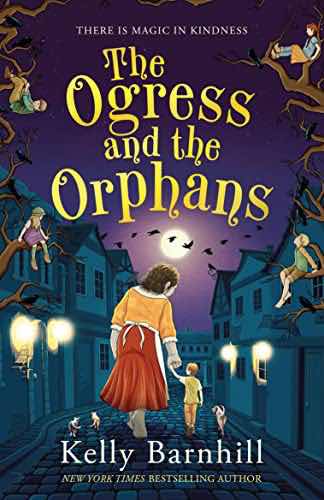
The Ogress and the Orphans by Kelly Barnhill


UK paperback. Cover illustration: Amanda Yoshida

Some of our finest contemporary children’s fiction writers come from the USA and Kelly Barnhill is most certainly one of them, with a canon of outstanding work already to her name. (See my reviews of  The Witch’s Boy from July ‘20 and The Girl Who Drank the Moon from January’17.)

Kindness is everything 

‘One good person can inspire other people to do good things. . . With good, the more you give, the more you have. It is the best sort of magic.’ (p 314)

As flagged by some of its cover quotes, her latest novel,  The Ogress and the Orphans, can be thought of as a charming piece extolling the role of kindness in making our world a better place. It is indeed this, and its message is both true and vital. Yet, being the quality of writer she is, there is a good deal more to Kelly Barnhill’s book than such an overview implies.

Slowness is everything

Quite a number of published travel guides promote the benefits of ‘slow’ travel, where this adjective is intended as a very good thing. Their strong and potent philosophy is to take the time to really notice the features and qualities of places, to relax into them appreciatively, rather than to rush through just ‘ticking them off’.

The Ogress and the Orphans is very much a ‘slow’ novel in exactly this same beneficial sense. At a superficial level, its plot is relatively slight, and such developments as there are pretty predictable. In fact most key plot points are clearly flagged to the reader well in advance. Indeed there are even several instances of prescience by characters themselves. There is one big surprise held back until very near the end, although I think more perspicacious readers will have worked that one out for themselves too. ‘The orphans will save the day,’  announces one character, early in the story. And the reader knows they will. And they do - with a little help. It is that sort of book. All very nice. So what is it that makes this reasonably long novel so very engrossing, which it undoubtedly is?

It is so engaging because it is slow enough for the reader to notice all the felicities of the intriguing way the narrative is structured; slow enough for the intricacies, the subtleties of character to come to light, and for the reader to completely invest in the story. The breathtaking description of the first visit of the Orphans to the house of the Ogress, which takes up almost the whole of Chapter 42, is a perfect example of this ‘slowness’, capturing with effecting simplicity what feels like every previous moment of this crucial encounter.

Whilst the malevolent ‘dragon’ has no redeeming features, all the other characters (‘good’ and ‘bad’), ogre, proxy parents, crows, and even the townspeople are interestingly ambivalent, vulnerably ‘human’. But above all, the diverse group of orphans, with their varied personalities, talents and insecurities are most vividly and endearingly drawn. They are so well intentioned, so clearly the hopeful instruments of an optimistic outcome, that we identify with them and share every stage of their endeavours, somehow desperate for the denouement to be positive, even though we expect it will be.

This story cleverly takes characters and tropes from the world of Fairy Tale and skilfully recrafts them into a multi-perspective, thought-provoking journey, far more nuanced than might be expected from its basic components. Yet, despite its strong moralistic purpose, it always feels like an enchantment, never a lecture. It’s language is never over-elaborate or obscure, yet its evocative, immersive world-building leads the reader deep into the experiences of the conjured images and, equally, into the thoughts and emotions so richly explored. 

Stories are everything

Amongst other telling themes, The Ogress and the Orphans is a peon to the power and potency of books and an impassioned plea for the maintenance of libraries as the cultural heart of communities. For the town that is the focus of this tale, it is the willyfully wicked burning of the library that instigates its descent into intellectual, emotional and social decline. However, the fact that some books were saved and form a central element of life in the Orphan House helps to keep the protagonist orphans separate from the culturally impoverished community around them. And, ultimately, it is the creation and redistribution of books that provide the very potent seeding of renewal.

‘The next day , people in the town work up to find that someone had carefully placed an object on their doorsteps. . . . A tiny hand-stitched book. . . Each one was astonishing - a small, lovely little marvel. (p 323)

Inclusion is everything

Alongside this, the novel gives enormously strong and positive messages about inclusion. Its chronicling of reaction to the one character who (quite literally) stands out as different, the Ogress, goes straight to the heart of both narrow-minded prejudice and open-hearted acceptance. Whilst the orphans, and indeed the crows and other creatures,  instinctively respond to the Ogress with true humanity, regardless of superficial difference, for the initially prejudiced people of the town, the story is a journey towards realisation of just how much is being brought to their community by the ‘outsider’ who is really a neighbour.

Dragon slaying is everything

Perhaps most pertinent of all, however, this story is an only very thinly veiled allegory about those abominable leaders who, through a show of superficial charisma and powerful personality, entrap whole communities into passionately supporting them, whilst actually serving only their own selfish and power-crazed ends. In the character of the mayor-dragon, the author personifies those all-too-recognisable ‘leaders’ who whip-up hatred by playing on many people’s propensity to prejudice, and who re-interpret reality to suit their personal ends, labelling the actual truth as ‘fake news’. This dragon feels terrifyingly familiar when he asks:

‘Should things not be true simply because he said they were?’ (p 354)

Beneath the ‘golden’ popularity of his exterior:

‘He would make more signs. He would ban books. He would end their questions. He would make people hate the Ogress. By any means necessary. Everyone would love him again Everything would be as it should. Even if he had to burn the whole town to the ground.’ (p 359)

We have seen him before. We will see him again. There is great comfort offered here in the Orphans’ ability eventually to oust this dragon. But the author wisely, if worryingly, leaves the door open for his return. The people of Ukraine are, as I write, devastatingly and tragically aware of the reality that lies behind this allegory. This is no Fairy Tale. We must look to the ‘Orphans’, to our children, for a better future, however distant and difficult to achieve it may currently seem. Books like this one play a key role in nurturing that hope.

Time is nothing 

On yet another level, this is a deeply philosophical book. Yet this aspect too is handled in a way that will reach young readers, and mean much to them. Aptly, for such a ‘slow’ story, it encompasses a rich exploration of the concept of time itself. To use the author’s own words, from her  closing ‘Acknowledgements’, this story itself  ‘is a process: it bends time, expands space, and allows the universe to invent itself, and re-invent itself, again and again and again,’ It has to be read to be experienced. And the time spent reading it is integral to the experience itself. Its slowness is not slow at all.

Stories in stones

The town in which the story is set is called Stone-in-the-Glen. At the heart of the town is an ancient stone, neglected and buried by the town’s rubbish. But the stone has writing on it and when the children touch it it tells them stories. The stories help them understand.

‘I sat on this stone and . . . well, my mind went all funny. I saw things that I shouldn’t have seen and remembered things that I shouldn’t remember. And then I forgot the things I had seen. Just like that, my mind went blank. But bits and pieces have come back, and I feel as though they are important.’ (p 340)

Kelly Barnhill’s book is such a stone. 

More than anything

The Ogress and the Orphans is a significant contribution to children’s literature. It is also a significant contribution to humanity. It does not matter if children reading it miss some of the nuances of this wonderful writing, Words read cannot be unread. The images of story, particularly ones as potent as these, live long in the memory, affecting thought and behaviour, even if subconsciously.

They remembered that a story, in the mind of the reader, is like music. And discussing stories among other minds and other hearts feels like a symphony. They remembered how ideas make their own light, and how words have their own mass and weight and being.’ (p 327)

Books, children. Children, books. Books for children. Allowing the universe to re-invent itself. Please, Kelly Barnhill, do not stop writing. The loss of even one writer of your calibre is something our world and its children cannot afford.

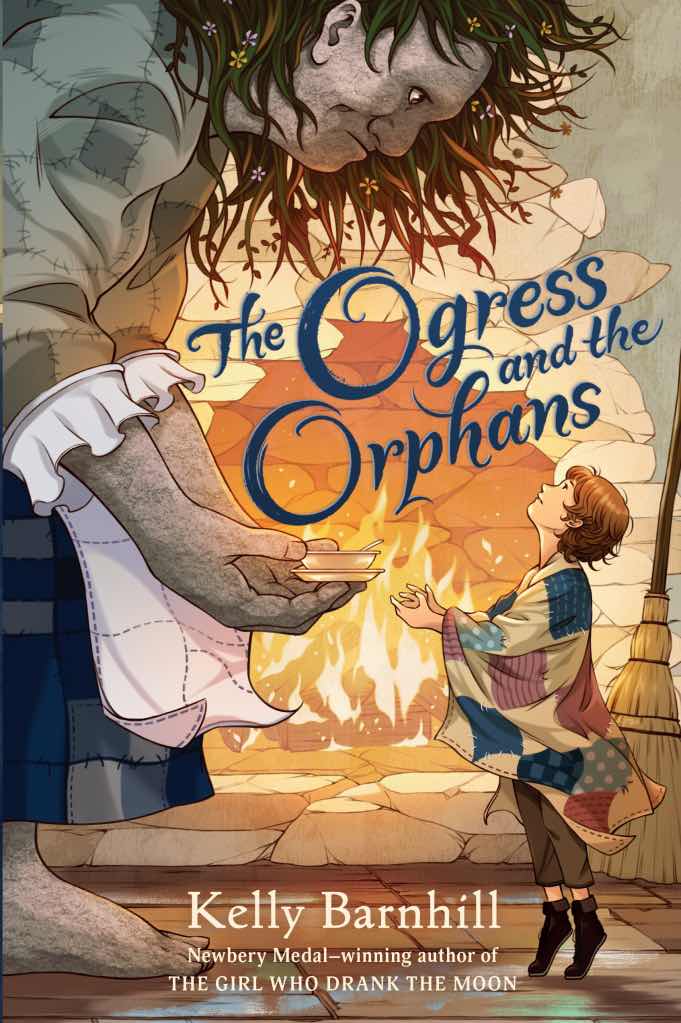
US edition. Cover art: Yuta Onoda

Thursday, 10 February 2022

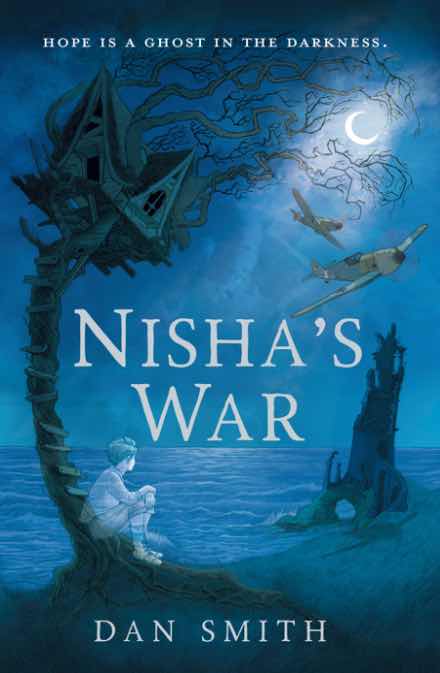
Nisha’s War by Dan Smith


Cover: Matthew Land / Steve Wells

Joining the ranks

The Second World War, especially the UK ‘Home Front’, has served children’s fiction very well as subject matter. Or perhaps that should be vice versa. Whichever, it would be easy to compile a substantial list of wartime-set books that not only provide outstanding reads but also serve to sensitively bring awareness of this terrible period to new generations. ‘Lest we forget.’ It is important.

However the sheer number of already existing great books in this area make it difficult for authors today to offer true originality and provide fresh perspectives and insights into the period. One recent offering that succeeded brilliantly in exactly this was Phil Earl’s When the Sky Falls. Now, in a quite different, but equally affecting way, we have another.

Best yet

Dan Smith has previous written two MG wartime novels, My brother’s Secret and My Friend the Enemy. Both are outstanding reads and very effectively raise questions about who is or isn’t an enemy. Yet both could justifiably be called conventional war stories. Nisha’s War is markedly not conventional and is a particularly fine novel as a result. It is a strange amalgam of elements, but that is its strength, its power. It is in many ways more sensitive than this author’s  earlier work, more nuanced, more layered. 

The main strand of the narrative is set on an small island off the Northumbrian coast which owes much to the geography of Lindisfarne, especially in its tidal causeway to the mainland, although in many respects fictionally transformed. At this remote and rather desolate place a young girl, Nisha, arrives as a refugee from her previous home in war-torn Malaya, having escaped through Singapore. In a darkly lyrical story, she attempts to ensure a favourable outcome for her herself and her desperately ravaged  family through interaction with the island’s mysterious child ‘ghost’. This not so much a supernatural story, though, as a mystical one that explores Nisha’s journey towards acceptance and hope through a multi-layering of metaphor and emotional reality.

More than just a war story

The novel is, however, yet richer. The island narrative  strand is counterpointed by a horrifically realistic diary account of Nisha’s evacuation from Singapore which involves scenes that very strongly pre-echo recent news images of the appalling desperation at Kabul airport. This gives the story both grounding in the grim events of WWII and considerable contemporary resonance and relevance. Nisha’s War is a story about a refugee, and the need for acceptance in a new country,  as much as it is about the war itself.

The mixture of historical and specultive fiction (almost magical realism) could be a confusion for young readers, but here it is so well handled by Dan Smith that distinctions are perfectly clear. The imaginative elements of this story only serve to enhance and extend the impact of it underlying reality. It is insightful, engaging and deeply moving.

As befits a novel for young readers, the outcome is positive and encouraging, without being over-sentimental. The whole is a triumph of intelligent fiction, made accessible for children, and Nisha’s War joins the finest examples of children’s literature on these important themes.


Final note:
Dan Smith is a prolific writer and his output is a smorgasbord of fiction for different audiences and tastes. Also in the children’s category, his She Wolf , set in Viking-invaded Northumbria, is a great read and a brilliant choice for bringing this distant period of our history to vivid life. Very different, but outstanding of their type, his Crooked Oak Mysteries would be excellent for enticing less experienced or reluctant readers. Indeed, they will provide exciting escapism for any children needing it, as most do at some time or other.

Friday, 4 February 2022

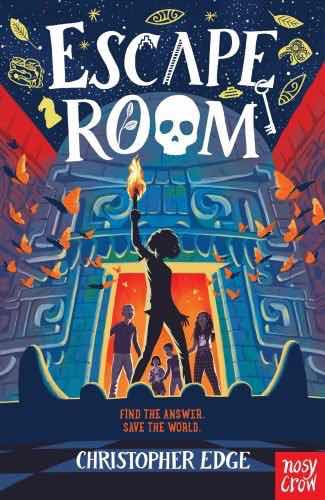
Escape Room by Christopher Edge


Cover art: David Dean

‘The Neanderthal stares blankly at me. In the darkness of his eyes all I can see is my own reflection.’ (p153)

Game on

This Escape Room has many levels.  As a game it is puzzling, fast-paced, engaging, unexpected, and intensely thrilling. Yet the story’s protagonists are participants as well as players, and, for them and the empathetic reader,  it is perplexing, disturbing, terrifying, devastating and literally a matter of life and death. Further still, Christopher Edge is no writer of simple pot-boilers. Through a whole sequence of recent brilliant novels, he has more than proved himself as an ingenious, imaginative and deeply concerned writer, asking some of life’s biggest questions. This book is also a journey through ideas, provoking and probing at levels far deeper than those of the arcade.

Like others of his recent titles, it holds many surprises, shocks, twists and revelations, that it would be wrong to reveal in a review. It is tempting to say simply that this game is not what it seems, but even that is not completely true, because, as the reader of the book, and the players of the game, are repeatedly told, there are clues to be found throughout by those who have eyes (and minds) to see.

And the winner is

Every stage of the story is loaded with the most vivid and powerful images, products and stimulants of rich imagination. Images of what? That is for each reader to decide. But who, for example, can miss the butterflies. They not only crop up unexpectedly in the text, but it is they, and not vicious monsters or resurrected corpses. that swarm across every chapter head. Are they fluttering towards Escape?

For Christopher Edge Escape Room is a multiple triumph. It will fly from the shelves and into children’s imaginations as a crazy, thrilling, rip-roaring ‘Indiana Jones’ adventure game. (Supported by David Dean’s outstanding cover.) However this new novel also further confirms this author’s already outstanding reputation as one of our finest contemporary children’s writers, original, thoughtful, provocative - truly psychedelic. Having been drawn in by the game, many young readers will understand that it isn’t a game at all; that it isn’t about finding the answer and saving the world, it’s about finding the answer and saving the world.

Christopher Edge is a certain winner here, but even more so are his young readers.