Here are the occasional reflections of a joyful traveller along the strange pathways of fantasy and adventure. All my reviews are independent and unsolicited. I read many books that I don’t feel sufficiently enthusiastic about to review at all. Rather, this blog is intended as a celebration of the more interesting books I stumble across on my meandering reading journey, and of the important, life-affirming experiences they offer. It is but a very small thank you for the wonderful gifts their writers give.

Wednesday, 16 September 2020

Catching up on Sharon Creech


Unmissable US children’s author

Sharon Creech is a US author with a fully deserved international reputation. Her best known novel, Walk Two Moons, from back in 1984,  won the Newbury Medal. It would  unhesitatingly go onto my list of greatest children’s books and is one of those that I hope that every child will encounter sometime during their growing  years (and come back to later, as well). It is not one jot less fine, moving or memorable a read now than when it was written.

She went on to become the first ever American author to win the UK’s prestigious Carnegie Medal in 2002, for Ruby Holler. With now more than twenty stand-alone titles to her name,  many quite individual in character, it is inevitable that some will be more to some readers’ taste than others. However she is a truly fine writer and everything she crafts carries her own distinctive mark of quality. Yet, despite her reputation, she is not always as prominent in British homes and classrooms, as I think her writing merits. A couple of brand new UK editions make this a great time to catch up.

A good feeling about Sharon Creech

Sharon Creech generally writes feel-good books. Even when they genuinely and realistically treat of children with issues, as they often do, they are basically warm-hearted. But, you see, the thing  about feel-good books is that they make you feel good. And surely that’s a very good thing. Sometimes we seem to think that to be really great a book has to put us through the emotional wringer, fling us hard into the face of life’s many unpleasant realities. And, yes, we do I suppose need some books like that. But we should not scorn books that make us feel good. Feel-good books can be a wonderful tonic for those feeling low and a security for those feeling vulnerable. 

‘When she  was feeling as if everything was dark and scary and putrid, Dallas would paint word pictures that would fly into her mind and scatter the dark scary things.’ (Ruby Holler, p 196)

And feeling good about life, about our selves, often puts us in a stronger position to try to do something about those bad things.  Feel-good is only a problem if writers leave us wallowing in saccharine sweetness, and Sharon Creech never does that. 

Just out: One Time


Illustration: Jori van der Linde

A lot to teach

Way back when I was a young teacher, I was very influenced by a little book from the early 1960s, a short discourse about her experience in the classroom by Margaret Langdon, called Let the Children Write. I found it very relevant then and actually believe it still has much of value to say, even though the school context described now seems somewhat old fashioned.*

That book was brought strongly back to mind because Sharon Creech’s latest, One Time, also paints a wonderful picture of how much good can be done by a sensitive teacher who understands that children need to be freed to write rather than constrained to do so. Even though this book is more about prose writing rather than poetry, in this respect it has a close link to her earlier  title, Love that Dog. (See below.) It also makes it at least a distant cousin of another wonderful work of children’s fiction about inspirational teaching, Mrs Bixby’s Last Day, by John David Anderson. (Reviewed here March 2019.)

A lot to learn

One Time is a quiet, gentle book. It contains no rollercoaster adventures, no dastardly villains, no magical superpowers. It is a book about a young person and her everyday experiences. Yet through a simple, relatively uneventful narrative it explores life and in a deeply affecting way. It explores people and the way they affect each other, and how some people and some relationships become part of what you are. It explores who we are and what we can become all the more meaningfully for doing so quietly. It uses words to explore words. It uses life to explore life. And in its gentle way, it is quite wonderful.

Themes and influences

Interestingly, in this little book, Sharon Creech draws together many themes and images from her other work. Here there is a boy who appears and then goes again, an Italian angel, a special teacher, a noisy, ramshackle family. But then perhaps, after all, it is the other way around. I will not spoil the end of this very special book by giving it away, but I think those who know this author’s work well may start to get there before she does. They will only love and value this very special book the more if they do. 

May her many influences influence many others, like the reflection of  moonlight on water, when each enhances the other. I feel sure they will.

Much of this story revolves around daily life in an American School. The behaviours and routines of both children and teachers will feel strange to many young U.K. readers. But dig just a little beneath the surface and the children themselves and what affects them will affect our children too.


Another recent book: Saving Winslow


Illustrations: Sarah Horne

Even by Sharon Creech standards, this relatively short book, published in the UK only a few weeks ago,  is something very special. It is certainly a classic feel-good and there is, indeed, much about this story of a boy trying to raise a sickly baby donkey that could have been sentimental.  But it is a deeper, richer, more sensitive story than might appear from a bland synopsis.  And it is so for several reasons.

Louie

One of the principal reasons is the boy, Louie, himself,  for he is a boy who responds deeply and sensitively to the world around him. He is moved  equally by seeing an indigo bunting perched atop a sunflower and by observing a thin, unkempt man lying on a brown wooden bench. He is a boy awakened by strong moonlight, who needs to be reassured that it is nothing unusual. He is a boy who was born very prematurely and believes that he almost remembers the experience. He is a boy who deeply misses his older brother, recently gone off to the army, even though the two are very different in temperament.

In Louie, Sharon Creech creates a character of depth and persuasive humanity to whom the reader cannot help but be drawn.

Nora

Further riches are added in the story’s second protagonist (if you don’t count the donkey, Winslow, in this role, which, actually, you probably should). Nora is a superficially edgy, angsty girl, drawn into what becomes a three-way relationship with Louie and Winslow. Much of her back story is implied as much as stated, but nevertheless has a strong contribution to make to both the impact of the book, and the thoughtfulness that lies behind and within it. 

Simply splendid 

And then there is this highly experienced author’s incredibly skilful use of language. Never heavy or pretentious, in fact  apparently very simple, it draws the reader in with vivid and visceral effectiveness, so that you live so many moments of this touching story with its characters. Never more so than when Louie has to give regular injections to the sick little donkey.  You feel the needle in the animal’s flesh just as vividly as you experience the young boy’s trepidation about performing the procedure. 

This is a book that can please at many levels, from a totally endearing story of a boy’s attachment to a young animal, to an deeply human exploration of separation and loss, common experience dealt with in an individual way. It is another book that as a teacher I would have just loved to share with a class (Y4 or Y5 perhaps?) and one which I believe would lead them into deeper understanding of both literature and life, in the kindest, the most generous of ways. It is a true little gem of a book. Saying something simply is not at all the same as saying something simple. 

Nappies?

Sarah Horne’s illustrations are delightful, and will undoubtedly add to the appeal of the book for many, although they relate more to the superficial charm of the characters that to their rich depths. 

It is relatively rare for an American book to be re-edited for a UK audience (although I think the reverse is rather more common) but this one seems to have been. Perversely, I found it rather disconcerting for American children to be talking about the baby donkey wearing ‘nappies’ rather than ‘diapers’. Nevertheless we should be grateful to Guppy Books for bringing us this big little treasure. 

Too good to miss: The Great Unexpected 


Illustrations: Zdenko Basic

‘How is it you can be close friends with a person, deeply close friends, closer than sisters maybe, and then one day you want that person to disappear off the face of the earth?’ (p 97)

One of the things that impresses me so much about Sharon Creech is that she has written so many different books; not simply that there are so many, but that they are all so very different. Almost all her novels being stand alone, it is hard to say she writes a particular style, or particular type, yet she certainly has a signature. And that signature involves a set of characteristic qualities, the most significant of which is her outstanding skill as a storyteller. In this particular respect she reminds me of the UK’s own Geraldine McCaughrean.

I love many of Sharon Creech’s titles, but if I had to perform the rather silly task of selecting a favourite, it would probably be this one.

The Great Unexpected is something of a book of two halves. Further it is a book of two halves in more ways than one, if that makes sense. Firstly it is a split narrative, split between a story of two ‘adopted’ orphans in a small US town, ‘Blackbird Tree and it’s cocoon of protection and its people rooted to that small patch of earth.’ (p 153). The other part of the narrative concerns an elderly woman and her companion living through the same period in an Irish country mansion, known as Rooks Orchard. Both parts of the tale evoke a great deal of mystery and intrigue, in their different ways, without initially appearing to have any connection with each other.

The other way the story splits for me is that its first half is a quite simply feast of delightful entertainment. The two principal protagonists of the main Blackbird Tree narrative are young girls of contrasting character: quiet, thoughtful Naomi and loquacious, emotional Lizzie. Their lifelong friendship (thus far) is thrown into some disarray when an unknown but charming and good looking boy, Finn, literally falls out of a tree in front of them. The relationship and the way it is explored is a joy, their banter, is constant amusement, and Sharon Creech exploits their small-town naïveté as a vehicle for no little wit of her own. Only rarely do books make me guffaw aloud, but this one did.

In contrast, the later part of the book, introduces much more genuine pathos  and the dark mystery of the narrative threads real sadness through the lives of characters the reader has come to invest in emotionally.

Yet this is most certainly not a book of two separate halves. Quite the reverse. It is a book where the separate elements are cleverly and quite beautifully woven together. In fact connections are very much at its heart and the way they are made the essence of its greatness. 

And perhaps, after all, I should have said it is a book of three halves. For just when Ireland and the ‘New World’ come together in what promises to be as sweet an ending as might be found in one of Eva Ibbotson’s more sugary romances, things slip again and in creeps just a hint of magic, the magic of ‘Old Ireland’. Two worlds remain, perhaps, more connected that one might think, but are they the Old World and the New, or are they the mundane world and that of faery?

It is a book that asks possibly one of the most important questions of all: ‘What is “real”?’ (p 188)

Oh, and it manages a strong shout out for feminism too!


Well worth a catch up: Ruby Holler


UK cover.                             US cover

‘“How do we know who we are?” (Dallas) asked Florida. “How do we know what we will be?” . . .
“We might be big and clumsy and stupid like we are now,” she said, “or maybe we’ll get some brains and turn into geniuses or something. How the crawly crud should I know?”’ (p 44)

I am not sure if this title, first published in 2002, actually counts as recent (I suppose it depends on how old you are), but it is the book that won the UK Carnegie Medal, and is possibly one of the most feel-good of all Sharon Creech’s novels, as well as being one of the most appealing . So I am going to include it anyway. 

Boxton Creek

In some ways, this story about a pair of orphan twins, who, after a darkly difficult life, find themselves living in the wild but beautiful countryside with a caring older couple, is a strange mixture. But it is a mixture that, surprisingly, works beautifully. Florida and Dallas, though with all the closeness of twins, have interestingly contrasted characters, and their dialogue is consistently entertaining and often very funny. Mr. and Mrs. Trepid, the horrendous couple who run Boxton Creek, the children’s home where Florida and Dallas initially live, are exaggerated monsters, They might be the American cousins of The Dursleys, from Harry Potter, but are perhaps even more akin to some of the child-hating adult figures in Roald Dahl’s children’s books. Their later antics in the story, grossly amusing in their avaricious stupidity, also belong in the same, almost comic book, category. It is gleefully gratifying when they finally receive their due comeuppance,

Ruby Holler 

In contrast, Sairy and Tiller, the old couple from Ruby Holler, have a warm truthfulness about them, particularly in their relationship to one another and in the poignant way they miss their grown-up children. Similarly the actual location of Ruby Holler is evocatively conjured with the sensitive pen of one who knows and loves wild places. Even if life there is a little idealised, it still feels richly and genuinely desirable.

Narratively speaking, the characters of the twins might have stretched uncomfortably between these two worlds, but thanks to skilful writing, they actually bridge them seamlessly. The book amuses and entertains just as easily as it pulls at the heart strings. Sharon Creech once again saves what could have been sugary sentiment, with both lightness and genuinely human concern. We very much feel for the twins, whether they are being berated by the dastardly Trepid, or nourished, both physically and emotionally, by the deeply caring Sairy.

Love to the loveless

In fact, there is much to learn here for teachers, social workers, parents and other carers - and of course for children too, who are the teachers, social workers and parents of the future. The story overall is an object lesson in how it is kindness and love, not meanness and punishment, that makes ‘difficult’ children better: ‘Love to the loveless shown, that they might lovely be.’ 

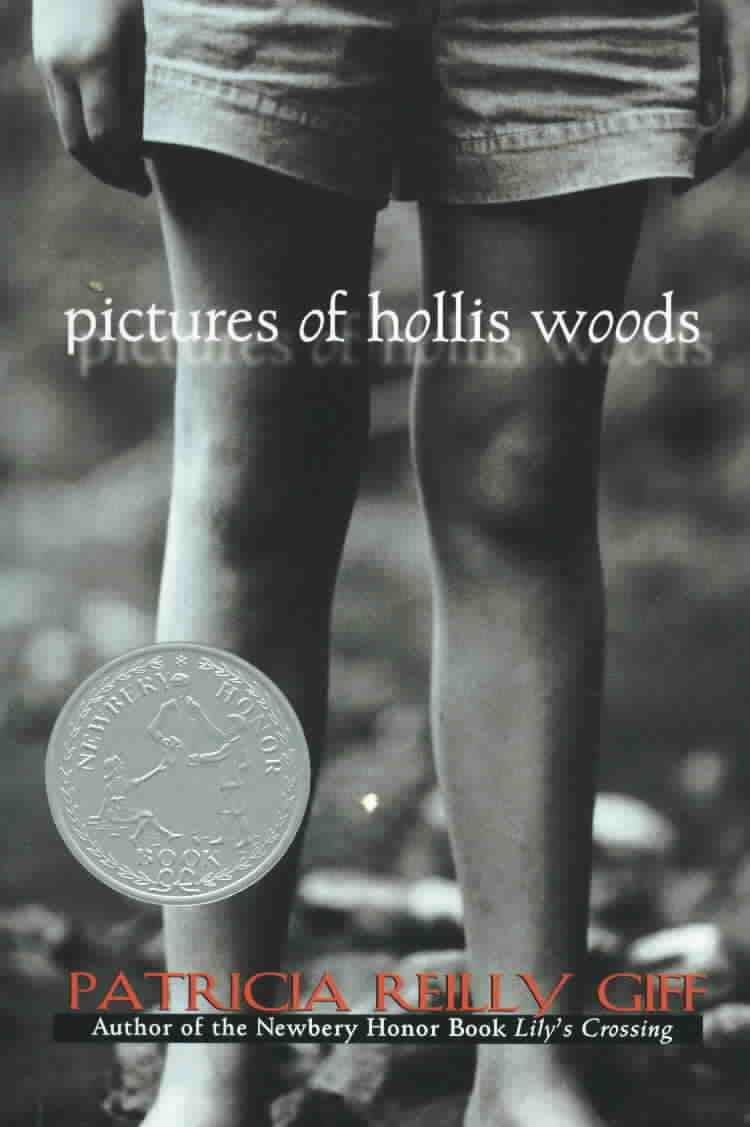
It is interesting to compare this novel with Patricia Reilly Giff’s Pictures of Hollis Woods, Lauren Wolk’s Beyond the Bright Sea, and even our own Michelle Magorian’s Goodnight Mister Tom. All have themes in common as well as much individual and special to say.  

Unmissable for teachers: Love that Dog


Cover: Nathan Burton

‘I don’t want to 
because boys
don’t write poetry.’ 

For don’ts, won’ts and can’ts

If I’m going back as far as the early 2000s, then I have to mention this book too, because it is a miniature masterpiece. In a short, often amusing, but hugely effective (and affecting) story, a young boy who is initially reluctant to write poetry grows in confidence in response to an inspired and inspiring teacher. The clever narrative is told entirely through the boy’s own attempts at writing, supplemented only, at the end, with the actual poems his teacher has used as stimuli. It is an object lesson in inference as well as in the potential of poetry, yet it is gloriously accessible and renders the quite challenging poetry quoted less obscure too.

Were I still teaching upper KS2 and wanting to explore the writing of poetry (as opposed to verse) as a way of capturing experience, thoughts and feelings (which I certainly would be), then this little gem would constitute an essential resource. Inspiration for me as well as my children. 

Sharon Creech later produced a follow-up, Hate that Cat. It was never going to have quite the same impact as the first book, but is also excellent.

Coming soon: Moo


We are finally back to what is indisputably a recent book in Moo.

I have  several times seen this new title hailed as a successor to Love that Dog and Hate that Cat as the story is told through a mixture of prose and (largely) free form poetry. However, unlike those earlier books, Moo, is not really about the poetry itself or about writing poetry. In fact it had more to say about art, about drawing, than about poetry itself. Rather here the poetry is simply used as a storytelling medium. And how very effective are both the story and its telling.

The tale itself is one that you might call archetypal Sharon Creech. A young girl is uprooted from the city home in which she has grown up, and moved to Maine. The landscape and atmosphere of this area of New England are beautifully evoked, but much of her life suddenly changes. The process of adapting is considerably helped for her by a developing relationship with a very difficult (‘onery’) cow, not to mention the beast’s elderly and, in her way, equally difficult owner.

At heart it is a story about change. About accepting change, taking advantage of change; change in circumstances, but also change as a person. It is a most endearing story but also a gently challenging one,

The format does not make it difficult to read. In fact, quite the reverse. However, it does serve to enhance the storytelling very considerably. The poetic text adds a flow to the language and an intensity to events and their underlying emotions. It is often very funny too. Whilst I am a great enthusiast for reading aloud (to children), this particular text does need be seen, rather than heard -or at least both. Layout and typography are significant contributors.

I started this post discussing Sharon Creech as a feel-good writer, and I do not retract from that in the slightest. However, she does not draw back from the difficult issues of life, or skimp in addressing some of the challenging questions about our lives and humanity. Rather, she takes a positive, supportive line through our difficulties and weaknesses. She helps us find a way forward, with sympathy and compassion, helps us see the good in our lives, and helps us find it when it seems to be missing. Young readers everywhere should be enormously grateful to her for it. As should we all.


It appears that Moo is due to be published in the UK, again by Guppy Books, in April 2021. Look out for it. It will hopefully be in (independent) bookshops around then, and is a moo-st read. (Sorry.)


Note: 

*At the time of writing there seem to be quite a few used copies of the Margaret Langdon book available fairly inexpensively from AbeBooks.


Saturday, 5 September 2020

Two stunning books by new Children’s Laureate, Joseph Coelho


Illustrations: Freya Hartas                       Illustrations: Kate Milner

Differently the same 

A: Zombierella

Sometimes, you know, you can tell a book from its cover.

Within its vibrant, flap-folded cards
chockablock with every 
spooky
Halloweney
whatever-you-do-don’t-go-into-that-housey 
(I told you not to)
hide-under-the-bedclothesey 
sort of image 
(drawn by Freya Hartas quite delightfully)
this is

A
kid pleaser.
teacher scarer
parent shocker
you can’t read that
choose a proper book
sort of book.

A
scary funny
funny scary
laugh yourself into
an early grave
sort of book.

A 
story you know 
but not as you know it
(though perhaps as you always wanted to
without knowing it)
sort of book.

A 
bring you up short
jolt to your thinking
just occasionally rhyming
sure fire best seller
Zombierella
sort of book

As grim as Grimm.
More so than Perrault.
It is

a
feast of a book that will go down a treat
with kids
who will gleefully 🤪
lap up the trickling blood of severed legs
devour words that conjure resurrected flesh 
gnaw the rattling bones of a long dead steed
savour the fetid stink of a fungal coach.

A
super-imaginative 
joy
of a book
for which the aforementioned Freya
must share the credit.

But wait.
It is written out in
little
short
lines
as if it were a poem.

Perhaps it is.

Despite its lines
it is not quite Revolting Rhymes.

Kids scared by the book (in a good way)
may
in consequence 
be less scared of poetry

And that is most certainly
a good thing.

But don’t  go yet.
There is more.

Its language is evocative.
There is real pathos
amid the scares.

This Zombie girl
has lost a father
she loved
and loves still
lost a horse
she loved
and loves still.

This graveyard tale
had depth
beneath its gravestones
life in its corpses
in more ways than one.

Form. 
          Images. 
                      Humanity.

It really is a
poem
and a very special one.


B: The Girl Who Became a Tree


In a book near you

Not just a novel but a collection
of very fine 
very special poems.

Not just a collection of poems but
a very fine
very special novel.


Optical Verbal illusion

Here is 
sensitivity
that lies at the heart
of sensitivity.
Sensitivity that lights images
we have seen before
and never seen before.
Sensitivity 
true poets know
and know to share.

Here is 
involvement
empathy
with someone other
who may not be other at all.
Involvement
that turns pages
compells us to know more
travel further
reach the end
and never reach the end.
Involvement 
true storytellers know
and know to share.

Sometimes before
we have been gifted 
fiction in verse
sometimes
narrative poetry
but rarely (if ever)
a book with
such fine poems
making such fine fiction
both.

It moves
more than either
enriches
more than either would.

Images too
of nightmare passion 
and compassion
from Kate Milner
are essential 
to the glory.


Daphne

This is a girl of legend
from the resonance of time.
A story told long ago
that lives on and on 
through the screens of mobile phones,
library computers
Xboxes
iPads 
at the heart of all her suffering.


Library

Grief acted out
in a theatre of books.

Childhood lost
in a forest of pages.


Haiku

A girl’s private pain
seeping out between the cracks
of his poem’s lines


A mobile rings

Although it is demanding
although it is never trite
simplistic
although  it is deeply painful
this book charts a journey 
through the forest and out again
beyond childhood and into
life.

It is a book for all daughters
and fathers
not least soon gone ones 
(don’t I feel it)
and mothers
sons too.
It is the trauma at the heart of joyous life.
It is the trauma that gives joyous life.
It is a great
book
in so many ways.


A + B

So here you have it.

One book for kids 
(whoever they may be)
one book for teens
(or whoever may read it).
Each book about a girl who becomes a tree.
(If you doubt me,
just see Zombierella clad all in leaves.)
Each a girl 
with a father dead and gone.
Each a girl
with a zombie life.
And in the end 
each a girl 
who rides away 
with a new old love
she knows already
and has only just found.

How much more the same
Can two such different stories be?

Sensitive.
Involving.
Drawn all in images
(verbal visual)
that draw us
                      in
                          and through
                                              and out.

Two portraits
of one and the same.
One girl
painted by Picasso
and Rembrandt?
No.
Not that.
One hand.
One mind.
One wild imagination free.

One remarkable poet
Two remarkable books
Like us
So differently the same.


Note:
For any who don’t already know it, Joseph Coelho’s earlier collection of poems Overheard in a Tower Block (also illustrated by Kate Milner) is another must read, as well as a must for classroom poetry shelves.


Thursday, 20 August 2020

Here in the Real World by Sara Pennypacker

‘
Cover: Jon Klassen
‘Here in the real world, bad things happen.’ (p 106)

Wow!

This is me, at the end of reading this book.

‘His heart had lifted right out of his chest, as if it had been reborn as a bird, and was now soaring somewhere near the top of the watchtower. . . And the view from there was terrific.’ (p 117)

Here (in the real world) is one of our finest contemporary novels for young readers. Think Holes; think The Boy in the Striped Pyjamas; think The Giver; think Goodnight Mister Tom; think Breadcrumbs. Sara Pennypacker’s is not like any of these books in the slightest, except in its stature, except in its importance within the canon of children’s literature, except in its potential to change the thinking, the understanding, the resolve of those who read it - and perhaps to change the world a little too.

‘I don’t think you should just take it when bad things happen. But I don’t want things to be magically what they’re not. I want them to be what they could be. And somebody has to want that, or nothing bad will ever get better.’ (p 223)

And if that sounds preachy then I have given the wrong impression. I have scarcely read a book with so much to say that is less preachy. It is simply what it is.

Simply Wow!

And what it is is simple. At least it is on the surface. 

I often admire books that do not patronise their young readers, but help them into the sophisticated narrative complexities that much of the finest literature has to offer: split storylines, varied viewpoints, time slips, or whatever. This book has none of these things. Its story starts at the beginning and runs through to its end. It is written in simple, generally direct sentences, with a good deal of realistic dialogue thrown in. It is constructed in simple, short chapters. It is directly narrated through detailed incident that shows you clearly what is happening, how its characters behave, what they are thinking. 

However, Sara Pennypacker’s simplicity is highly sophisticated and very clever indeed.  She can reveal and explore characters through a few perfectly chosen words and she crafts a storyline where every small, credible action and encounter pertinently develops themes that are at once intensely personal and profoundly universal. She renders small, apparently insignificant things, redolent with significance: the planting of papaya seeds in used snack cans; the catapulting of mud at the ruins of an abandoned church; the wearing of mirrored sunglasses. It is so cleverly, complexly simply, that I find it breathtaking. 

The ‘simple’ story involved two principal characters. Ware is a dreamer, an artist, apt to spend time in ‘a world of his own’.

Sometimes he wished he lived back in the Middle Ages. Things were a lot simpler then, anyway, especially if you were a knight. Knights had a rule book - their code of chivalry - that covered everything. . . If you were a knight you knew where you stood. Too often, Ware wasn’t even sure he was standing. Sometimes he felt as if he were wafting, in fact. A little drifty.’ (p 14)

He is the only child of highly extravert, social and capable patents, a sports fanatic of a father, and an organising planner of a mother.

‘His mother . . .operated from a clear code. . . “If you aren’t thinking three steps ahead,” she would say, “you’re already four steps behind.” The trouble was, Ware hadn’t the faintest clue how to unravel an advice-puzzle like that.’ (p 14)

Ware feels he is inadequate, a let down to them, not the son they really want. He thinks  he needs to become someone else to become ‘normal’. Thankfully, however,  there comes along  for him one hot summer of avoiding ‘ Recreation Camp’;  a piece of waste ground and a girl from the ‘’real world; an injured grandmother and an uncle who gives him a film camera. 

Jolene is the cynic, the pragmatist - largely. She is an embodiment of the injunction to ‘get real’. When Ware complains something isn’t fair, she repeatedly tells him that he isn’t in ‘magic fairness land’.  Yet she saves dandelions by transplanting them, insisting it is not right to kill them just because they grow in the wrong place. In fact she is more than a little obsessed with things not getting thrown away, not being trash. Turns out she has good reason. And the fact that her tragically difficult home life situation is explored more through implication that explanation, renders her not simply touching as a character, but deeply moving.

‘People aren’t things. You can throw things away. Usually you shouldn’t. But sometimes, things are trash. But people are never trash.’ (p 103)

Wow, American style!

The dialogue between there two young protagonists can be very funny indeed, in a dry American way. It is also sometimes very Harold Pinter, or even Samuel Becket, when they appear to be having a conversation, but each actually continue individual thought lines regardless of the other. 

The book has much to say about family and about friendship. More than this though, though, I liked Here in the Real World so much because it vindicates quiet, ‘antisocial’ , artistic boys. Nay, it celebrates them. And I joyously  welcome every word, every page, every chapter of it for doing so. As someone who, as a child, had little feeling for sport and feared being made to ‘join in’, as much as Ware does, as boy often happy with my own company, buried in a book, or simply dreaming and imagining, I too was often made to feel ‘not a real lad’. How I would have taken comfort and strength from Ware’s realisation that he did not need to try to become what others wanted him to be:

‘What I really want is for it to be okay that I’m not someone else.’ (p 252)

And, of course, Ware’s right to be himself is everybody’s right to be themselves.

Sure (as they say), the social context of this book is very American, and children over here will need just a little familiarity with the cultural language use, if they are to get what’s going on. But they almost certainly have this from watching The Simpsons anyway, so what’s the big deal?  

Wow with wings!

Over everything this is a book about what can and can’t be done, be achieved, in ‘the real world’, the world where bad things happen. It is not a sentimental book that implies ours is  ‘magic fairness land’ or that we can make it so. But it is a route map to what we can and should do. It is a story for our times, and for all times. It is the ultimate story of hope. The only hope we have. We all have to cling on to it, just as all our children should read this glorious book.

‘You’re right. (In the read world) bad stuff happens. But the real world is also all the stuff we do about the bad stuff. We’re the real world too.’ (p 282)


Note:
When you get that far, try listening to the final movement of Sibelius Symphony No 5 to accompany the final chapter of Here in the Real World. 

Wednesday, 19 August 2020

Annie Lumsden: The Girl from The Sea by David Almond


‘I looked into my mother’s eyes. What did I see there? The delight of memories or the delight of her imaginings?’ (p 36)

What it isn’t 

I do not usually review picture books. However, as David Almond is one of our most important (and brilliant) contemporary writers for young people, even the publication of a new small picture book from him is an event of considerable note. Even if this were a picture book. Which this isn’t.  Or small. Which it it isn’t. Or even entirely new. Which it also isn’t.

Annie Lumsden may be a comparatively short book, but it is certainly not a small one in anything other than physical size Nor is it really a picture book, despite being full of (wonderful) pictures. At least not, that is, if you think of a picture book as something primarily for young children. Annie Lumsden is really an illustrated short story, from a master of the short story. But it is not actually a new one. It was first published in 2007, as Half a Creature from the Sea, and then again, more prominently, in 2014, in the brilliant story collection that was given that same title.


However, we live in an age when recycling is rightly considered a very good thing. When something recycled ends up being even more splendid than the original, surely that has to be even better. Exactly such is the case here, because what started as an outstanding story is now a quite ravishingly lovely single volume, enormously enhanced by illustrations that are both delightful and poignant.

So let’s  just look at Annie Lumsden: The Girl from the Sea for what it is now, for what it is now is very special.

What it is

What we have enclosed between comparatively close covers is a ‘little’ book whose language is a masterclass in prose composition and whose content a rich multi-faceted exploration of life on the cusp between childhood and early adulthood. It is touching, insightful, humbling, lyrical, ethereal, mystical, baffling and enlightening. It is enigmatic; and its new  title captures that enigma perfectly. Annie Lumsden is the mythic, fantastical girl from the sea. Yet the girl from the sea is Annie Lumsden; her tale rooted in the place and people of the North East coast in such a down-to-earth way that it leaves you flabbergasted at how it can be all of  this at once. In other words it is so very David Almond. 

The story’s central figure is a young girl who, over its course, moves through that stage of growing about which David Almond often evokes with such sympathetic potency . Of course it then becomes about all cusps, all periods of change, all necessary, but sometimes difficult, growth. But it is about many other things too. It is about a single parent family, and all single parent families. It is about the power of love that accepts unconditionally. It is about place; the Northumbrian coast and the sea; about all coasts and all seas.

‘All seas flow into each other . . . and into us.’ (p 46)

It is about places where minor artists make tourist trinkets from pebbles and shells. It is about what we learn, and when we learn it, and how.

‘Things that’d seemed fixed and hard and hopeless started to shift. Words stopped being barnacles. Numbers were no longer limpets.’ (p 58).

More than anything, though, it is about tales; tales with the quiet resonances of the traditional, of selkies.

‘In the water I am truly as I am - Annie Lumsden, seal girl, fish girl, dolphin girl, the girl who cannot crow,’ (p 23)

It is about a thin line between reality and story, so that one segues into the other, and neither the reader nor Annie quite knows which is which, until realising that both are the truth. It is about being strange and being normal, and how both of those are the same too.

‘Sometimes the best way to understand how to be human is to understand our strangeness.’ (p 58)

All of this David Almond wraps in  language that continually seduces and enchants the reading ear. He has a poet’s sensitivity to language. Perhaps an orator’s too, for he knows the power of repetition,: of sounds, of words, of phrases. He also knows exactly the moment when enough is enough. No, it is not so much the language of the poet or the orator; it is the language of the world-weaver, the bard, the consummate storyteller. 

Mastery of mystery

How is it possible to condense so much in a book of only sixty-odd pages, many of which are shared with extensive illustrations? Well, by being David Almond. And I should not really be surprised. 

And, of course, the illustrated element is of integral importance, too. It would be quite wrong here to reserve all the praise for the writer. Beatrice Alemanga’s art work captures wonderfully many of the same telling ambiguities. Her pictures are childlike, yet sophisticated; dreamlike, yet starkly real, dusky-hued yet vivid, and, more than anything, movingly beautiful. Most importantly of all, words and pictures enhance each other and together conjure images of rich resonance.

Towards the end of the tale, one character offers an insight, and a challenge:

‘Sometimes the biggest mystery of all is how a mystery might help us solve another mystery. . . Pick the sense out of that!’ (p 58). 

David Almond and Beatrice Alemagna teach us how to pick out that sense, and allow us space to do it, each in our own mysterious, strange, individual, universal way.

Monday, 17 August 2020

Some very special books by Patricia Reilly Giff

A national treasure in The States 

In the world of American children’s literature Patricia Reilly Giff, born in 1935, and, as far as I know, still writing, is  something of an icon. Through the 1980s and well into the 90s she wrote over twenty titles in a hugely popular humorous  series about the young kids from Polk Street School. Countless American children have grown up with them. Yet it is since then, in her later years, that I believe she has become an outstanding and internationally important writer. More recently she has written a string of quite remarkably sensitive and beautifully crafted books for slightly older children, often with a setting in recent history,  including two Newberry Honor award winners (Lily’s Crossing, 1998, and Pictures of Hollis Woods, 2003), no mean achievement in the crowded US children’s market. Her latest novel, Genevieve’s War, was published as recently as 2017, again wining awards and accolades in the States.

As I think her books are far too little known and read over here, I have decided to intersperse my other reading by revisiting some titles of hers that I know and love, as well as exploring some new ones. I hope to add further reviews to this blog post as I finish them. 

Pictures of Hollis Woods


This is a ‘classic classic’ of American children’s literature. Think The Great Gilly Hopkins (Katherine Paterson) or The Pinballs (Betsy Byars)*. In fact there are a good number of books from both sides of the Atlantic about children  in care who are shuttled from one unsuccessful ‘placement’ to another. However, although this novel repeats that basic scenario, it is not so much the story itself that is so special here. Although it is painful, touching and ultimately heartwarming; it is the way that this particular example it is told, or rather the way it is written, that makes it so very special. Take the basic storyline away from the writing and it might even be considered sentimental. Yet the writing lifts it to a totally different level. Patricia Reilly Giff’s unobtrusive command of her medium is masterly. 

For starters, her young eponymous protagonist is a talented artist. Hollis sees, explores, discovers and, perhaps especially, remembers her world through the pictures she draws. This wonderful writer help us to see those pictures vividly too, and, through them, takes us not only into her world but inside the thought and, indeed, the psyche, of Hollis Woods herself. She clearly ‘gets’ children, in the deepest way, and Hollis lives through her - and, consequently, in us. 

And then this story is a quite wonderful example of a two stranded narrative. Intimately interleaved storylines recount Hollis’s present situation even as she frequently recalls an unexplained past. Constantly switching the reader’s piqued curiosity between ‘What will happen?’ and’What  did happen?’ makes for compulsive page-turning  and the result is heart-wrenching where it could have been maudlin. 

Although never difficult or obscure, Patricia Reilly Giff doesn’t patronise her young audience in any way. She leaves her readers to discover Hollis for themselves, and in doing so provides the most telling of opportunities for empathy. Whilst I would never dream of trying to compel a child to read a particular book, this is one of those titles that I desperately hope every child might discover at some time in their growing lives. It is a book about a universal yearning to belong and any reader will be hugely the richer for it. 

Eleven 


Cover: Shane Rebenschield

Here, from just over ten years ago, is another book that showcases Patricia Reilly Giff at the height of her long career as a children’s writer.


A boy is approaching his eleventh birthday.

There is a model ship and a memory of a real ship, each with two masts standing  tall like the number eleven.

The boy can’t read, but he has an affinity to wood, and to making with wood, shared  by a loving grandfather.

There is a  girl who can read, but who uses it as an escape from a life forever moving from one place to another.

The boy had questions about who he is, who his parents are?

He has dreams that might be memories; he remembers a large and dismal house with eleven over the door.

There are clues  and mysteries; frustrations and unexpected help.

There is the building of a model castle.

And the building of more besides.


And through all, the number eleven is a recurring theme, beautifully pointed by the writer in brief, almost poetic interludes between chapters. It is skilful work from a skilful writer in whom both storytelling and language have been honed over a lifetime of writing experience.


This is a  gentle book. There is little excitement as such, but plenty of intrigue to keep the pages turning. There is also a deep, and sensitive exploration of character and relationships, of friendship, where friendship is rare and special, and of love and family, found beyond the common nuclear arrangement. It is a book about building and discovering; discovering, too, that what you are looking for is sometimes to be found right where you are. It is a book about reading and the importance of reading. But it is also a book that does not condemn to failure, that offers ways forward with loving support. Most of all, perhaps it is a kind and caring book, the sort of book that may help our world, or at least our part in it, to be more kind and caring too.


*Both, incidentally, still very well worth seeking out for anyone who doesn’t know them.

Thursday, 13 August 2020

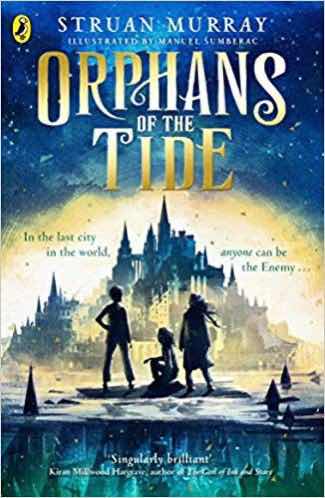
Orphans of the Tide by Struan Murray


Illustrations: Manuel Šumberac

Time and tide

I have been late to catch this particular tide, but am highly relieved not to have missed it altogether. I was aware of a very positive buzz about the book on social media and, now I have read it for myself, I can quite see why.

This is a novel with a level of originality relatively rare in a children’s debut. It oozes quality. The vivid world Struan Murray creates centres on an isolated island city, the hierarchical nature of whose society is reflected in the physical layout of its conical structure. Much of life there is dominated  by fear of a powerful supernatural ‘Enemy’ and its potential manifestation in  a  human ‘Vessel’. Supposedly protected by an autocratic elite of ‘Inqisitors’, life there has many dark, disturbing aspects. The obsession of those in power is a version of witch hunt that echoes  many regrettable  periods of our own history, dominated by religious, or pseudo-religious persecution of the innocent and driven by prejudice masquerading as protection. The post-apocalyptic implications of the setting, which could easily be post global warming, add further to disquieting  contemporary resonance.  The whole amounts to a creation of chilling imagination, backgrounding a story of consequently visceral excitement.

High tide

This narrative is developed through a cast of fascinating and highly engaging characters, with a feisty girl protagonist in orphaned ‘inventor’, Ellie. complemented by her gentler sidekick friend, Anna. However, boys are not neglected either. The mysterious ‘Seth,’, pulled by Ellie from the body of a stranded whale, is soon in need of her help when he is accused of being The Vessel and condemned to death by burning. He is an intriguingly enigmatic character, who may not actually want Ellie’s help an much as she is prepared to risk her own life to give it. There is also Finn, a young boy keen to become Ellie’s ally, but to whom she has an initially unexplained antipathy. Indeed many unanswered question emerge as this story develops and quickly give it compelling impetus. Many of the adult characters are ambivalent in motivation too, only adding further to the narrative drive. In fact, the story develops so strongly and  so much is not what it initially seems, that only rarely recently have I felt so involved in wanting to press forward with  a children’s book. The plotting is masterly and every chapter brings new questions matched by edge-of-the-seat action and excitement.

Moreover, a cleverly interleaved narrative gradually reveals, to both reader and characters,  a historical thread concerning a previous incarnation of The Enemy in a human Vessel. As the two story strands entangle the whole is precipitated into something that would approach a storytelling masterclass, if  the reader were not  too carried along in the moment of the narrative to appreciate the underlying skill of its construction.

Manuel Šumberac’s whole page greyscale illustrations also contribute strongly to the conjuring of this disturbing world.

It would be very wrong to reveal anything of the shocking denouements of the story, beyond saying that the reader will end up holding their metaphorical breath to the very end. However, this is no facile adventure. It is packed with things to think about as well as action to thrill over. Whilst it is never didactic, it is probing, provoking and challenging. This is no territory  for the faint hearted reader. 

Turning tide 

I was enormously impressed too by Struan Murray’s command of English prose. As a former teacher, this only adds to the strength of my recommendation. It is not that young readers will necessarily be consciously aware of the unobtrusively skilful quality of his language use, but they will nevertheless assimilate it as they read. For them to be exposed to such models is enormously beneficial, perhaps particularly in this age of truncated and abbreviated digital communication. When this is in the context of such a motivating and engaging  read, it is a particular asset.

0rphans of the Tide is not a book for the youngest readers; it will perhaps be best suited to older children and younger teens. However, I am sure any who enjoyed Frances Hardinge’s equally wonderful Deeplight* will revel in this too (or vice versa). Despite each of these works being distinctly its own book, there are many most interesting points of comparison between them.


The great news for us all is that a sequel from Struan Murray is due in March next year. I can’t see myself being so tardy in riding the next tide.


*See my review from December 2019

Saturday, 8 August 2020

Hello, Universe by Erin Entrada Kelly


Cover illustration: Isabel Roxas 

Too gold to miss

In 2018, Hello, Universe won the Newbury Medal in the USA, the close equivalent of our Carnegie Medal. Happily, it has recently been published here in the UK by Piccadilly Press.

It is yet another example of the stunningly high quality of the best of contemporary American children’s literature, and might well be a good place to start for any young readers (or their teachers) who have not yet ventured so far afield. It is a reading journey that will enrich experience enormously and reap manifold rewards. But whether or not you have already made such an  overall discovery, this is a treasure of a book and not to be missed. It has an outward simplicity and easy, entertaining charm, yet communicates with considerable depth, both intellectually and emotionally. Although it wears its authorial skill lightly, and is ideally pitched for its young readership, it is a masterclass in skilfully sophisticated storytelling. It opens some of the glorious potential of quality fiction, at the same time as entertaining hugely.  Moreover, it carries many messages about human worth and potential that are vital to the world in which its readers are growing. It is a book that may just help them, and  the world itself, to be better.

Wonderfully diverse

One of many things that this author does supremely well is to represent diversity through the young characters of her book. The story is told through the voices of four children, each very different in background, but all living in close proximity within the multicultural society of the USA. 

Virgil is of Filipino heritage and his story is replete with the folklore of those islands, mostly passed on to him by his beloved Grandmother, his Lola. Further, he suffers from being a quiet, shy, introverted boy in a loud, brash, extrovert family. He is often called Turtle by his mother, as a joking reference to his need to ‘come out of his shell’. It is not a implication he particularly likes, and in his heart of hearts he is tempted to think that, as with an actual  turtle, his shell is perhaps an integral part of who he is.

Kaori is Japanese in ancestry although second generation American in reality. She likes to think of herself as having inheritated the mysticism of the orient and to be something of a psychic. However Erin Entrada Kelly’s implicit messages of  understanding and inclusion are not so much about awareness of particular backgrounds or cultures, but about the understanding that every heritage has richness and value to offer as a piece in wonderful jigsaw that is humanity.

Chet is a bully from a family that appears to embody something of the extreme right wing conservatism.

Perhaps most pertinent of all, though, the other principal character, Valencia, is deaf. I know of relatively few children’s books that so sensitively convey some of the pertinent issues that affect children with hearing loss I am sure readers who are also deaf will delight in finding themselves prominently portrayed, as so rarely happens, in a mainstream book. Hearing children too, though, will learn a very great deal about how they need to behave to best help those who can’t hear. Even more importantly, Valencia is a strong, clever, highly articulate character. Her positive image is an salutary lesson to any inclined to see deafness as a disability rather than as a fully surmountable disadvantage.

A quartet of voices

Yet this book is not some sort of polemic on intolerance. Its many positive and important messages are fully embedded within a totally engaging story. And it is a story quite wonderfully told. Its themes and its style complement each other perfectly and are equally integral to its endearing (and I suspect enduring) appeal.

Each of the voices is beautifully evoked and takes us right inside the thoughts and feelings of the very particular child to whom it belongs, evoking very  effecting empathy. These four narrative accounts weave and interplay through the book like the instruments of a string quartet. Although the characters are sometimes eccentric and zany, and often amusing too, they are very much grounded in childhood truth. We are even led to a degree of understanding for bully Chet’s behaviour, even whilst not approving it. The story is very much about the way the lives and actions of these four different children move ever closer together over a few hours of their lives, and that is just what happens in the telling of that story too. Whether it is fate or coincidence that brings them together is one of the fascination questions posed by this fascinating book. Either way though, that conjunction results in hugely important growth for  both the characters themselves and for the reader. 

When the present is timely

Narration in the first person present tense can be very effective in the hands of a skilful writer. However, I have to admit to finding it rather tiresome that it has become so ubiquitous in current children’s fiction. Especially so, where it appears to have no real literary justification but to be emplotpyed solely in the cause of trendiness. However these reservations decidedly do not apply to this author. She uses the present tense for only one of her four narrative voices, thus creating distinction and variety whilst avoiding monotony or restriction of viewpoint. Further, the voice she chooses for the present is that of deaf Valencia, where it not only emphasises her very particular perception of the world, but also gives her feisty attitude a powerful immediacy. It is most cleverly done. 

An interesting comparison

Surprisingly, there were several times whilst reading this book when I was put in mind of this year’s UK CLIP Carnegie medal winning novel, Anthony McGowan’s stunning Lark. I say surprisingly because the two books are in many respects completely different. Hello, Universe is very much a children’s (MG) novel, with the sort of cutely smart kids that always seem to me distinctly American. Don’t get me wrong, Erin Kerry’s  are vivid, convincing protagonists, but they  are nevertheless distant cousins of Charles M Schultz’s Peanuts characters, somehow capturing something of the essence of American (and maybe universal) childhood. They dress a good deal of human truth in light, bright clothing. Lark, by contrast, is a book for slightly older readers, set in the gritty realism of the British north country, offering a short tale that is is harshly demanding emotionally, even if not without its own beauty.


Yet the two books each tell superficially simple stories developed around a central incident where the principal protagonist in in fear of his life and in desperate need of rescue Nicky in Lark falls down a rocky ravine; Virgil in Hello, Universe finds himself trapped at the bottom of a disused well. Even more though than this narrative parallel, I think, it is the fact that both books are fundamentally about character and relationships, and draw their potency from the way that, through the unfolding of a few hours of story, the  reader learns more about the protagonists at the same time as those protagonist learn more about themselves. Notwithstanding the warm charm of one and the raw emotion of the other, these are each in their own way books that show young readers the power of literature to grow understanding of others - and of themselves.

And now . . .

Another of this authors most popular titles, Lalani of the Distant Sea, has also been published in the UK in a fairly recent Piccadilly Press paperback. I now anticipate reading it with excitement.