Here are the occasional reflections of a joyful traveller along the strange pathways of fantasy and adventure. All my reviews are independent and unsolicited. I read many books that I don’t feel sufficiently enthusiastic about to review at all. Rather, this blog is intended as a celebration of the more interesting books I stumble across on my meandering reading journey, and of the important, life-affirming experiences they offer. It is but a very small thank you for the wonderful gifts their writers give.

Wednesday, 25 January 2023

Pony by R.J.Palacio

UK paperback

‘People see the world they believe in. And you see the world they believe in.’  (p 85)


The Wonder that is Wonder

R. J. Palacio’s Wonder is a major phenomenon of contemporary children’s fiction. When published ten years ago it was an international success. It has remained hugely popular ever since, selling copies in the multi-millions and held in deep affection by a broad spectrum of readers. 

Over recent years there have been many novels dealing with children’s issues, physical, mental and emotional, and the best are outstanding books, playing an important part in promoting understanding and developing empathy. But Wonder is undoubtedly an archetype. Perhaps it is because the courage, resilience and humour of Aggie, a boy who has to live with severe genetic facial distortion, is so deeply moving. However it is also because the simple but effective writing of its author not only communicates the thoughts and feelings of Auggie himself, but also opens for readers the impact his life has on others around him. R. J. Placio has a genius for getting into the minds of young people and a deep, compassionate understanding of the issues she explores. Yet she does this with a light, readable touch that is truly exceptional.

And now Pony

In the intervening period she has written a number of spin-offs from Wonder, understandably so, as her many readers were clamouring for more of the same. These books too have turned out to be most valuable additions to the children’s shelves, both entertaining and enriching, However, in 2021 she published a new and completely different book, Pony, and thankfully this had just come out in paperback here in the UK..

And completely different is no understatement. Were it not for the name and the references on the cover, I do not think I would have recognised Pony and Wonder as being by the same author, at least initially. However, this statement is not intended to the detriment of either book. Indeed, whilst Wonder is a deservedly popular, emotional read,  Pony is an outstanding, more literary, novel.

Two worlds, one world

The story of Pony has a historical setting in the American West of the 1800s. It is a gripping tale of a father’s kidnap and a son’s courageous journey to rescue him, of desperate counterfeiters and dedicated lawmen, of dramatic shootouts and of hidden loot. For young protagonist, Silas, it is a long journey through deep forest, for part of the time accompanied by a highly taciturn and cantankerous old Marshal, later by a young Sheriff and his sarcastic Deputy, and always by his loyal mount, named simply, Pony. Within this frame is developed the classic children’s fiction trope of a young person’s journey towards discovery of themselves and their true family. However, the setting here is so different and compelling that, even if this were all there were to the novel, Pony would be a very fine book. 

Yet Pony is far more than this. Silas, a boy physically scarred by an earlier lightning strike, sees and talks to ghosts. Indeed, the constant close companion and interlocutor of all his years to date has been the ‘apparition’ of a slightly older youth he calls Mittenwool. The few adults who are aware of this dismiss Mittenwool as an imaginary friend, but this is open to question for much of the book as it becomes clear that Silas is aware of a number of other spirits too. 

This blending of historical setting and apparent fantasy is surprising, even shocking. The intrusion of Silas’s paranormal perception disrupts the classic Western movie scenario, forces the reader into awareness that this something other than a straightforward narrative: it expands the novel’s  ‘reality’ to embrace more than the physical world.

Silas’s particularly sensitive character is very cleverly drawn, and emerges subtly, but most affectingly,  as the story unfolds. There is depth and much tenderness too in his gradually revealed relationship with his father, and indeed with the other principal adults he meets on his journey. Silas’s world, and his relationships, extend beyond the tangible, beyond the here and now.

‘ . . . The feeling I had while riding. A feeling like I had done this before, like I had dreamed this once upon a time. Something familiar in the colour of the light maybe. In the sound of the hooves trampling the earth.’ (Silas, p 138)

And later,

‘Half my face was smeared with dried blood . . . I remember thinking: My face, half red, for I live half in this world and half in the next.’ (p 220)

Multi-levelled

Without once sacrificing the cohesion of a fine novel, Pony is a something-for-everyone book. For the seekers of high excitement, there are horseback chases and gunfights worthy of any Hollywood Western. For fans of mystery, there is the compelling intrigue of the true identity of Silas’s father., as well as other perplexing issues, including the actuality or otherwise of the  ‘ghost’ Mittenwool himself, and an old violin, obsessively carried around by Silas, but never played. For those many whose emotions are engaged by animals, there is the eponymous Pony, completely dedicated to Silas and with almost magical abilities, as well as a loyal mutt of a dog. For those aware of archetypal resonance, there is a journey into a dark, forbidding forest that is worthy of any ancient legend. For the Romantics, there is warm, Dickensian resolution of fortunes and relationships. For the academically minded, there is an overarching metaphor that sees Silas’s journey to find his father in the story of Telemachus, pointed in quotation, as well as in narrative allusion. For those concerned with the world and society we live in, there are important messages about the appalling atrocities inflicted on Indigenous peoples by white colonists. It also points up the courage and conviction of individuals prepared to go to great lengths to combat the grotesque practice of slavery.

Pony is a potpourri of ideas, cleverly linked into coherent whole. It is even more clever when the link between ideas and people is what story is really about.  Here the wonder of early photographic images, caught both as a key element of the narrative and in the reproductions used as chapter openers, reflects and refracts the lingering of dead spirits as ‘ghosts’ from the past. In this we are getting close, I think, to the heart of this book. Ultimately, this is not simply an adventure in the historic American West. Nor is it a simply a ghost story. It is a thoughtful novel about connections, connections between the living, but especially between the living and the dead. It is  not specifically religious, nor even spiritualist, but it is deeply spiritual, humane and compassionate. It explores the way we keep the dead with us and take them into our lives. It is a richly comforting book.

‘The connections that bind us are astounding, as I’ve noticed. The invisible threads weave in and around us, and tug us in places and at times that we may not see, or that only make sense over time. This is what I have found.’ (Silas, p 249)

So differently the same

After starting off thinking this new book felt very different from its predecessors, by the end the author’s signature hand, or at least her heart, was unmistakable. Here, after all, is the same understanding, the same deep humanity, that R. J. Placido has always shown in her writing. But it is now expressed with a refinement, a subtlety that is more reflective, more poetic if you like, but no less rich, and, ultimately, perhaps even more affecting. It is essentially the same wonder, but extended beyond the present.

‘The fathers and the mothers and the ghosts, the living and the dead, spinning butterflies out of thin air. Holding them gently in their hands, for as long as they can. Not forever, but infinitely. Beckoning the wondrous. But never for themselves. Just for us. If only for a little while. It’s not the fantasy of it, but the trying of it that matters.’ (p 186)

I cannot think that Pony will garner quite the mega popularity of Wonder.  HoweverI do hope that many readers of that earlier book will be encouraged to try this one. Children will find a different, but thoroughly engaging, life-enriching story. Others will discover a very fine work of fiction, one that demonstrates how a children’s book can be a true work of literature, in the hands of a great writer. 


Hardback edition

R.J.Palacio, like C.P. Cavafy, in his poem, gently reminds us that the gift of Ithaca is a journey, not an arrival. 

Saturday, 21 January 2023

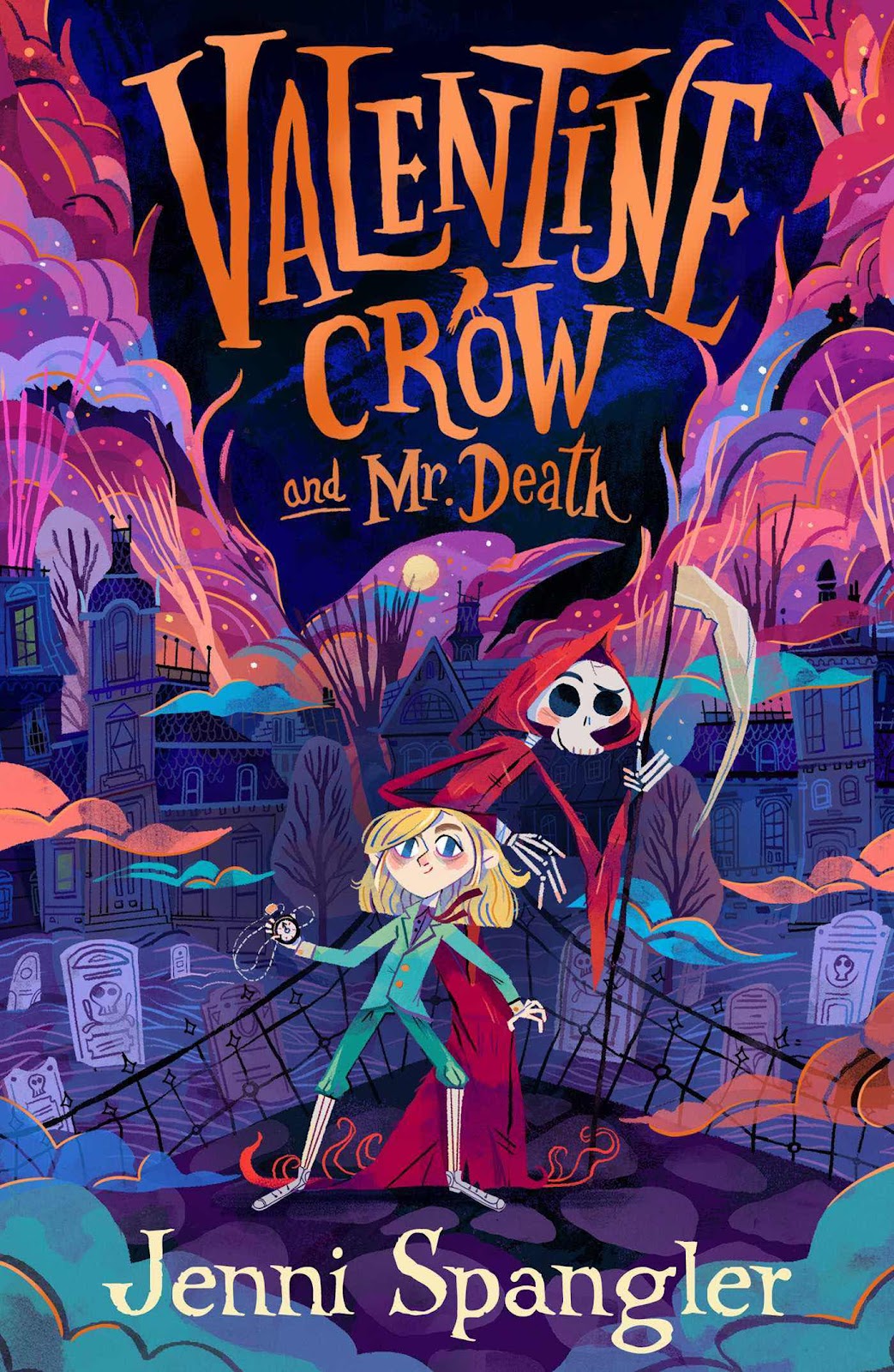
Valentine Crow and Mr. Death by Jenni Spangler


You saved my life.’ Valentine’s voice came out squeakier then usual.
‘Huh!’ said Death. ‘So I did. First time for everything , eh?’ (p 179)

A Darker Shade of Tale

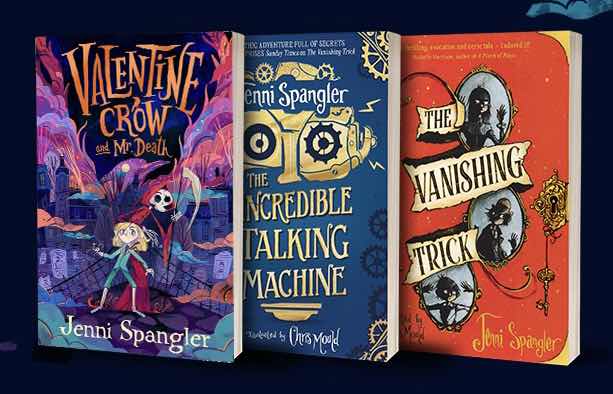
Jenni Spangler has carved herself out a clever niche in the contemporary children’s fiction market. Perhaps I should rather call it a dark corner (with cobwebs) for she has so far specialised in the most deliciously entertaining gothic stories. You might call them children’s ‘Tales of the Unexpected’ - and what an original delight they are. The motto that surrounds the magpie emblem on some of her sought after merchandise is, ‘Work hard. Be kind. Think weird.’ Whilst I am sure she is fully behind the first two of these admirable exhortations, it is the third that best captures her own approach as an author. She digs amongst the shadows of imagination and comes up with some captivatingly spooky subject matter. Then she writes it brilliantly. 

In many ways, her latest, third novel goes even further than the first two; it is positively macabre, in a (mostly) very jolly sort of way, at least in so far as death can be jolly. Imagine, if you are able, a sort of junior version of Terry Pratchett’s Mort, mixed with a touch of Sophie Anderson’s The House With Chicken Legs and just a sprinkling of Neil Gaiman’s The Graveyard Book. Splash through it a good few pages of the sort of graphic exuberance you find in Cressida Cowell’s books. Then you might just get some feel of the tone and content of Valentine Crow and Mr. Death, although all this does not allow for the very considerable creativity and invention that is completely Jenni Spangler’s own. 

Another Twist in the Tale

The somewhat familiar opening, with an orphan boy being farmed out to a grim work placement, could be a pepped up version of Oliver Twist were not Oliver’s allocation to undertaker Sowerberry (already dark and dismal in itself) replaced here by protagonist Valentine’s indenture to the personage of the Grim Reaper himself. From there on in, Jenni Spangler launches into a story of her kid-pleasing best. Once Valentine gets going with helping Mr. Death to collect souls and take them to the ‘next place’  there are laughs, thrills, surprises and mysteries aplenty. One of the first of those clever and entertaining surprises concerns Valentine’s new master. Whilst some of the deaths encountered are rather dismal, some moving, the skeletal Death himself turns out to be a not altogether unpleasant fellow at all. Despite little experience of dealing with living humans, he is actually very solicitous of the boy’s welfare and does his best to provide the necessities of life in the bleak, virtually empty mausoleum that is their very un-homely home. A further surprise comes when Death reveals that he has a boss of whom he seems terrified. It turns out her name is Linda! This is one of Jenni Spangler’s many comic coups, whilst, incidentally, avoiding any potential association of the character with a religious God. 

A Harvest Fails

Early on, the author introduces two key animals to her story, a singularly supercilious crow and a smelly but affectionate mutt of a dog. Such additions always go down well with young readers and here they help wonderfully to engender warm involvement. (Well at least the dog does.)

After only a very brief period of accompanying Death to harvest souls, Valentine finds himself trusted to make some ‘calls’ alone. It is when one of his first solo visits has to be to Philomena, his dearest friend from the Foundling Hospital, that he tries to change the destiny assigned to her. This really upsets the charnel cart, so to speak, and launches a truly boneshaking ride of original storytelling that makes this new book a true, if grisly, treasure.

Punny Pics

As if this were not enough, Jenni Spangler is not only a wonderful writer but a talented artist too. Her pages are shot through with her own strong drawings, which enhance the story perfectly. Moreover, occasional pages are devoted to graphic insertions of apparently handwritten text and labelled pictures that purport to add objective information to things mentioned in the story. These are frequently hilarious, and if their creator often ‘sinks’ to the kind of jokes and puns that make adults groan, they will nevertheless have huge kid-appeal - and that is who the work is for, after all. This combination of illustrative elements gives the book a most enticing approachability and will, I am sure, win it many, many fans.

Light Prevails

Whilst this tale is both amusing and compelling, it is not altogether silly or superficial. There are times when its consideration of difficult issues, such as good, evil and forgiveness, verges on the philosophical. It also provides speculative ideas about the ‘last things’, metaphysical suggestions as to the nature of death and afterlife which, whether true or not, are both thought-provoking and potentially comforting. Happily, it does this without getting involved in the specifics of any particular religion.

Its macabre subject not withstanding, this is ultimately a sensitive, warm and caring book. It probes and pushes at some of life’s (and death’s) biggest questions in a way that will be accessible to many thoughtful children. If, for others, it simply provides the distracting entertainment of a cracking story, well that is fine too. For Jenni Spangler it should prove a triumph whatever way.

Death’s final message to Valentine (and the reader) says it all:

‘I stopped taking much interest in human lives. They’re just gaps between deaths to me. But having you around reminded me of how special and interesting you are.’ (p 299)


Sunday, 15 January 2023

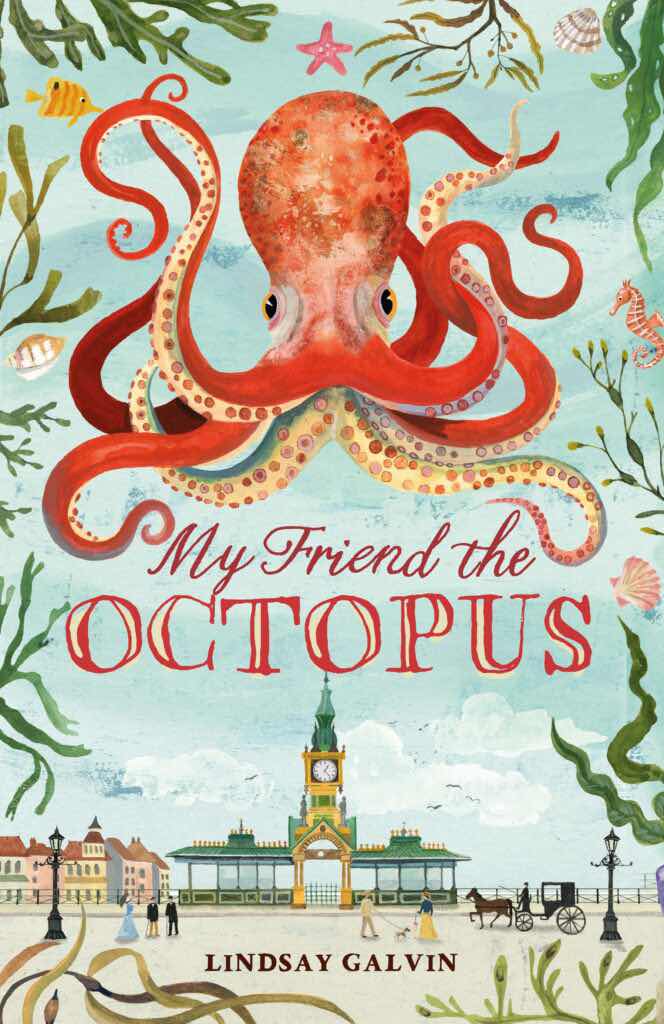
My Friend the Octopus by Lindsay Galvin


Illustration: Gordy Wright

Late to the party

It has taken me a long time to get around to reading this one; far too long considering now much I admired and enjoyed Darwin’s Dragons. However, whilst I own shelves of stories about children befriending a whole range of animals, domestic and exotic, I have to say that not one of their protagonists has actually developed a relationship with an octopus.* The idea had to be intriguing enough to spur me on, when I finally came across it. And am I glad I followed-up. What I discovered was a richly rewarding read.

I am always thrilled when, all too rarely, I come across real originality of imagination in children’s fiction, providing of course that its story is well written. Happily, My Friend the Octopus meets both these criteria outstandingly. 

Late Victorian Brighton

One of Lindsay Galvin’s finest achievements is in capturing the late Victorian period generally and the seaside atmosphere of Brighton in particular. Like all the finest historical novelists, she does this not with extended exposition or description but by introducing a myriad telling incidental details into her narration, things that the characters accept as normal and everyday, but that point up to us differences that conjure bygone times.. 

This is compounded by outstanding writing, replete with rich, sensory references that takes us into her past world with engrossing immediacy. Here you can share such vicarious experience as young protagonist, Vinnie’s first experience of bathing in the sea from a bathing machine. And this is as nothing compared to the jeopardy and thrill of her half diving into a vast aquarium tank trying to tempt a giant octopus to eat. In another fine instance, the whole extended passage where staff are trying to move the monstrous creature from a large barrel into its new aquarium home is a writer’s triumph and a reader’s delight.

In the early stages of the story, the pace is slow enough for us to share every moment of over-protected, artistic Vinnie’s journey from a timid little thing, restrictingly tied to her milliner mother’s hat ribbons, into a strong and independent girl. Yet her journey is engaging enough, with an element of mystery thrown in too, to keep the pages turning.

Young would-be reporter, Charlie, ward of the aquarium keeper, makes a lively and entertaining accomplice, helping ably to lead Vinnie out of her shell. However, an even more valuable dimension is added to the story in the person of a second new friend, intelligent Temitayo, who has been ‘exported’ from her native Africa so that her imperialist ‘guardians ’ can show her off as a novelty - an educated black girl.

Later in the story

Later in her tale, Lindsay Galvin does not hesitate to show another side of Victorian society, the appalling conditions endured by the working poor, exploited by unscrupulous and avaricious industrialists. Her story develops gripping momentum and a much darker edge. Discoveries around Vinnie’s mother and the obnoxious Mr Jedders become deeply disturbing, and the situation sinks deeper into jeopardy, for the girl and her friends.

Underneath its entertaining, sometimes chilling, mystery, My Friend the Octopus develops significant themes, making it a most valuable addition to the contemporary children’s canon.Vinnie’s growth through the story not only involves coming into her own as an independent-minded yet caring individual, but also discovering which people truly love her. Perhaps even more pertinent, the story treats with the wicked exploitation for personal gain of appallingly treated human workers. It echos this too in the thinking of a businessman who wants to profit from the capture of exotic animals and colonialists who wish to exihibit a displaced African girl for the supposed novelty of her cleverness. Yet, for me, it is the story of Ghost, the octopus, and the beautifully sensitive and ultimately deeply affecting relationship Vinnie develops with her, that is the centre of this book. Anyone not aware of the nature of these wondrous creatures, afraid of even hostile to them, should read this story. Lindsay Gavin does here for octopuses what E.B.White did for spiders in Charlotte’s Web. And it is a very special thing. 

Later this year

She seems to be heading rapidly for a throne next to that of Emma Carrol, as another queen of children’s historically-set fiction. And in this case two queens are most certainly better than one; there is ample room on our lucky shelves for both. It is a great pity that I did not read this book earlier, if I had it would most certainly have been included in my Best Books of 2022. On the other hand there is now less time to wait impatiently for her next book, Call of the Titanic, due out in June. She now has a very great deal to live up to. With her talent and track record, I am confident she will do so. However, there will never be another book special in quite the way of My Friend the Octopus. Because of it, I would never want to live in a world without octopuses. Even if I never actually see one, just to know the three-hearted, colour-changing wonders are there is enough. 

Chicken House are to be warmly congratulated on the beautifully lavish paperback presentation of both this book and Darwin’s Dragons.

Note:
*Amazingly, another one seems to have just arrived on the scene, The Octopus, Dadu and Me by Lucy Ann Unwin, but I haven’t had a chance to read it yet. Jungian synchronicity?

Saturday, 14 January 2023

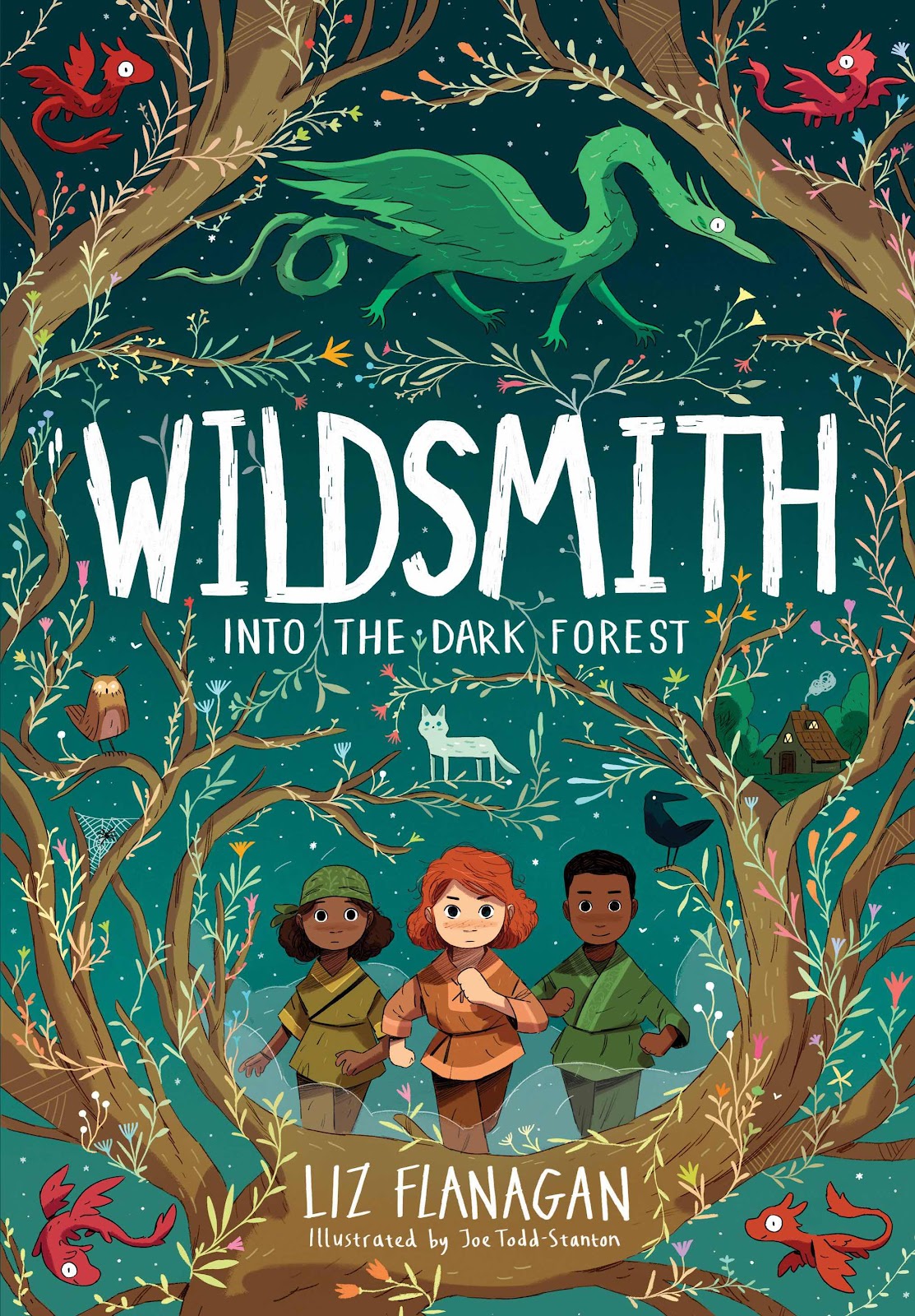
Wildsmith: Into the Dark Forest by Liz Flanagan


A new audience

Recently, Liz Flanagan penned two of the finest, most original and exciting older children’s fantasies, Dragon Daughter and Rise of the Shadow Dragons. Now she has turned her attention to writing for younger children with equal success. 

Her new ‘entry-level’ fantasy, Wildsmith: Into the Dark Forest is ideal for those just starting to read longer novels for themselves, or indeed to be read aloud to even younger children. And what an enchanting world they will be introduced to. 

This author’s skilful crafting demonstrates just how much can be achieved, even when keeping language relatively simple and sentences fairly short. Vivid, sensuous evocation creates a powerfully immediacy and an involving sense of place, whilst spot-on thoughts and reactions establish characters that are wonderfully alive. They are just right for her young readers to recognise and identify with. 

Exceptional storytelling

Through equally accessible short chapters, she crafts a story to enchant and compel. Undulations of tension generate unfailing involvement. The story tide is pulled rapidly from one peak to the next, whilst still providing the reassurance and predictability needed by this readership. Whether it is the thrilling jeopardy of racing over rooftops, the heartache of being torn away from a much loved father, the exciting trepidation of waiting for dragon eggs to hatch, or the wonder of meeting (very surprising) witches, the whole builds ever engagingly towards a gripping climax.

Yet there is always warmth and reassurance. Liz Flanagan capitalises cleverly on young children’s attraction to animals and their desire to care for them (my two young granddaughters both play ‘vets’ regularly). Her story builds a useful bridge between traditional stories and relevant, modern fantasy. Here is the magic of fairy tale in a grandfather’s house, almost growing organically from its woodland location. Then there is the kindly but somewhat strange grandfather himself with his wolf companion. The surrounding ‘Dark Forest’, dangerous and witch-inhabited, is a very archetype. Yet everything is brought  charmingly into new focus by this author turning many expectations on their heads. Forest, witches and dragons all become features of the light. It is the actions of some human, particularly those at war, that are the source of darkness; fantasy and magic are good things. Although not over played, as suits the age of this audience, the subliminal message that war is a major source of evil is not at all a bad thing for today’s young children. Mid-story, there is also a chapter that strongly promotes the magic of libraries, books and reading; also a very splendid embedded sentiment. 

Thankfully not the end

Protagonist Rowan and her fellow characters are beautifully drawn with the same clear, simple lines as are the lively, charming illustrations by Joe Todd-Standon. They too are ideally suited for this readership. The scattering of his pictures through many of the marginally decorated pages also helps to  give this book the visual impression of easy-reading accessibility.

No spoilers, but suffice to say the story ends in much the way that so many young children’s adventures tales have ended over generations. And it is all the better for that. Warm resolution is exactly what this age group needs to go to sleep on after the very best of bedtime stories. 

The good news is that, with a February 2nd publication date, there is only the shortest of waits now for this little gem of a book. Those caring for 7-9 year story lovers, and teachers of Year 3 or 4, should not hesitate to seek it out. It will open a world of fantasy to their eager charges, exciting without being threatening. Who knows, it may well also lead on to later enjoyment of the likes of Cornelia Funke’s  Dragon RiderAngie Sage’s Todhunter Moon stories and, of course, Liz Flanagan’s own Dragon Daughter books.

There is further good news for the many young fans that this first Wildsmith adventure will undoubted win. A sequel, Wildsmith: City of Secrets is to follow follow this April. However I sincerely hope Liz Flanagan will also return soon to her brilliant fantasies for older children, be it with another book set in the world of the ‘Shadow Dragons’ or something completely new.

Saturday, 17 December 2022

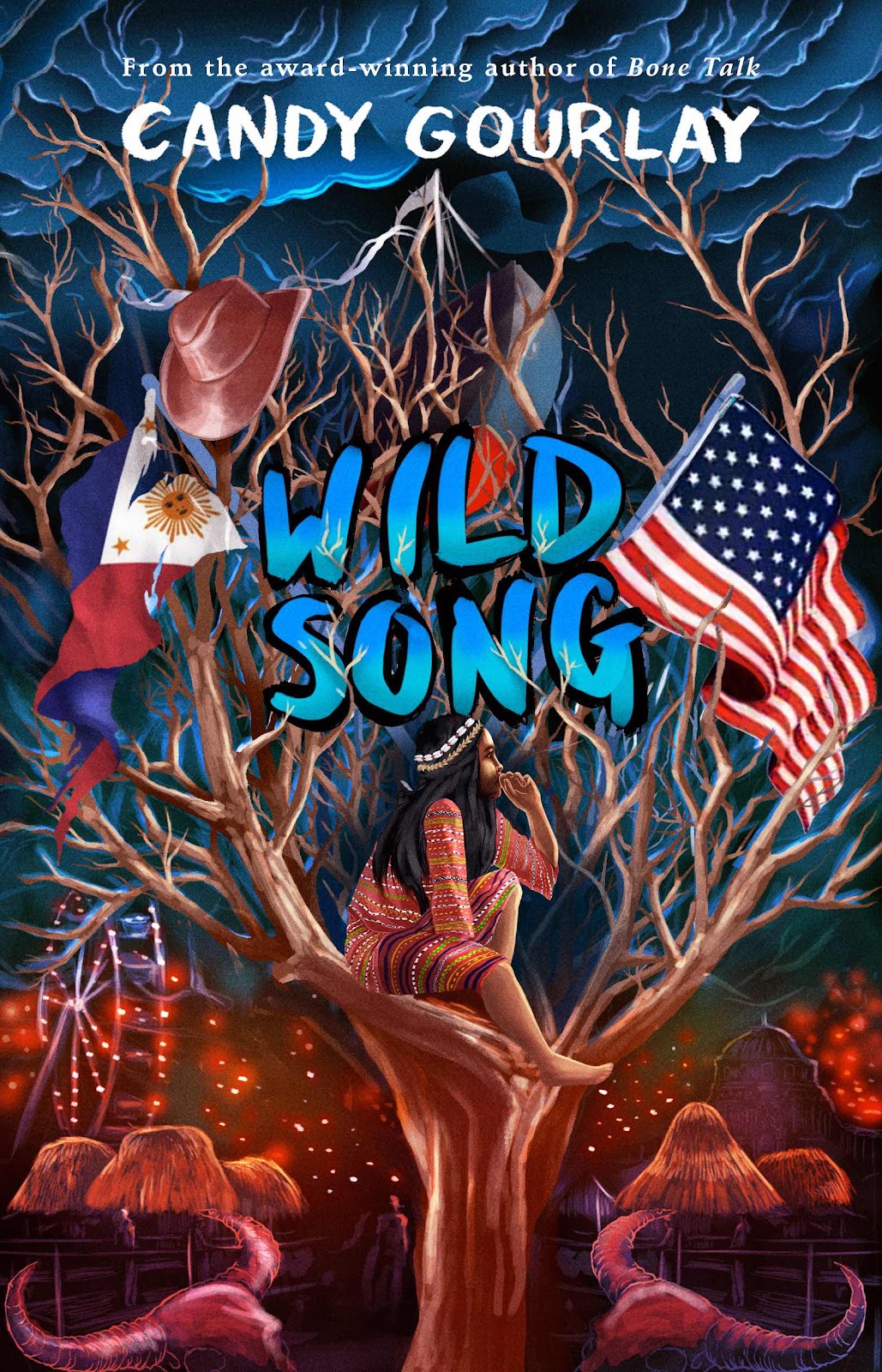
Wild Song by Candy Gourlay

 
Cover: Leo Nicholls

A bright star on the horizon 

We are not yet quite out of 2022 and already I have found another novel for young readers destined to be one of the great books of 2023 - and beyond. Wild Song is a devastatingly important successor to Candy Gourlay’s outstanding and deservedly plaudited Bone Talk from 2018.

This one is perhaps aimed principally at YA readers. However, it is so accessible and yet so powerful that I think it will work for a very wide readership.

The history we should know 

The stortelling is superficially straightforward: a linear narration by Luki, a Filipino girl of the Bontok peoples, addressed to the spirit of her dead mother. However it is wonderfully constructed from an authorial perspective, evolving into ever richer and more thought-provoking understanding of hugely important cultural and human issues. Fiction, but based around events in US history of which many readers will have been unaware , it is a compulsively engrossing read, albeit horrifying, and, at times, heartbreaking. It is hugely impressive, not only as education about previously overlooked or distorted history, but also for our own time. It is a passionate and thoroughly justified tirade against colonialism, the subjugation and exploitation of minorities. It exposes the way so many treat with contempt and even demonise people who are different, whether in appearance, way of life or beliefs. More than anything it is about the need, the right, of all people to grow, change and move ahead without sacrificing their own identity, their cultural roots, their very integrity as human beings. It is a book that so very much needs to be read.

Human zoo

Wild Song is a recount of significant events in the life of Luki, along with a group of her people, including other principal characters from Bone Talk, although they are all now somewhat older. Following US ‘conquest’ of the Philippines, they are transported to the States to be exploited as part of a living exhibition of ‘primitive tribes’ from around the world at the  St Louis ‘World Fair’ of 1904. Canday Gourlay succeeds wonderfully in exploring major world events and appalling attitudes through the eyes and experience of this young individual, so that it remains an intensely personal narrative as well as one of global significance, Luki’s voice is beautifully caught and insight into all that happens is given the human perspective it needs to register most poignantly. Her joy, her pain, her aspirations, her learning and her recognition of the truth about the people she visits are all ours. She is a wild girl, but not in the sense of ‘wild’ the 1904 Americans used of her. Her wildness is closer to that we mean when we talk of re-wilding our planet, rediscovering what life was meant to be before some humans dehumanised it. Luki re-learns to sing her own wild song - and so must we.

Caught between worlds 

A strong thread of feminism is woven through the story and, whether in her home Bontok community, or in the America of ‘new opportunities’, Luki kicks against entrenched mores that seek to restrict severely her behaviours as a girl/woman. At the same time as she clings to many of the cultural and spiritual beliefs the are her heritage as a Bontok, she sees potential in her new surroundings, And this epitomises one of the particular strengths of this book. Luki does not represent a single-minded or prejudiced perspective, her thinking is often ambivalent. She may be an exhibit in the eyes of the Americans, but she is also an observer, and not always a hostile one. She is originally a willing participant in the invitation to travel to The States and, although ultimately appalled by the treatment of her people there, especially after she (and the readers’) make a most devastating discovery, she also sees some of the good  in it. 

‘. . . like a door had been wrenched open and a new world revealed to us. I felt like throwing my arms into the air and screaming. This is what I wanted! I wanted a chance to see this!’ (p 156)

Even when she chooses to return to her home, she has been changed by the experience. She has travelled forwards as well as backward on her journey to discover confidence in her own identity; to acknowledge her roots whilst still accepting her place in the world and her need to fight for a better one.

‘ . . .  it wasn’t about money or who deserved what or how to get more money. We were here, in America. We had seen things that we would never have seen in Bontok and none of it had to do with money. After this, how could we go back to our ordinary lives? 
     It was the one thing I knew for sure. My life was definitely never going to be the same again.’ (p 209)

Yes, the change in Luki’s life is most certainly not all for the good. However, Candy Gourlay herself, in creating Luki and  her story, is now an important agent in that vital struggle for better change 

The us in US

Damning indictment as it is, it is important that Wild Song is not seen solely as a condemnation of early 20th Century America and Americans. What is depicted here is a shameful episode in their history and reflects appalling attitudes of racial superiority. But such colonialism and its related treatment of indiginous peoples and their cultures is far from confined to The States. We English are every bit as guilty, if not more so, and the First Nation inhabitants of Africa, Australia and India, suffered equally horrendous expressions of presumed white superiority. Not to mention all the things that happened, and still happen, here. The 1904 World Fair provides a metaphor for so much more.

A voice, a song

Wild Song is a story powerful in its honesty and heartbreaking in its sincerity. At the same time it is unspeakably potent in communication of its devastating messages about the world’s treatment of ‘minority’ peoples, historically, but also, sadly, bleeding into our present. It is a vital voice for those justifiably seeking a way to be themselves, to accept and value their own cultural heritage, to sing their own song. Similarly it is a heartfelt cry for that heritage to be respected and valued in our contemporary societies and for its people to be treated with the equality that is their human right. 

Re-wilding our world is is not just an activity, it is a state of mind. Civilisation will only grow and flourish when it learns to sing a wild song. Candy Gourlay is playing a huge part in helping to lead us all towards this. Thankfully, she is not alone.


Friday, 9 December 2022

The Song Walker by Zillah Bethell


Illustration: Saara Söderlund 

‘I think about the pattern dream.’ (p 66)


The Song Walker it is just so good it’s breathtaking. If it doesn’t win major awards in due course, then there is something seriously wrong with the system.

Naming cats

Sandy Brownjohn, an inspirational writer on the teaching of poetry to children, prominent in the later part of the 20th century*, characterised a talent for creative thinking as ‘the ability to name cats’. My heart sings when I read that Zilla Bethell ‘walks in the hills’ and amongst her favourite things are ‘mint tea, swimming in the rain, cheesy fridge magnets, snow globes, Chopin, dancing and diphthongs.’  To me this immediately speaks of someone with what I now always think of as that ‘ability to name cats’. Not just in the lists’s contents but in its expression, this promises to be someone with a flair for idiosyncratic creativity, someone who plays with words and ideas in fresh and exciting ways. Delving into her children’s novels immediately and amply confirms this - and they are deeply affecting too. 

She set off, not too long ago, with a very fine MG debut (A Whisper of Horses) and an even better second book (The Extraordinary Colours of Auden Dare), but then really hit children’s literature heights when she wrote a novel set in the country in which she was born and spent her early childhood, Papua New Guinea. The Shark Caller was undoubtedly one of the children’s novels of 2021 and I am only sorry that I didn’t read it early enough to include in my ‘Books of the Year’ post for that year.

Now, however, I am able to make amends, for her latest book is the most special of all. 

Outback

This time her setting is the Australian outback. Whilst this may not exactly be Papua New Guinea, it is far closer to there than to here and Zilla Bethel obviously has a strong connection with it. She has deep respect, too, for the First Country Australians, whose home this was long before colonisation. The beliefs and traditions of these peoples play a fundamental part in her new story and that sincere respect is shown by the fact that the she sought the consent of representatives of the Alyawarre community before publishing the book. Integral to those beliefs, and right at the heart of her book, are the ‘songlines’, or ‘dreaming tracks’, musical maps that guide their people through both the physical and spiritual landscape of the outback.

Of course, the place and its indigenous culture will be far removed from the experience of most UK children, but Zillah Bethell’s handling of both is so knowledgably rich, and communicated in such skilfully vivid language, as to make both come fully alive for them.

Fugue state

The basic story is that of a young girl, the book’s narrator, who finds herself walking through the outback, carrying a strange case, and with a peculiar marble in her pocket, but without the least idea of where she is, how she got there, who she is, or even her own name. Very soon she meets a lone First Country girl, also travelling the land on foot, who is very reluctant to explain who she is or where she is going. As the two trudge ever onwards through the arid, yet surprisingly varied landscape of the Northern Territotry, with a good many incidents on the way, funny, awesome and terrifying by turns, they very gradually learn more about themselves and each other. 

There are times when the metaphor of the journey in the outback landscape (externalising, as it does, the inscape of the  girls’ mental one) becomes quite explicit. After watching Tarni make a fire with a steel, flint and dried grass, her lost companion says:

‘I try and ignite the dried grasses of the memories hidden away within me. Try and use the flint and steel of my mind to spark them back to life.’ (p 66) 

However, for much of the book it sits as an underlying but potent presence. 

If this were all there were to the book it would still be a very fine one. But this is not all there is. Not by a long walk.

Song

It is very hard to write about the later stages of this story without spoiling it for other readers - and I would certainly not wish to do that. Suffice to say that the narrative develops in a way that not only shocks and surprises but brings so many things in the preceding story into focus. However, this new focus is a strangely enigmatic one. What have so far seemed merely sights and incidents in the girls’ story suddenly shimmer as images of something much deeper.  A mirage experienced at the very opening, a bird in a cage, a musical instrument locked in a case, a wild horse rescued, a night gazing at the stars, all suddenly begin to take on significance. And then there is the strange way that Chapter One is titled as ‘The End’, which strikes one as strange at the time, but gets put to the back of the mind until later in the book. Yet at the same time as everything becomes clearer, reality becomes illusive, fragile, fugative. Dry earth spawns earth magic. The physical becomes spiritual. Time becomes dreamtime. 

These days the word enchanted has become rather debased, superficial in its use, but at root it means being enthralled by song. This book is enchanted and enchanting in the truest meaning of these words. At its spiritual centre is music, is the song and, towards the end of the book, there is a most beautiful, lyrical passage that honours and celebrates that song. It is deeply affecting. It is the heart of everything.

Dream Time

Just as in his book, TygerSF Said draws on the visionary thinking of Willian Blake, so Zillah Bethell reconnects to the earth dreaming of the First Country Australians to reawaken in us a forgotten spirituality. She and her book are helping to reweave the rainbow that two and a half centuries of materialism have unwoven. She has composed a song that guides us all, of whatever peoples,  along a dreaming track; one that leads us both forwards and backwards to a journey completed and begun, under a glaring sun that reveals the beauty of our own outback, under a dark sky where stars can actually be seen.

Very soon this book will join the songline of great children’s literature that meanders its way around the world and deep into human hearts.


*Footnote
Sandy Brownjohn’s best known books are probably Does it Have to Rhyme? (1980) and What Rhymes With Secret (1982). I warmly recommend them to any primary teachers who can manage to track them down. Teaching the writing of poetry does not date. 


Tuesday, 29 November 2022

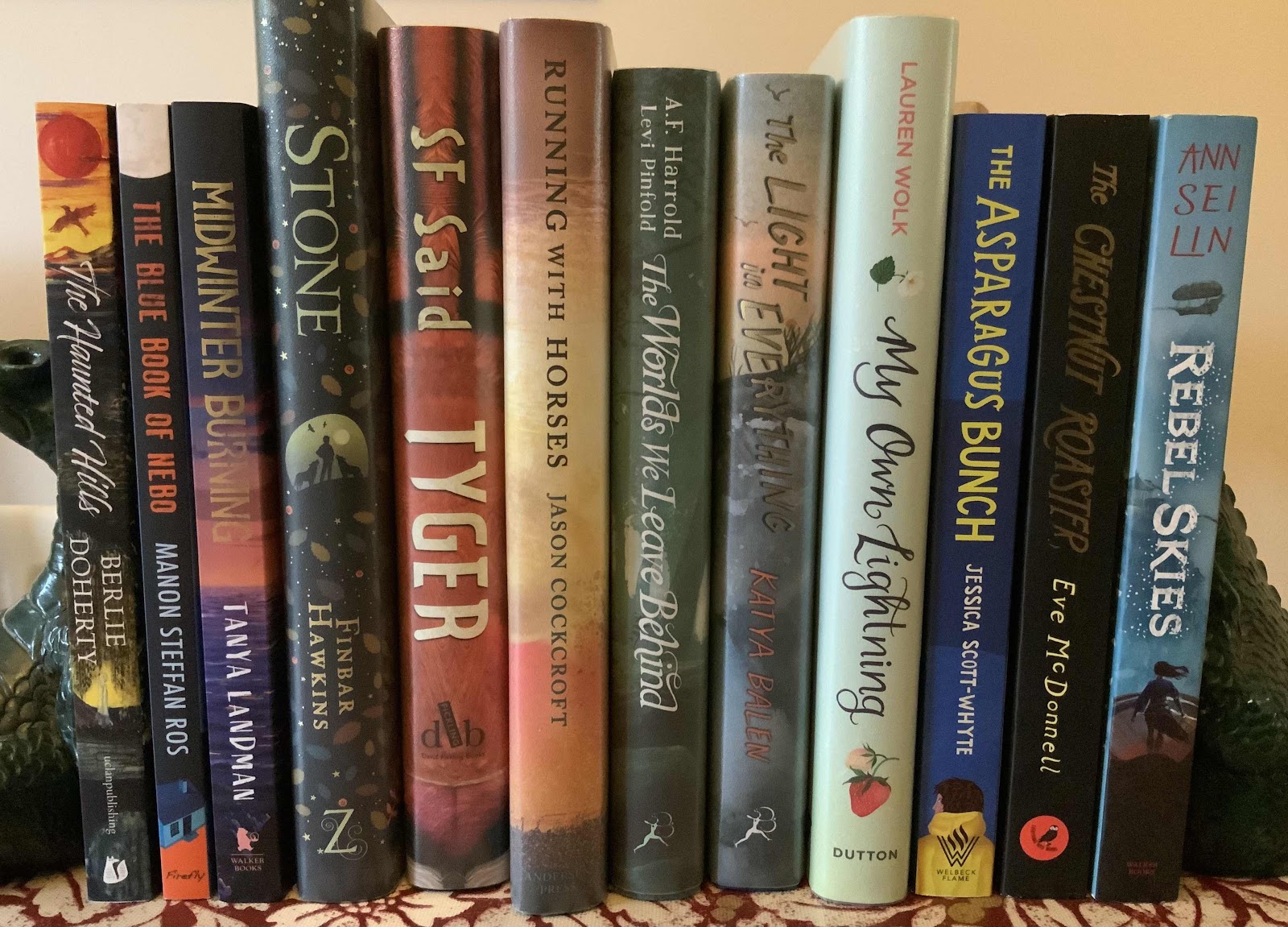
My Books of the Year 2022


Best of the best published in ‘22

Each of the children’s and young teen books I have reviewed this year has been outstanding in its own way. If it hadn’t been I wouldn’t have written about it. There may well be other wonderful new novels I have missed, but, of the ones I have read, these are my top twelve.

Images of images

This has been an exceptional year for illustrated fiction, by which I do not mean picture books or graphic novels, or even novels with a few illustrations, but ones where copious illustrations throughout form an integral part of the reading experience.


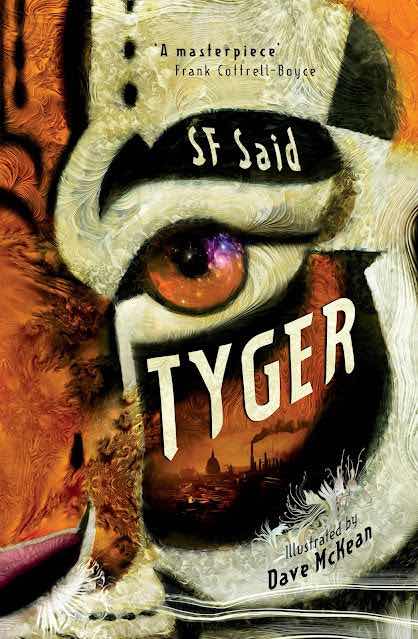
At the very top of the pile comes SF Said’s Tyger (reviewed in October), undoubtedly my favourite book this year. I don’t always like to follow the crowd, but in this case there is no choice. Staggering in its skilfully crafted, gripping narrative, it is a transcendental story, not simply underpinned with iterative reference to the poetry of William Blake but embued with his visionary spirituality, as well as his social conscience. It creates myth for our time and re-enchants our world as vitally as others wish to re-wild it. Dave McKean’s magnificent illustrations show just how much graphic images of real artistry can complement and enhance a text.

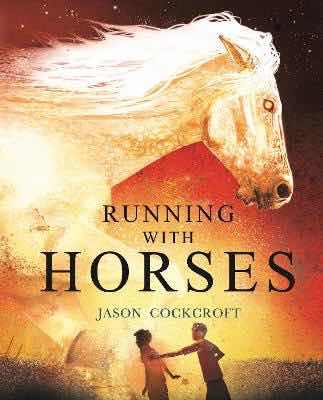
Jason Cockcroft’s Running with Horses (reviewed in August) is a study of close friendship as deeply affecting as it is disturbing. Gritty and violent in its almost hyper-realistic exploration of desperate deprivation, it nevertheless has a richly humane core, replete with understanding and compassion. A novel for teens rather than children, the illustrations, this time by the author himself, lift it into being a darkly beautiful and treasurabke book. Although perfectly readable as a stand-alone, it is actually a powerful sequel to the author’s equally stunning We Were Wolves, from last year. 

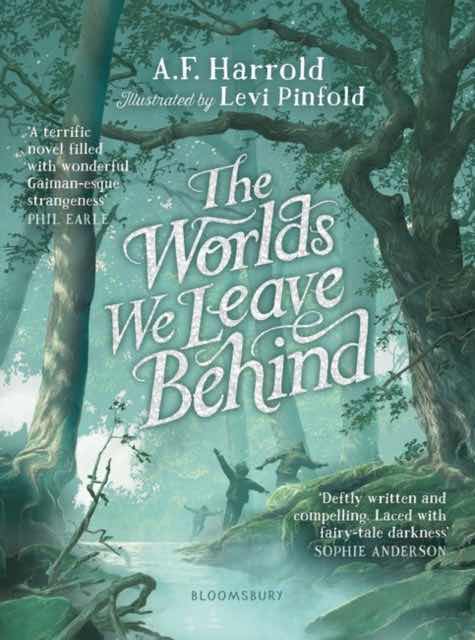
The Worlds We Leave Behind by A.F. Harrold (also reviewed in August) almost blows your mind with its haunting and haunted mixture of realism and fantasy.  It conjures a series of intensely experienced moments, switching shockingly between altered versions of existence, and yet pulls them together into flowing, viscerally exciting, storytelling. Its issues are very human, its ideas psychedelic. This is a book that will end up with thinking, as well as feeling,  readers, even if it did not start with them. Here illustrations from the amazing Levi Pinfold fully complement the author’s sometimes almost poetic prose to create a breathtakingly brilliant reading experience for children or anyone older too.

Thinking differently 


It is wonderful to see the significant increase in children’s books with neurodivergent characters, as well as those with wider representation of diversity and inclusion. There are still not  enough of them, but some progress is better than none. Jessica Scott-Whyte’s The Asparagus Bunch (reviewed in July) certainly deserves a prominent place amongst these most welcome works, It succeeds brilliantly in making characters with Asperger’s (ASD) highly entertaining and often funny, without ever making fun of them. This bunch of children (Asperger’s Bunch/Asparagus Bunch - get it?) are hugely likeable and the voice of narrator (or supposed author), Leon, is quite beautifully caught. Other  characters, especially his two mates, leap into endearing life too. It is a book that will help develop understanding and empathy, even as it engages and delights, showing joyfully just how much value differently-thinking people can bring, both to our literature and to our world.

The human spirit


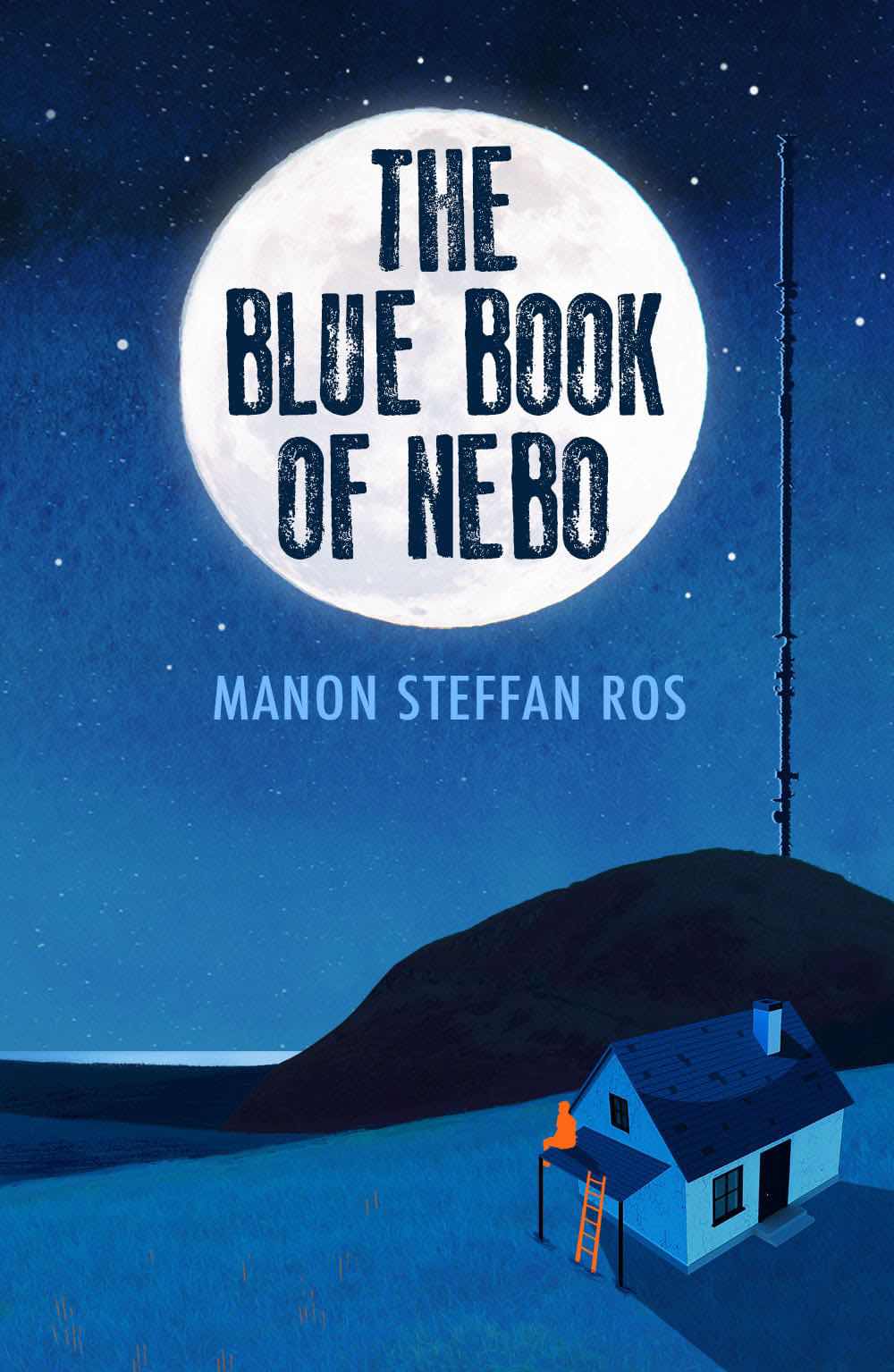
The Blue Book of Nebo by Manon Steffan Ros  (reviewed in January) was my favourite book of the year until Tyger came along - and it still pushes it close. In fact, as this one is more suitable for a slightly older audience, I think I can say it is my favourite teen book of the year. In this post-apocalyptic tale sentence after sentence is highly original and beautifully wrought. The narrative of a boy and his mother, a boy and his life, is as uplifting as it is harrowing. It is at once quintessentially Welsh and completely universal. Its cover illustration by Becka Moor, with the tiny, bright figure looking out over a minimalist blue landscape, seems to capture the book’s spirit wonderfully. It is an exquisite masterpiece of literature, 

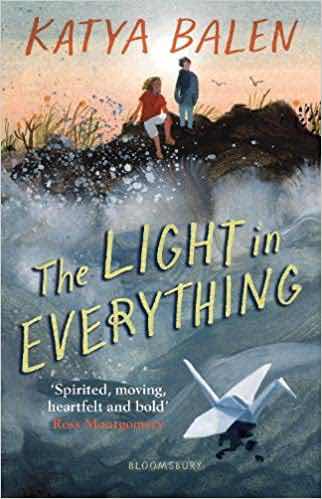
For me (and, I think, many others) Katya Balen is already established as a great writer. Her latest book, The Light in Everything (reviewed in April), only serves to compound this. Her beautifully crafted, economical prose has incredible power and effectiveness. Although darkness permeates the book, it is, as its title suggests, ultimately an uplifting testament to the strength and light of the human spirit. It is as beautiful as it is brave and original. 

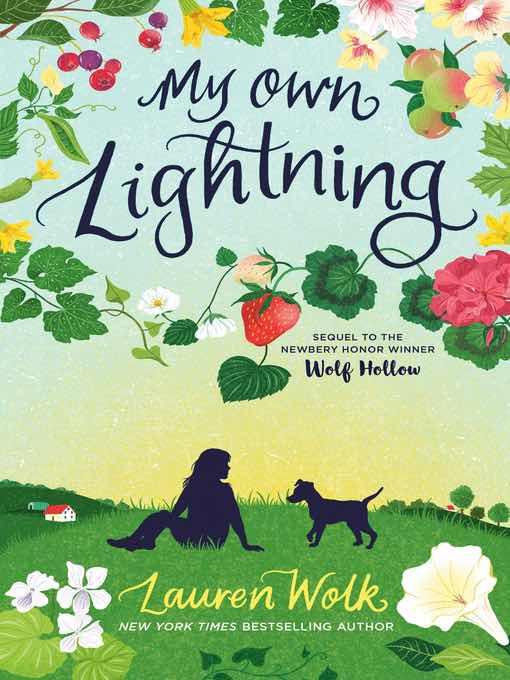
I hold Wolf Hollow, from outstanding US author Lauren Wolk, in such high esteem that I was worried when she produced this sequel, My Own Lightning (reviewed in May) lest it fell short. Any concerns were soon dispelled. Even though it could be read as a stand-alone, it is dependent on knowing the first book for its full impact - but that impact is profound. A slow, reflective read, rather than a roller-coaster adventure, it is the beautifully-crafted exploration of a young girl’s sensitivity to both nature and to other people; another moving and uplifting celebration of the human spirit. 

Landscape and legend

Three books stood out to me this year as great examples of the fine post-Garner tradition of children’s literature; that is, they draw richly on British landscape together with its legends and folklore.


Finbar Hankins made a big impression on me with Witch, his powerful teen historical novel, published in 2020. Although loosely linked in some clever ways, his latest, Stone (reviewed in September), is not a sequel, but an equally strong and engaging work. This time with a contemporary setting, albeit tinged with ancient magic, it is a deeply affecting study of loss and grief, told with simple but penetrating language and rich metaphor. Its combination of earthiness and sensitivity underlies a masterly, compulsive narrative.

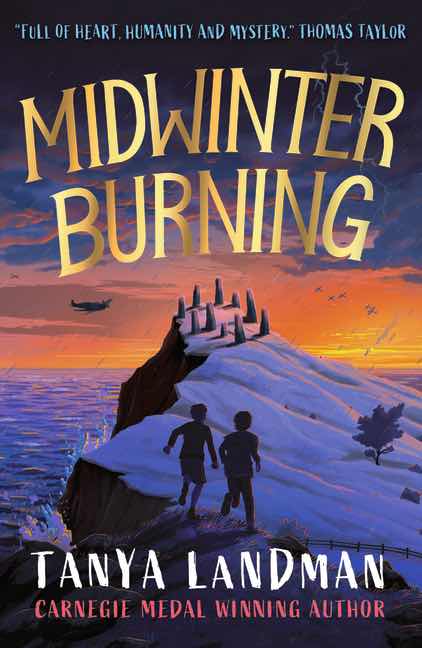
Tanya Landman has also made a well-deserved name for herself with strong historical novels for teens. Recently though, she has turned to a slightly younger audience and Midwinter Burning (reviewed in November) is another exciting example. 
Her WWII evacuee story starts off as a peon to the joys of the English countryside. However, after its protagonist somehow conjures up a friend from the landscape’s prehistoric past, it turns into something much stranger and darker. Its narrative draws on the potency of  an ancient megalithic circle, with its present and past associations, to explore willing sacrifice, both patriotic and personal. A  very fine book. 

Berlie Doherty is one of the treasured names in UK children’s literature, and over the years has added many splendid titles to the canon. Now here is another quiet triumph in her recent The Haunted Hills (also reviewed in November)If this novel, set in deepest Derbyshire,  has a slightly old-fashioned feel, then it is old-fashioned in the best of ways. Language and narrative skills, honed to perfection with experience, work to combine remarkable understanding of the young teen psyche with deep human compassion. In a compelling novel of strong friendship and traumatic loss, landscape and inscape enhance each other in illuminating symbiosis. 

Supreme storytelling

My final two unmissable books are not as deeply meaningful as the other choices, but they fully merit their place here through outstanding writing, storytelling and imagination.


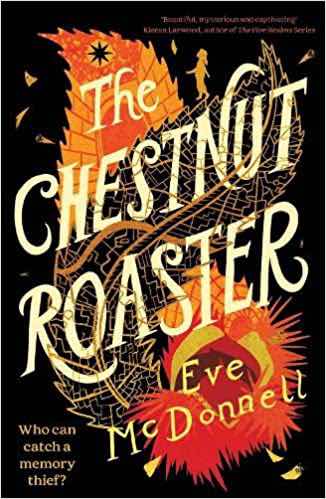
In The Chestnut Roaster Eve McDonnell uses language to startling effect to conjure up Nineteenth Century Paris. Even more so, to bring to vivid life the voice of her idiosyncratic but endearing protagonist, whose sparrow-like fidgets and flutters, both physical and mental. are quite brilliantly caught. Amidst a cast of vivid characters and atmospheric locations, the reader is immediately plunged into dramatic action, with tension only letting up very occasionally to heighten the authors gripping storytelling. I would have no hesitation in recommending this book strongly to any confident young reader; they would not only be royally entertained, but exposed to a model of  wonderful writing at the same time.

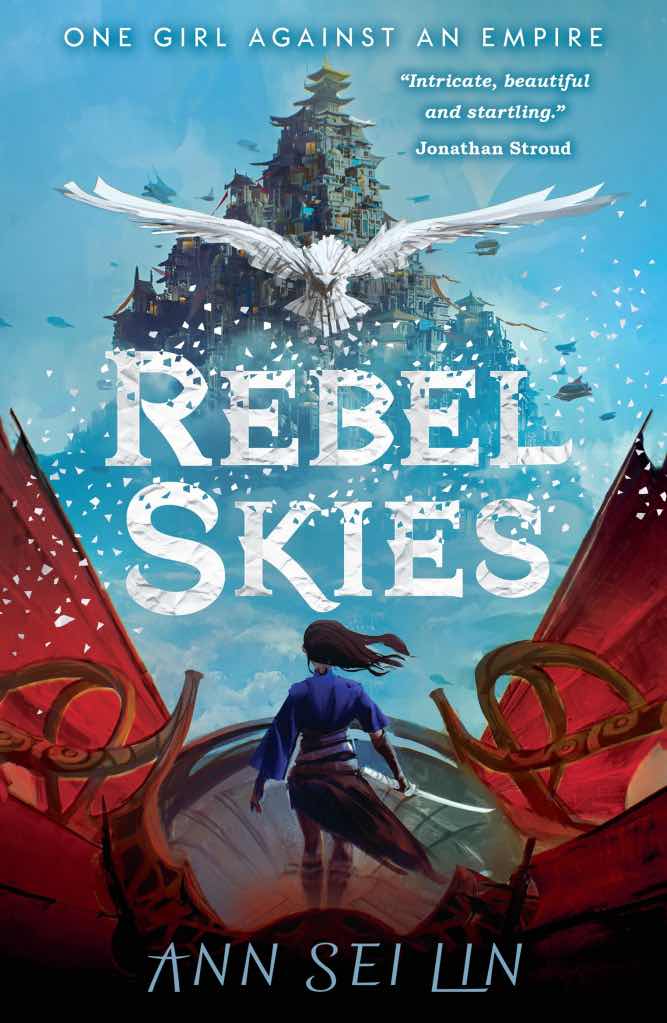
With so much teen fantasy about, originality is hard to come by. So, when startlingly fresh ideas are combined with the quality of writing found in Ann Sei Lin’s Rebel Skies, it makes for a very special book. At heart, her story is built around enough classic tropes to feel familiar as sci-fi/fantasy, albeit with a distinctly orientalist vibe. However, the main premise of this exciting tale is a strange and beautiful magic that can create wondrous creatures, and indeed functioning machines, from paper. It is mystical origami as a superpower. This may sound far-fetched but, in context, it is totally convincing and the narrative is as compelling as they come. It all adds up to my favourite high fantasy of the year.