Here are the occasional reflections of a joyful traveller along the strange pathways of fantasy and adventure. All my reviews are independent and unsolicited. I read many books that I don’t feel sufficiently enthusiastic about to review at all. Rather, this blog is intended as a celebration of the more interesting books I stumble across on my meandering reading journey, and of the important, life-affirming experiences they offer. It is but a very small thank you for the wonderful gifts their writers give.

Thursday, 9 June 2022

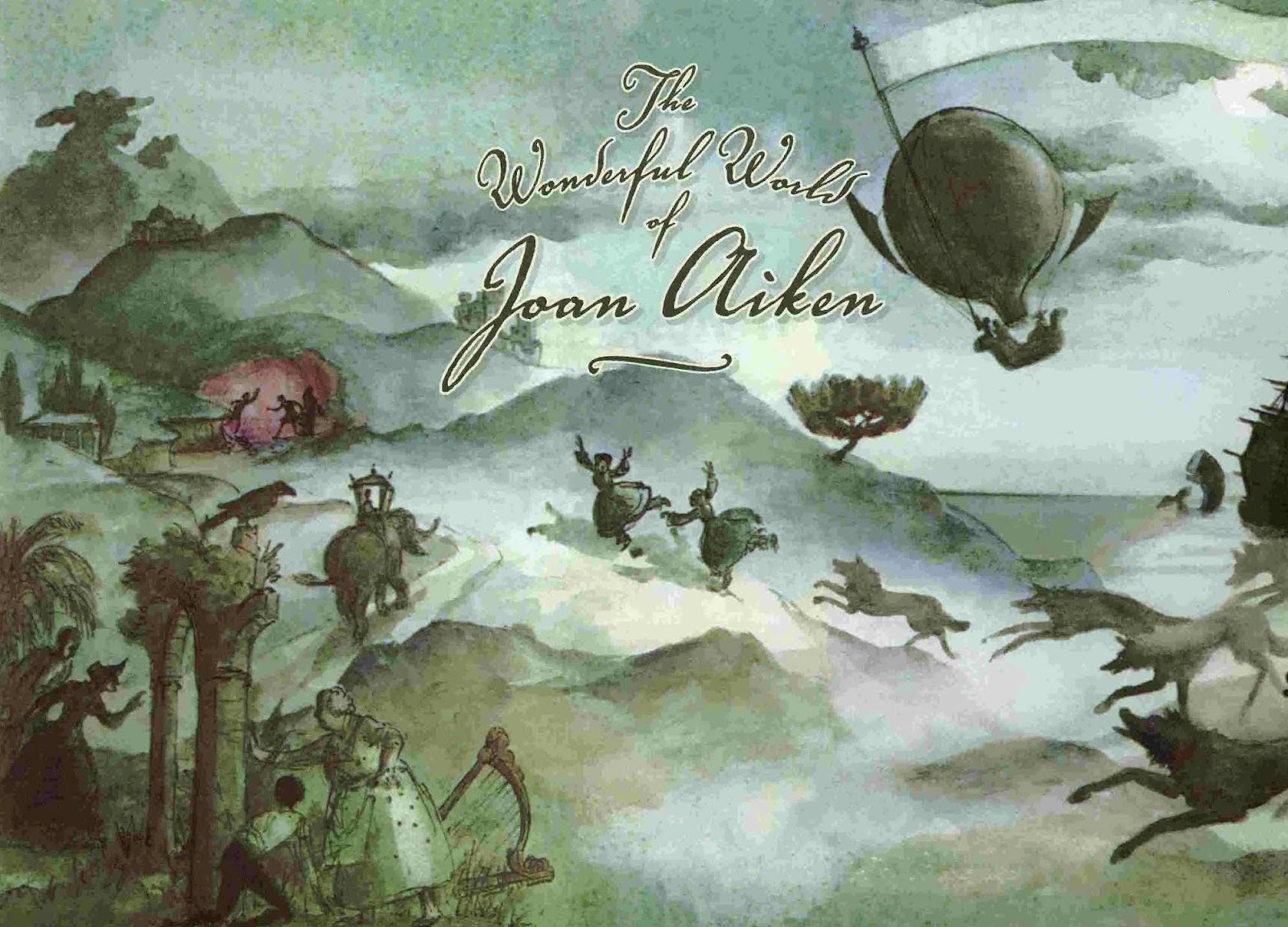
Rediscovering JOAN AIKEN


Great but sadly neglected (by me at least)

I have long thought of Joan Aiken as one of the greats of children’s literature. To be honest, though, it is a long time since I read any of her books. She wrote a lot of children’s novels, I mean a lot. Many I have not read since they first came out, and some not at  all. In fact, the only one I would claim to remember in any detail is her classic, The Wolves of Willoughby Chase, and that largely because it was an often-shared favourite of our children when they were growing up.

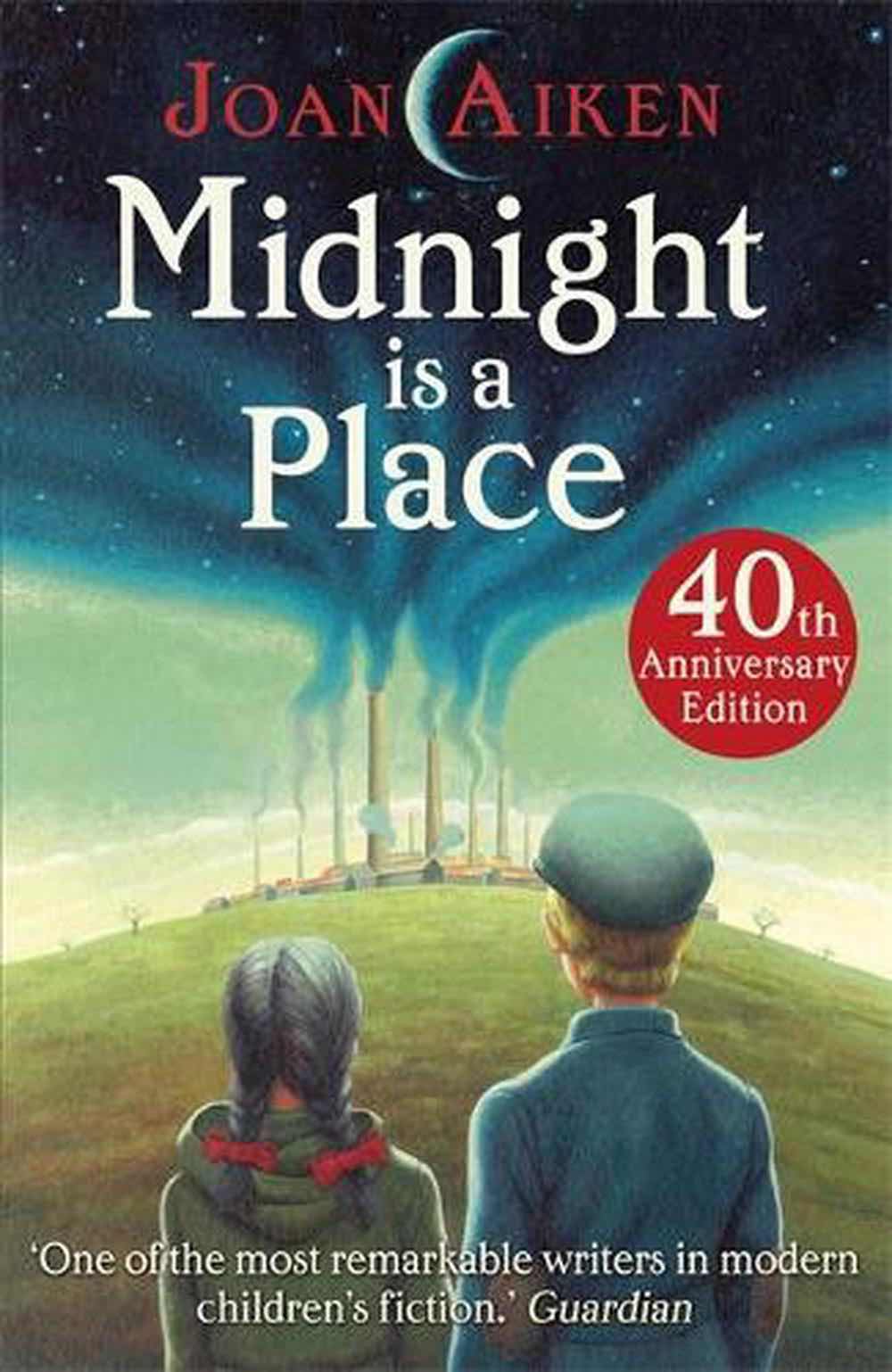
A chance find in an independent book shop of a (rather tatty) first edition of her Midnight is a Place has now set me off on a twofold quest: to read (or reread) as many of her older children’s books as I can, at the same time collecting their first editions, if I can manage to find them at not too exorbitant a price.

As I go through, I will record my Aiken journey here. However, as I do not wish to abandon my reading and reviewing of contemporary children’s fiction either, and as the physical copies could be hard to ferret out, it may well be a fairly long-term undertaking. 

Midnight is a Place


‘Meet me, meet me at Midnight,
Among the Queen Anne’s lace.
Midnight is not a moment,
Midnight is a place.’ (p 237)

I seem to have started my revisiting of Joan Aiken with a slightly untypical book. Her work is often described as having Dickensian elements, but this one goes much further. I think it could fairly be described as full-on ‘Joan Aiken does Dickens’. It does not have anything much of the whimsical fantasy, or the witty humour of much of her other work. Although her northern town location, Blastburn, also crops up in The Wolves of Willoughby Chase, she also moves away here from here from her typical ‘reinvented’ early Ninteenth Century, to a more realistic Victorian, industrial milieu of grime, poverty and child exploitation in ‘dark satanic mills’. Not one but two disinherited orphans (you get your full money’s worth of orphans) stoically endure the worst degradations, and very real mortal danger, working one down the sewers, the other in one of the said mills, before remarkable coincidences of ‘fate’ finally improve their lot. For all its lack of originality this is a gripping story, grippingly told. As a historical piece it has not dated in the way of some writing from this era, and remains wonderfully accessible for young readers. I think they will get far more out of this than trying to read Dickens himself whilst still too young. Joan Aiken’s skilful command of English prose is an object lesson for aspiring writers. It provides so much richer a reading experience than many of the trendy present tense narratives currently so ubiquitous. This is a book that most certainly doesn’t deserve to be neglected. (And what a wonderful title!) 

Tuesday, 7 June 2022

GLASS TOWN: novels inspired by the childhood imaginings of the BRONTË siblings

(A brief digression from my usual reviews of recently published books)

Childhood imaginings

Children discovering the Brontës* may be interested to explore some outstanding fiction inspired by the stories these famous siblings invented when they themselves were children. This might particularly apply to any keen young readers (or indeed older ones) who have visited the former Brontë home, the fascinating Haworth Parsonage in Yorkshire.

The young Brontës frequently made up games and plays about their own imagined lands and sometimes wrote these  romantic adventures down in tiny hand-made books, which can still be seen in the Parsonage Museum. The four children often took inspiration for their characters from a set of twelve toy soldiers belonging to Branwell, brother to Charlotte, Emily and Anne. Frequently too they centred their fantastically imagined events in and around a place they called ‘Glass Town’. 

The Town


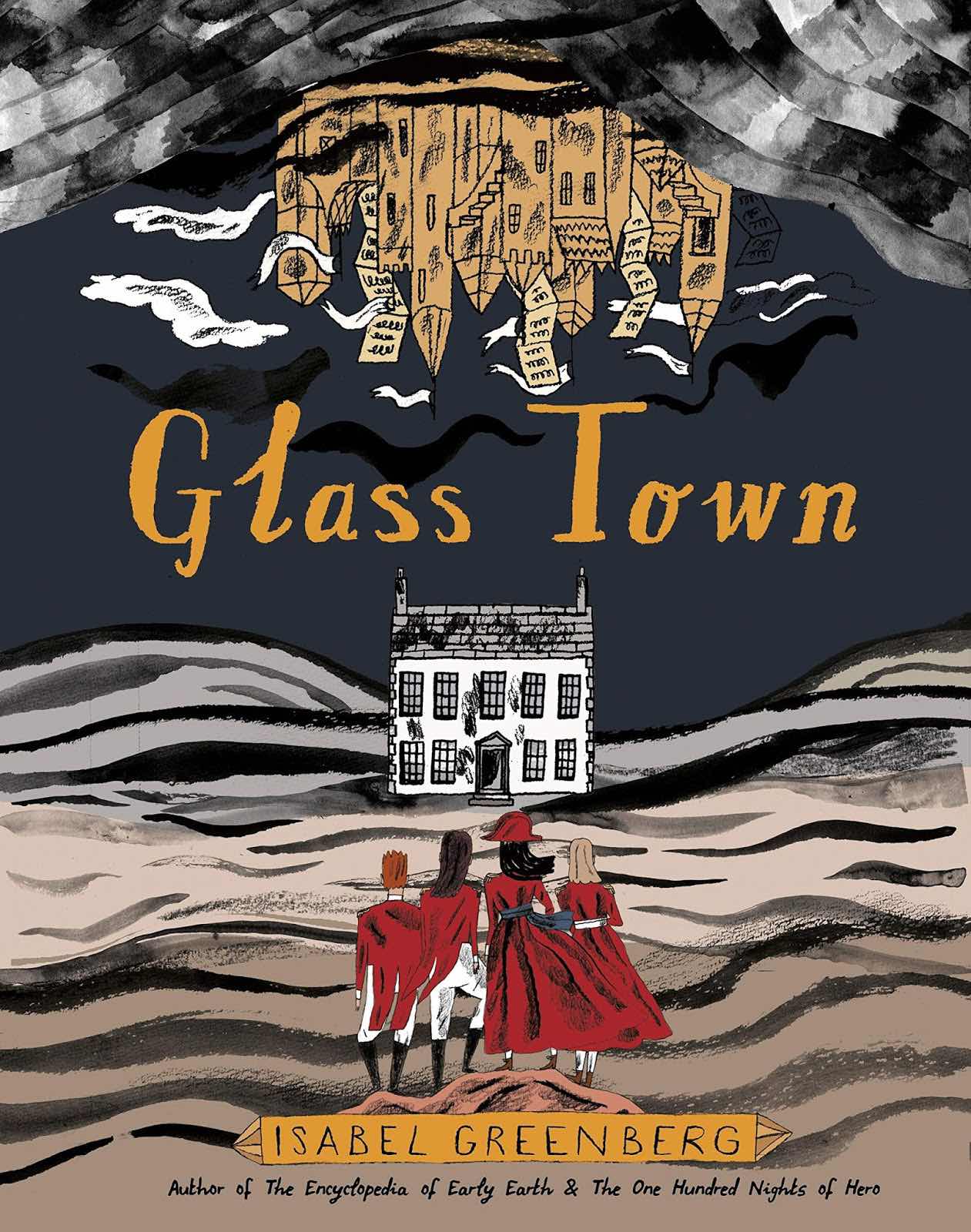
Possibly the most generally accessible of the books based on the Brontë childhood stories is a wonderful graphic novel by Isabel Greenberg, first published in 2020 and called simply Glass Town. Although it does involve some fantasising on the author’s part, it is in fact reasonably true to both the historical/biographical facts and to the content of the children’s imaginings, all put together as a complex and arresting book. 

I know some adults can be rather sniffy about graphic novels, but any prejudice is misplaced. The best can provide  absorbing reads, often offering a good deal of literary and intellectual challenge. It is certainly the case here and this clever fictionalisation is well worth the time of readers of any age from about 10 upward.

The Twelve


Pauline Clarke’s true modern classic (renamed The Return of the Twelves in the US) won the Carnegie Medal back in 1962. It is the first children’s novel I am aware of to take up this Brontë theme. However it is not about the family directly but rather a boy who, a hundred or so years later, rediscovers Branwell Brontë’s set of toy soldiers, ‘The Twelve’. The figures respond to the warmth of his attention and come alive, still with the names and personas the Brontë children gave them. Together the boy and his tiny friends become embroiled in escaping the clutches of an unscrupulous dealer who wished to obtain the soldiers as valuable Brontë artefacts.  The book inevitably now feels a little dated in some respect, but notwithstanding, it is a real gem of a story, original and totally charming. It does not seem to be remembered or read anywhere near as often as it merits.

Clearly this is not a book to entice reluctant readers, but for committed, bookish children, it will provide much of real interest and enjoyment. (Although currently out of print, it does seem that reasonably priced used copies are still around.)

The Game


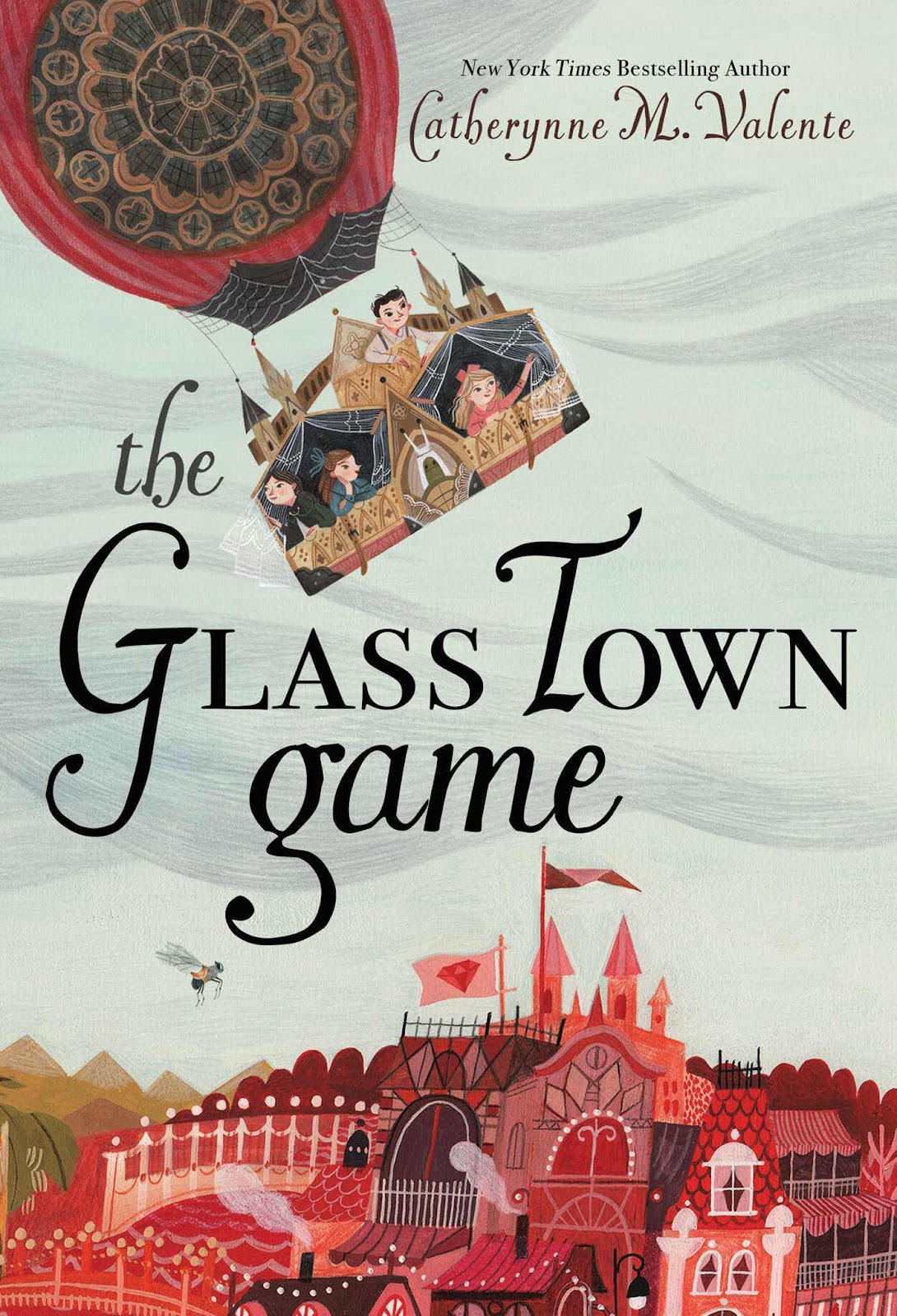
Of the prose fiction here, this would certainly be the most approachable for many MG readers, although it is a fairly long book. Its emphasis is strongly on whimsical fantasy entertainment. Popular American author Catherynne M. Valence uses the Brontë children as her main characters and the novel starts with its feet securely in the realms of history/biography. Indeed it also employs many of the fantasy characters the Brontës invented. However, the author’s imagination soon takes over and children and reader are whisked into exciting speculative adventure way beyond the original little stories. The writer succeeds very well in maintaining a strong period feel, in action and language, without this ever becoming heavy or pretentious. Within fictional bounds (or lack of them) she develops both characters and plot convincingly and if she plays fast and loose with historical characters, then so did the Brontë children. This book really is tremendous fun and is very much in the spirit, if not the letter, of the real children who inspired it.

As well as a very entertaining read in its own right, the book would work either way: as an interesting follow-up to those who have already started to find out about the real Brontës, or as an initial stimulus for those yet to discover them. 

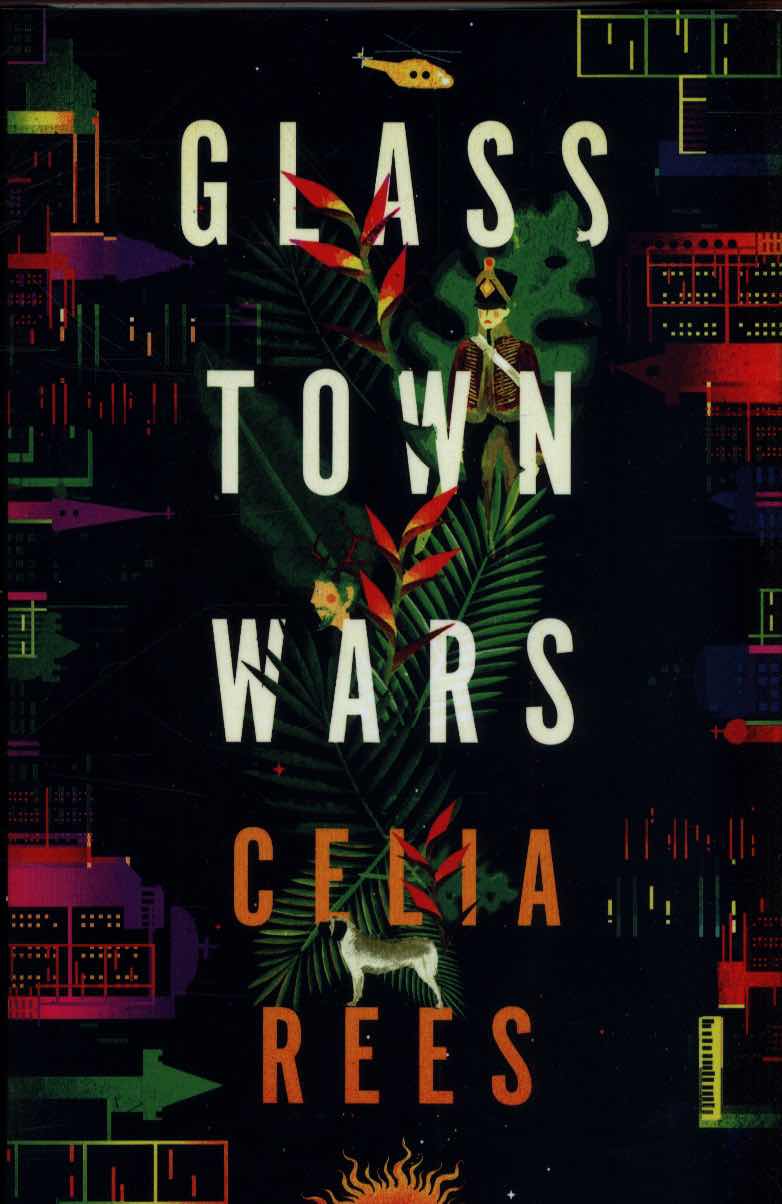
The Wars


Celia Rees’s book is aimed essentially at a YA readership, although is almost certainly only for the more sophisticated end of this audience, with a style and challenging ‘literary’ complexity well towards an adult model. Published in 2019, it is, I think, the most recent work from a writer long held in high regard and is in many ways archetypical of a late work. Although owing some inspiration to, and often referencing ,the Brontës and their childhood imaginings, it is is no way biographical. Veering between a contemporary setting and wildly speculative fantasy, it is a multi-layered, in-depth exploration of the relationship between reality and imagination. It provides a riveting, if occasionally confusing, reading journey, with a great deal to offer to the right readers. It is certainly interesting to pull out the threads that lead back to the Brontë world and see what a complex tapestry of her own this experienced and undoubtedly talented author has woven from them. 


*Footnote

There are some delightful children’s non-fiction books on the subject. I particularly like:


And a brilliant recent publication (just out in paperback):


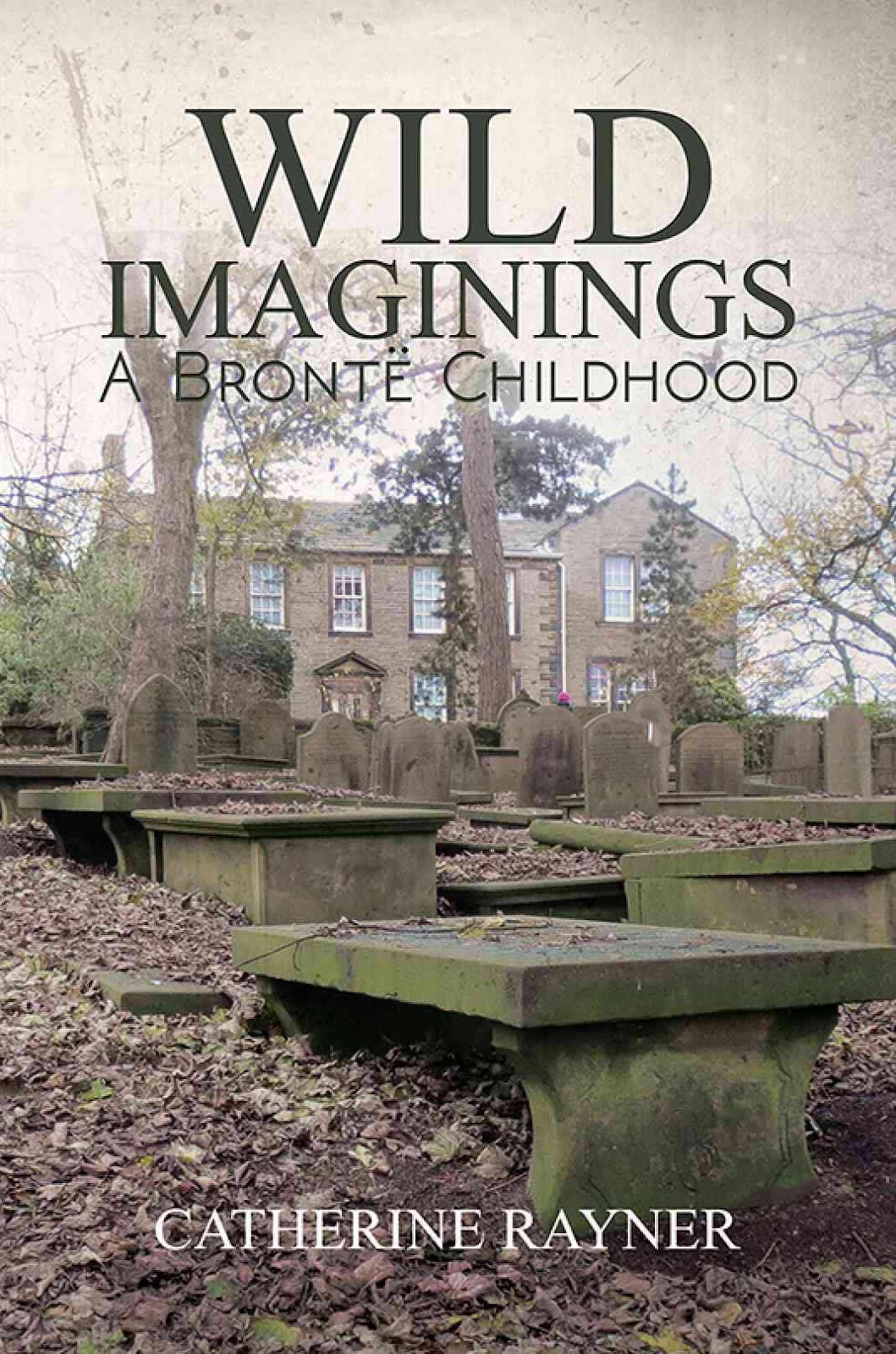
Strongly recommended for older readers, Catherine Rayner’s book is semi-fictionalised but soundly based on biographical evidence:


Wednesday, 1 June 2022

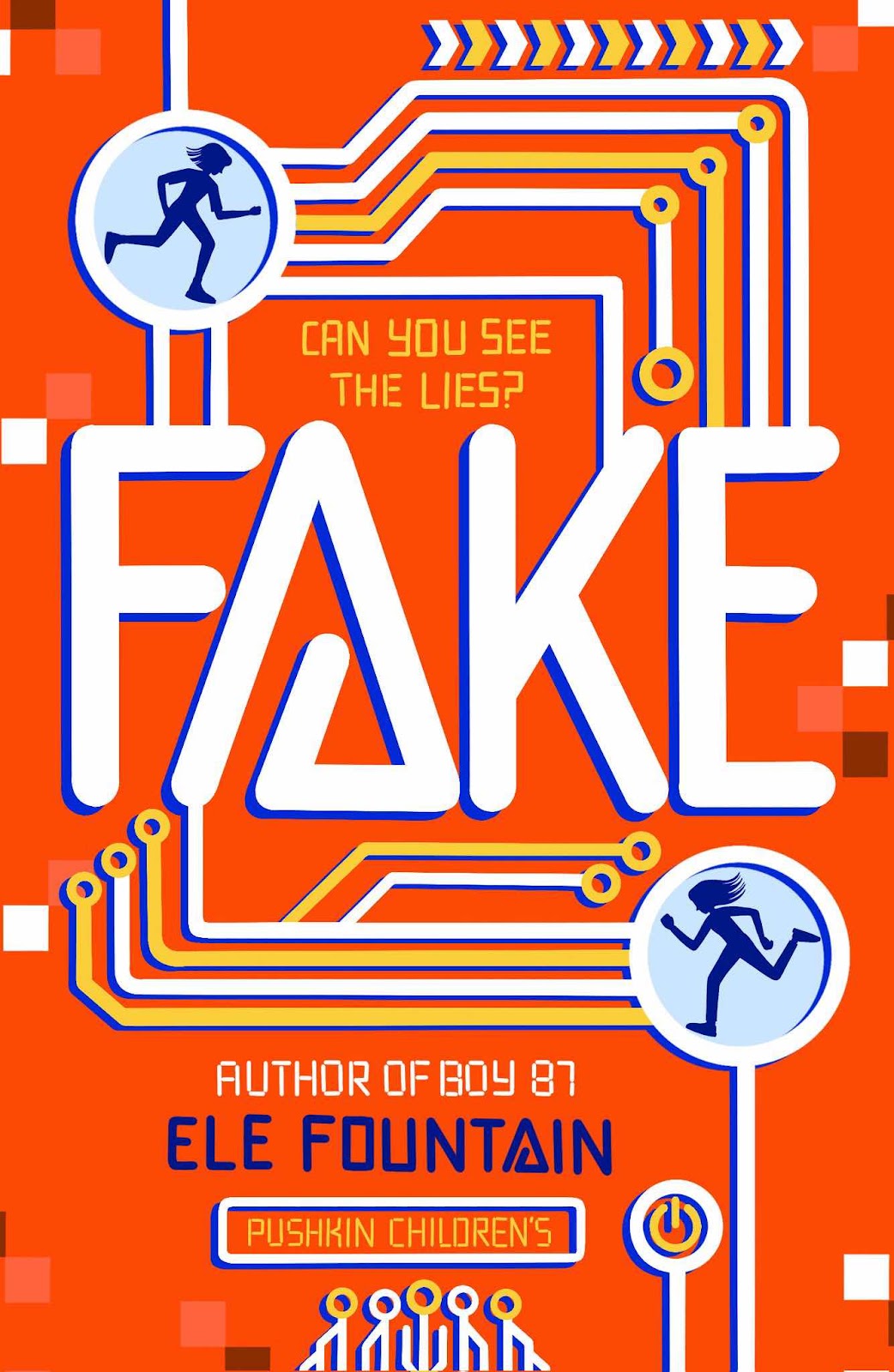
Fake by Ele Fountain


Cover: Thy Bui

‘Be bold. Question everything. Don’t forget to brush your teeth.’

Ele Fountain’s very real talent (and it is a considerable one) is to write books that heighten awareness of  important contemporary issues at the same time as engaging readers in a completely compelling story. Has she done it again with her latest book Fake?

Fake or Fortune?

The evidence:

Whilst it is not about the Coronavirus pandemic, the fact that it resonates with many recent lockdown experiences and preoccupations make it startlingly potent.

The author never patronises her young readers with excessive exposition or explanation. They are left to infer the world and how it works from what the characters say and do.

Its world is close enough to ours to be simultaneously worrying and completely credible.

It brings into question many things we accept (or could easily come to accept) far too readily: on-line teaching; internet buying; virus hysteria; unnecessary health supplements; computer  hacking; exploitative prices for vital medicine; obsession with technology; virtual finance; the dominance of global tech companies; personal data abuse; social-media ‘friends’

At the same time it joyously celebrates: real books; the natural world; family; music and music making; creativity; real (actual) friends.

It confronts moral issues, without moralising

Its writing and plotting are thrillingly clever.

Its storyline is so compelling that pages turn themselves (metaphorically but not virtually).

You will scream advice at its protagonist, Jess, but she has to learn for herself, just as we all do.

It is deeply disturbing, but hopeful too, without being naively optimistic.

It believes in people not technology and here its hope lies.

If ever there was a book to be read on paper, not on screen, this is it (except perhaps for those deeply into irony!).

It is a must for all young readers from about 10 or 11 upwards.

The verdict:

Fresh, provocative and engrossing, Fake is 100% genuine and virtually priceless (although literally 7.99).


Sunday, 29 May 2022

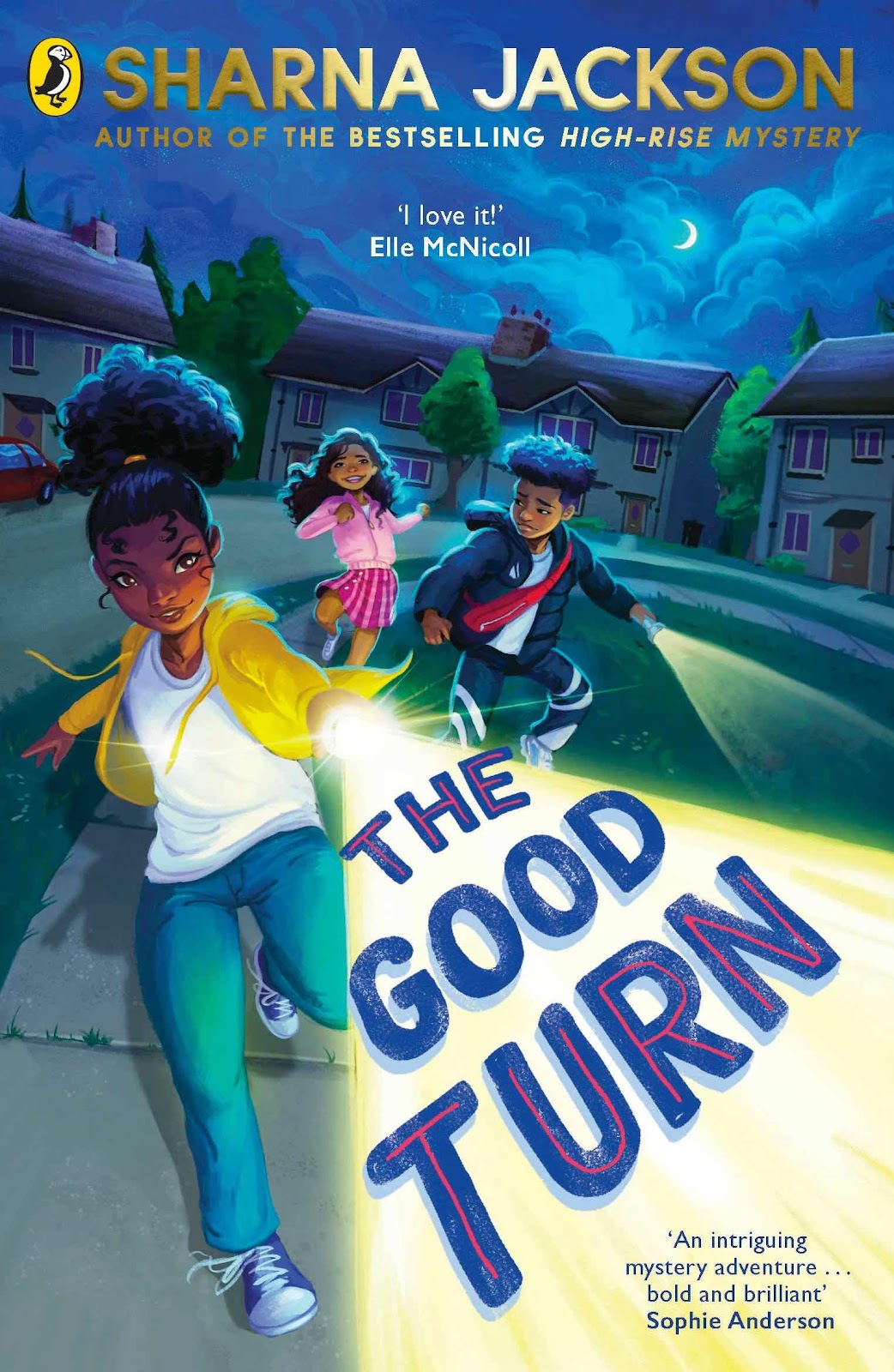
The Good Turn by Sharna Jackson


Cover: Paul Kellham

Not the only word for it

The brief review quotes so often found on book covers are clearly selected to provide maximum hype and are sometimes to be taken with a pinch of salt. However Katherine Rundell describes The Good Turn as ‘a joy’, and, in this case, I can think of no better word. The book is indeed an absolute joy. But it is also an important and moving lesson in humanity.

High-rise achievements 

It is great that we are finally seeing a considerable improvement in diversity and inclusiveness  in children's books, in terms of both their authors and illustrators and of the characters represented; books that far better reflect the wonderful richness and heritage of our British society. Supported by outstanding publisher Knights Of, author Sharna Jackson made a very substantial contribution to this with her brilliant and deservedly popular 2019 debut High-Rise Mystery, and its sequel, Mic Drop. What she did so inspirationally was to put Black British children from a low-income background front and centre of an intriguing mystery/adventure. In this she massively helped other recent writers to finally dispel the spectre of Enid Blyton’s white, middle class, ginger-beer-quaffing children as the quintessential protagonists for this type of book. 

Mismatched trio 

However, her latest children’s novel, with a different publisher, is a rather different book too and, I think, an even better one. From a high baseline, she is already developing as a remarkable writer, without in any way diminishing her wonderful commitment to diversity and inclusion in children’s literature.

Whilst she keeps three Black British children as her principal characters for The Good Turn, this time they are a very contrasted trio of individuals. The whole story is essentially more character-driven than plot-driven, and, for me, revolves around witty, hugely entertaining dialogue and interaction between sparky kids of a type I more readily associate with American children’s fiction (for example, in Laura Ruby’s delicious York trilogy) but is a delight to see here in a Luton setting. 

Josie, the book’s narrator, is a bright eleven year-old with big ambitions. One might say she is pretentious, certainly precocious, as demonstrated by her current collecting of university prospectuses so that she can decide which institution will suit her future self best. Although her heart is in the right place and she desperately wants to do good in the world, you could perhaps describe her as bumptious, if bumptiousness can ever be considered amusingly endearing, which Josie certainly is. Her long-standing friend Wesley is far more pragmatic, sometimes cynical. He can lack confidence, even be timid, in some situations, but perhaps it is just that he assesses risk more realistically. The third of the trio, Margot, has only recently moved from London. The fact that she eats sushi and goes to clarinet lessons, much to the bewilderment of the other two, in both cases, gives a good indication of her rather more affluent background. In their different ways these three each have much to say for themselves, and usually do, which makes for delightful and frequently funny banter that is a joyous highlight of the book. 

Pledges and badges

In pursuit of her intention to improve, herself, her friends and the world, Josie follows the example of another Josephine, who founded the first Girl Scout troop for Black girls in America, and starts her own, ‘youth group for good’, albeit with only the three members. Her club has an ambitious, decidedly lofty code of moral behaviour. It also has more achievement badges than even Hey Duggee. Even though her club’s early attempts at activities do not really amount to much, the constant delightful banter between its three members is more than enough to keep the reader hugely entertained and engaged.

Despite the lightness of much of the early part of the story, a background of reality is established in that each of the children has a degree of difficulty in their home life,  from which their club activity is a partial escape. Josephine, an only child until now, is feeling very put out by the imminent arrival of a new baby brother. Wesley lives in one-parent family with a sickly mother and  several siblings, carrying quite a burden of care for the household. Whilst for Margot, who has moved with her father from an extremely well-heeled home in London, following a separation from her mother, Luton is something of a come down, even though she is trying hard to accept it.

Real issues

About half way though, the story segues into something rather more serious. Although the narrative still remains essentially character-led, events do intrude to move those characters on.When the children encounter older residents of their area in rather surprising circumstances, real jeopardy increases considerably for all concerned. As the narrative is drawn out with consummate humanity by this super writer, the children come to learn more about injustice in their society and, indeed, succeed in doing more real good than they may have thought they had. If, by the end, they may seem to have returned to their initial level of club,  badge-obsessed activity, it is not really so. In the course of events they have learned more about themselves and grown as individuals. Perhaps their readers will have too.

Joyous and more

This text has a high level of readability that  results from a great deal of authorial skill in both language use and narrative construction. Combined with a genuine understanding of children, an awareness of how they think and respond, these qualities make the book highly accessible to a broad readership, who will identify easily with one or more of its vividly drawn characters. The very credible lives, aspirations, strengths and vulnerabilities of its protagonists are all too human. Young readers will enjoy it enormously, be entertained and amused hugely, but still discover and absorb much, about themselves as well as others, in a completely non-didactic way.

When a book contributes significantly to the representation of Black children in fiction it is an excellent thing for all. When it also contributes sensitive insight into scandalous social injustice it is doubly so. When, additionally, it is an fine work of children’s fiction in its own right, engendering the growth of both empathy and self-awareness, it is very special indeed. The Good Turn is everything a contemporary novel for young readers should be and do.

Saturday, 28 May 2022

Dragon Skin by Karen Foxlee


One of Australia’s finest

Some books are great because of their complexity, their richness, their intricacy, but others can be great because of they are simple, or at least deceptively simple. Dragon Skin is one of these. Karen Foxlee is a very talented Australian author, one of a number of wonderful children’s writers from that continent. Sadly books published in Australia are difficult to get in the UK, but we are fortunate that Karen Foxlee’s children’s novels have also been published here Her first masterpiece for this age group, Ophelia and the Marvellous Boy, was brought out by Hot Key Books and the heart-rending Lenny’s Book of Everything (one of my Books of the Year 2019) is published by Pushkin Children’s, as is this, her latest. And Dragon Skin is another absolute gem of a book. 

Deep trauma with a light touch

For starters it gives a vivid and evocative picture of a mining town in outback Australia and of the life of a child growing up there. But Dragon Skin is far more than this. Bereavement, and the way a child deals with it, is a recurrent theme in Karen Foxlee’s books and it features again here. Ten year-old Pip has suddenly lost Mika, the boy who has been her very close friend for two years, and is struggling to cope without him. The often highly entertaining, and touching, story of their friendship is interleaved with the narrative of her most recent few days without him. But Pip has other huge problems too. Her mother is in an abusive relationship, as indeed, it appears, Mika’s mother has been too. The author uses the novel to explore how deeply children are affected by such abominable home situations. Yet even with these twin themes, Dragon Skin is not in the least maudlin or depressing. Karen Foxlee’s genius is to communicate trauma and deep emotion with a light touch. She treats Pip and her situation with profound sympathy, but also a good deal of humour, and captures her young voice perfectly. However, Karen Foxlee understand boys well too. Her conjuring of the overtly resilient, but inwardly vulnerable Mika is equally brilliant. It is just the behaviour of some men that appalls her - and quite right too. 

Simply huge 

All of this is told through the ‘fantasy’ of  rescuing and adopting a baby dragon,  a potentially clichéd idea, but which is here handled with masterly effectiveness. Despite dealing responsibly with some very real horrors, Dragon Skin is touchingly simple and simply very touching. It is also, ultimately, supportive and encouraging. It will be accessible for younger children from about 8 yrs, although this certainly does not imply that it should only be read by the young. It may be a short, simple book, but it is ‘Sky-huge. Galaxy-huge. Universe-huge,’ (p 318). 

Dragon Skin was one of my Books of the Year for 2021. Anyone who has missed it so far should not hesitate.

It has just deservedly won the prestigious Aurealis Best Children’s Fiction award in Australia.

Sunday, 22 May 2022

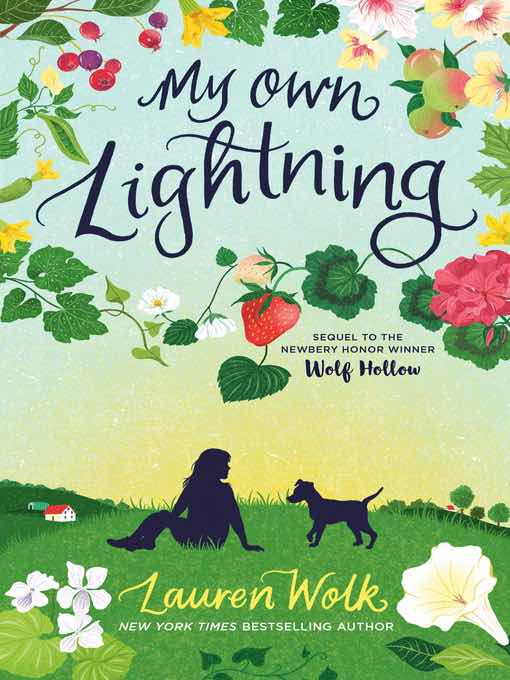
My Own Lightning by Lauren Wolk


Cover: Dawn Cooper

‘All around me, the world whispered its secrets, and I felt myself listening harder than I ever had before.’ (p 55)

Following on

US author Lauren Wolk’s Wolf Hollow is one of the all-time great works of literature for young readers. Deeply rooted in the time and place of its setting, ruralAmerica in 1943, it is one of those novels whose themes are so important and whose writing is so outstanding that it is of international stature. It has been compared to To Kill a Mocking Bird and, although inflated parallels are often thrown out as part of the hype for contemporary books, in this case the comparison has a good deal of validity. Wolf Hollow is very much its own book, but its quality and importance are indeed something close to Harper Lee’s classic.

Since Wolf Hollow, this author produced two further outstanding stand-alone novels for young readers, Beyond the Bright Sea and Echo Mountain, of which the second is a particular favourite of mine, a real gem of a book. (See my review from July 2020.)

Now, excitingly, Lauren Wolk has written a direct sequel to Wolf Hollow itself. And another truly wonderful novel it is. 

My Own Lightning is a true sequel, rather than another novel in a sequence, in that it follows on directly from the first, taking up the situation of its main characters only a short period of months after we left than in the first. Whilst it might be possible to read this second book out of sequence, picking up by implication something of what happened in the first, its true potency and importance really depends on having read the first. We already need to have experienced, alongside her, all that protagonist Annabelle went through in Wolf Hollow, which amounted to a very great deal.

Rural life and lightning

Whilst the setting of both books is during the Second World War, this is not a war story, in fact the war impinges on this second book, less even than in the first. There are no more than a few references to its impact on actual life in the American countryside. What this recent historical context does give Lauren Wolk is the opportunity to conjure, and conjure very vividly, what was still at that time the rather simpler, more rustic daily life of a small community. And where this really pays dividends is allowing both author and reader to focus very intensely on people, on their relationships with each other and with the natural world around them, without some of the complications of modern living. It acts as a fictional microscope providing a quite wonderful close-up on the core humanity that is her focus. Let other books be about contrmporary issues, this one is about the heart of who we are, how, in essence, we see the world.

The brilliant core concept of this novel is built around Annabelle being struck by lightning whilst caught outdoors during a severe thunderstorm. Atlthough not actually killed, thanks to the speedy intervention of a unknown rescuer who is able to resuscitate her , she subsequently experiences a startling intensifying of her senses, including a remarkable ability to interpret the thoughts and feelings of animals. However, it is when what her younger brother calls her ‘superpowers’ inevitably fade away, alongside her burn scars, that Annabelle begins to explore how being struck by lightning has truly changed her.

Writing skill

My Own Lightning is the work of a mature writer, a superbly skilled crafter with words, as well as with narrative structure. This is another ‘slow’ book (see my recent review of Kelly Barnhill’s The Ogress and the Orphans), again in a very good way. It allows the characters to seep into you, until they become a part of you and you them, in that very special way we are all part of each other. It is quite brilliant at evoking the days, hours, even minutes of Annabelle’s life; when she helps prepare a meal, we get to know what type the potatoes are, precisely how she cuts them, and, most pertinently, exactly how they smell. Through such details, of her thoughts and feelings as well as her actions, we live her story with her, vividly, intensely. And most miraculously of all, her lightning enhanced senses heighten our awareness of her vividly conjured world, and, in consequence, of our own world too. Lauren Wolk very cleverly echoes feelings and behaviours both in the characters’ relationships to animals, and in the ‘personalities’ of the  creatures themselves. Her implication that one of the truest ways of seeing people’s worth is by observing their response to animals often holds true.

One becomes two

Sequels to great books very often do not have quite the impact of the original. It is almost a necessary corollary. But if this is true of My Own Lightning then it is only because it has such enormous boots to fill. It is still an outstanding book. However, I do think there is good reason to now consider the two novels as a conjoined pair. For protagonist Annabelle, and indeed for the reader, the second book is very much a resolution of the first. If the first story is about trauma, then the second is about its healing. If the first is about some of what is very wrong about our world, then the second comes some way to helping understand how it might be improved. In learning how to harness her own lightning, Annabelle discovers at least a degree of understanding, forgiveness and acceptance, of herself, of others and of past events. She shows us a way forward. But although the narrative’s resolution is warm and hopeful, it is not simplistic or sentimental. Annabelle is ultimately a realist, albeit an optimistic one. Her story holds us with emotion in a way that moves us deeply.

This is not a book for those seeking the thrills and spills of rollercoaster fiction. This is quite a different ‘lightning’ story from Percy Jackson and the Lightning Thief. But instead of excitement it has depth and subtlety, its own engagement, not with adventure but with discovery of self, of others, of a world with much that is difficult, but also much to be thankful for. 

Whatever age, gender, race, creed, colour, sexuality, we all, like Annabelle, need to discover our own lightning.

Friday, 20 May 2022

Rebel Skies by Ann Sei Lin


Cover: Amir Zand

‘Do not walk the earth
For you are of cloud and sky.’ 
(p 229)

Fresh skies 

After more that a hundred years of fantasy/sci-fi stories, it has become increasingly difficult for authors to come up with  a concept of truly startling originality, and this applies in the field of children’s fiction just as much as in the adult. However, the remarkable Philip Reeve has done it twice recently, with his world of predatory traction cities, in the Mortal Engines sequence, and again with his network of space-busting sentient trains, in the Railhead trilogy. One of the remarkable things about both these scenarios is that they are almost laughably improbable in themselves, but are made totally convincing through the astonishing power of their writing and storytelling. 

Now a new author has done much the same thing again. Although it is indubitably novel, the idea of origami skill as a superpower could easily be, shall we say, somewhat hard to take seriously. Yet Ann Sei Lei creates a brilliantly imagined world so powerfully that its compelling credibility is breathtaking. In fairness, the power of her ‘crafters’, although clearly inspired by origami, involves a magic of creating from paper that as far exceeds the simple folding of flapping cranes as does a lightning storm from the striking of a match. It is a rare and considerable, if sophisticated talent. Similarly the paper monsters, known as ‘shikigami’, that maraude the world of Mikoshima, where the narrative is set, may sound ridiculously vulnerable. However, they are, believe me, in the context of this vividly evoked fantasy, every bit as terrifying,as any ‘Ring Wraiths’ or ‘Baldrog’, both to its characters and to the reader, 

Fresh winds from the East

Additionally, although set in a purely imaginative world, the whole story and its telling are grounded in Japanese culture. This not only permeates the tale’s ethos, as in the naming of characters and places, but also the language of the writing itself, particularly in its idiosyncratic imaging and metaphor. To this Western reader at least, this gives the whole book a fascinatingly distinctive and excitingly novel feel.

When her companion describes the destruction of her lifelong friend Haru as ‘a waste’, protagonist Kurara responds:

‘“Waste!” . . . . Haru was not a thing accidentally thrown out with the trash. Stains on a silk kimono, ink spilled on a carefully composed haiku: they were a waste. Haru was a person. The only person that had ever meant anything to her.’ (p 57)

The oriental feel to this speculative world is totally compelling. 

Trauma and treachery

The driver of the narrative involves Kura’s quest to restore to life her long-standing friend, Haru. After he is destroyed in a monster attack, she is shocked to realise that he too is a shikigami, a magical paper construct, but manages to save his ‘core’. From this, she comes to believe, he can be re-made, but only by powerful crafter magic, something currently way beyond her own abilities. She therefore needs to find those who can teach and help her. It is an intriguing twist on a key fantasy trope and one which the reader has no difficulty investing in alongside her.

‘Kurara had always loved making paper dance - the tingle of power through her fingers, the soothing rustle of paper - but this time she was not using her abilities for fun. She was doing it to save Haru.’ (p 119)

There is also a rich, if disturbing, context to Kuara’s personal story. In this breathtakingly different world of airships and sky cities, a belligerent Empire is fighting to expand its territories. Further there are two rivals to the succession of the Emperor, sibling prince and princess, whose supporters are involved in deadly intrigue and treachery. 

Whirlwinds

Above and through all this Ann Sei Lin’s plotting and her control of the narrative are superb. It is complex without being complicated. Around two-thirds of the way through the book comes one of the most startling, even shocking, twists of recent fiction. It is at once both  devastating and even more powerfully involving. As it develops, her story evolves from something excellent into a creation quite breathtakingly superb. There is awesome beauty, exciting action aplenty, but also depth of character and rich emotion, with all its strands weaving together towards an utter gripping, cataclysmic climax.

The final third or so of the narrative transforms outstanding young children’s fiction into literature of real quality. It is a novel that has much to say and provides a great deal to think about, not through didacticism, but in and through the power of story itself. It treats the profoundest themes, friendship and loyalty, found in many tales for young readers, with more complexity, more nuance than is often the case. Far more than this, it is  about our unstable world community, about what may or may not be ‘artificial’ intelligence, about the monsters we, perhaps unintentionally, create, about prejudice and, more than anything about power over others, ownership, slavery. It is a story of humanity and inhumanity.

Ann Sei Lin joins the ranks of authors like Ursula Le Guin and Isaac Asimov in showing us that speculative fiction can make us reflect upon our selves and our own world whilst involving us intensely in imagined ones.  And, crucially,  do this at the same time as providing the most intensely compelling of reading experiences. 

Sky high and flying

The end of this book leaves many tantalising questions unanswered. But then how else would the first part of a continuing sequence end? This is planed as the first of a trilogy, something for which all readers will be unspeakably grateful, if somewhat frustrated by the impending wait.

This novel  is remarkable, by any standards, and as a debut is, I can only say again, breathtaking. We may be something less than half way through 2022, but I feel absolutely certain that this older children’s/YA title will be one of my Books of the Year. If there is any justice, watch out for multiple awards coming its way.

Wonderfully, Amir Zand’s cover art is as stunning as the book’s content, the world of Rebel Skies just as brilliantly imagined and caught in visual image as it is conjured in its language. 

A final plea to the publisher: a book of this quality and importance deserves a hardback. It is to be treasured long.