Here are the occasional reflections of a joyful traveller along the strange pathways of fantasy and adventure. All my reviews are independent and unsolicited. I read many books that I don’t feel sufficiently enthusiastic about to review at all. Rather, this blog is intended as a celebration of the more interesting books I stumble across on my meandering reading journey, and of the important, life-affirming experiences they offer. It is but a very small thank you for the wonderful gifts their writers give.

Tuesday, 20 September 2022

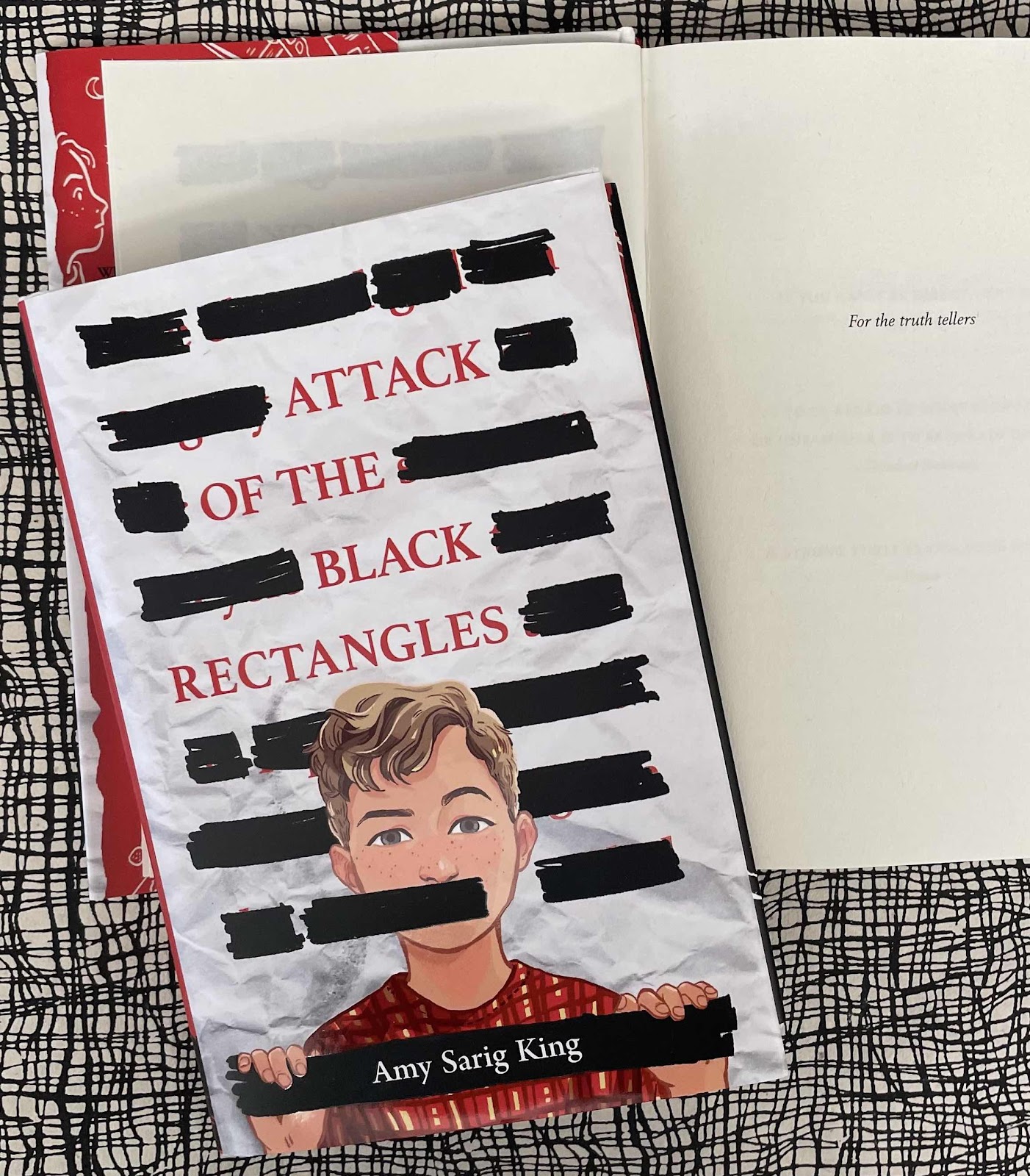
Attack of the Black Rectangles by Amy Sarig King : Why children must be free to read


Cover: Illustration, J Yang; Design, Elizabeth B Parisi 


Books that challenge

In terms of fiction, it seems to me there are two main categories of young people’s reading (or perhaps anyone’s for that matter). Like many such statements, this is of course an oversimplification. The reality is perhaps better represented by a Venn diagram of intersecting  circles than two separate columns. Some books will belong in both categories and placement may even depend on the response to a book by a particular reader. Even so, I think it is a helpful way of thinking for the argument I want to make here. 

First there are books that primarily provide amusement, entertainment and diversion. I suppose Harry Potter is the epitome here, but I am also thinking of  many comedies, exciting adventures, mysteries and fantasies.

Then there are books that not only engage but challenge. This challenge can be in terms of writing style; books that expand young readers’ experience of what a novel can be and do. These  can include fiction that is non-linear or told from different perspectives, stories narrated through letters email or social media communications, or ones that use language itself in ways new to the reader. Other challenges can be in terms of ideas, challenging thinking, questioning prejudices and stereotypes, for example, involving young readers with the lives and experiences of others very different to themselves or increasing their awareness and understanding of issues in their own world. Again, of course, some books will do both of these things.

This general distinction is in no way intended to belittle fiction in my first category. There are many instances when amusement, entertainment and diversion, ‘easy reading’, if you like, is exactly what young people need in books. Such books also play a great part in developing young people who not only can read but do, helping establish lifelong habits of reading for pleasure. They can also contribute much to the development of background knowledge, empathy, modelling such virtues as courage and determination and promoting the importance of family and friends. Children must be free to read such books whenever they choose, even if this is very frequently; adults do them a great disservice if they try to censure children because such books are ‘too easy’ ‘too young’, or even (in the case of comics, graphic novels and the like) ‘not proper books’.

Nevertheless, it is books in the second category, ones that challenge as well as entertainthat can make the most difference to the lives of young readers.They are the books that carry the real power and potency of story out into the world - and make a difference to it. They often constitute the most important contributions to the canon of literature for young readers. Of course, they cannot do that if they do not engage as well as challenge, but the best certainly do both. These are the books that children grow with and through, ones which I hope teachers, librarians and others will share enthusiasm for them, encouraging and supporting young readers to find. 

I would not wish to pass through this subject without mentioning how delighted I am to see Alan Garner’s Treacle Walker on the Booker Prize shortlist. Not only is major international recognition long overdue for this truly great writer, but Treacle Walker must be close to the apotheosis of a great novel that challenges young readers in just about every way..

A writer who challenges supremely well
 
Another of the most outstanding contemporary writers of challenging fiction for young readers is an American author, highly reputed in her own country, but not nearly as well known here as she deserves to be. She writes truly remarkable YA fiction as A. S. King, much of which is highly challenging in both style and content. I strongly recommend readers in the age group (or any older readers interested in high quality YA  fiction) to try to get hold of her work, perhaps especially recent books Dig and Switch. But be prepared to work hard for huge reward. Her YA work is often described as surreal, with good cause.

However, she also writes MG novels using her full name, Amy Sarig King. As befits the age group, these are slightly less difficult novels stylistically, but no less challenging in terms of their readers’ thinking. Her first two children’s books, Me and Marvin Gardens and The Year We Fell From Space are well worth seeking out. But her latest, Attack of the Black Rectangles, is an enormously powerful and important book, one that I think as many young readers here in the UK should have a chance to read as well as those in The States.

American is good

To a UK readership this author’s  books feel very American. (Although she can hardly be criticised for that, since she is American!) Hovever, as I have said before on this blog, I think many children here have now seen so many US films, TV programmes and videos that they have at least a degree of familiarity with cultural differences, the different school system, and the like. Beyond this, specific unknown references  in terms of vocabulary are easy and quick to look up. In any case, I think it is highly beneficial for our children to become aware of such a major western culture and its differences to ours (as well, of course, as its very many similarities). I therefore see the ‘American-ness’ of books published in the US not as a barrier but as a positive incentive for them to find young readers in the UK. The USA is home to some brilliant children’s authors  and it is a tragedy if our children miss out on their work.

Allowed to read (or not)

As its cover suggest Attack of the Black Rectangles is primarily about the censorship and banning of books. In particular, it it highlights instances of an, often small, number of adults denying children access to material that they think may  ‘give young people  the wrong ideas’, generally ideas with which the adults disagree with, or with which they patronisingly think the children cannot cope. Specifically here, protagonist Mac and a group of friends take issue with their teacher, school and ultimately district school board over passages that have been blacked out in the book they have chosen for their reading assignment. 

Now it may be that the censoring and banning of books is currently a larger issue in some areas of the USA that it is here, but it is a serious concern in some quarters here too, and one that we should not be prepared to overlook. What some children are allowed or not allowed to read, or simply not given the opportunity to read, needs far more careful consideration. If novels like this help to open up the debate, and allow children’s own voices into it too, then that is a very good thing.

Telling the truth

There are other related themes in this book too. Primarily, the way history has and is being distorted, not told or taught  truthfully. Specific American issues in the book concern the inappropriateness of some of their big commemorative days, in the light of such realities as almost three quarters of the ‘Founding Fathers’ owning slaves, and the white colonisation of North America involving slaughter and abominable treatment of indigenous tribes. However, there are more than enough similar British issues, both involvement in the slave trade and the many wrongs of colonialism, for the concerns to be equally applicable here. And although there have recently been some valuable steps forward in the growing appreciation of areas such as Black History, there are still far too many instances where reactionary attitudes abound. The cause of fair and truthful teaching of history to children still has a long way to go..

Throughout this richly themed book, also runs a more personal plea for honesty and truth, this time in relationship to the breakup of Mac’s family. As the narrative develops  he comes to realise that he is ultimately better knowing the truth that his father has has left for good, rather than maintaining the delusion that their relationship has a future. All of this is quite brilliantly captured through this author’s skilful storytelling, in scenes where Mac and his father take trips through space, the illusory nature of which he only gradually accepts.

Ultimately, however, the novel’s thematic strands weave together into into one: the importance of openness and honesty, of telling the truth to children. However, whilst taking a clear stand on the rights and wrongs of issues, this author is at pains to make clear that people themselves are rarely all good or all bad; this only adds to the integrity of a wonderful novel. Amy Sarig King ends her story with a resolution that is encouraging and positive, without being in any way unrealistic or sentimental. She is a writer of deep humanity and acute social conscience.

Uniting not dividing

The real life issues raised in this truly challenging novel are undoubtedly difficult to handle and even harder to get right. Often, there is a fine line to be negotiated. Clearly, adults do have a responsibility to protect children from material that is seriously harmful. However children’s books from legitimate publishers are unlikely, if at all, to harm or corrupt, even where adults disapprove of the characters portrayed, the themes explored or the vocabulary used. Books help children learn about themselves and their world - but only if they have the opportunity to read them. They bring us together - but only if we have the opportunity to share them. Amy Sarig King’s fine novel makes a very important point: children can understand and cope with with a great deal more than some adults give them credit for; telling them the truth about their own lives and the world in which they live is often far less harmful in the long run than hiding that truth in the name of protecting them. Children need the truth. They need books.

Over and above being a very engaging and often amusing read (which it certainly is), Attack of the Black Rectangles is a powerfully significant book, with crucial messages for today’s world.  It needs to be read by many young readers, and probably some adults too. I hope teachers, librarians and others will gently guide young readers towards such novels and, if necessary, help to access them. And a plea to UK publishers. This author’s books, and perhaps this one in particular, desperately need to be published over here. To presume its American context, or indeed its challenging subject matter, 
 is a barrier would be to patronise children and keep them from the truth in exactly the way the book so passionately and convincingly warns against.


Sunday, 18 September 2022

The Treekeepers by Kieran Larwood


Cover: Fernando López Juárez

Pedigree

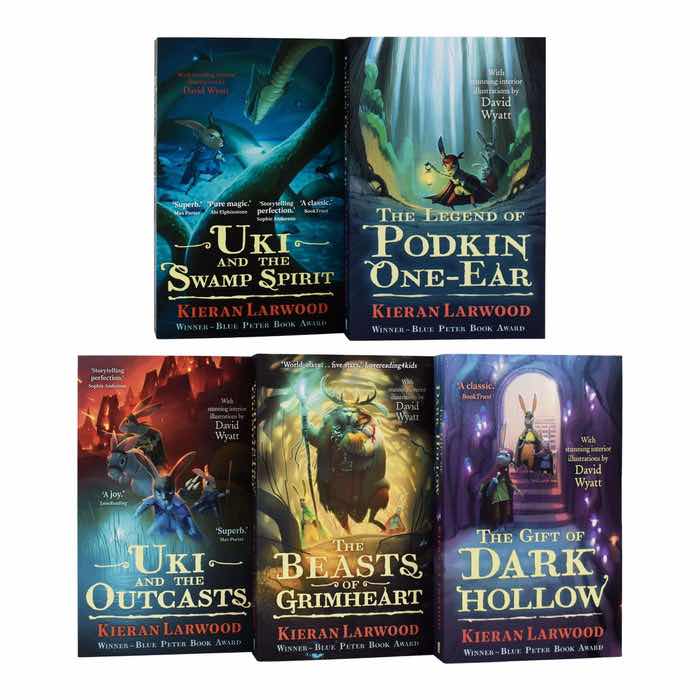
Over the years, a number of writers have made high fantasy accessible to younger readers by replacing human characters with anthropomorphised animals. One of  the most notable examples is the late Brian Jacques whose Redwall novels are still well worth seeking out for fans of this genre. However the best by far is Kieran Larwood’s recent series The Five Realms (3 ‘Podkin One-Ear’ books, followed by 3 ‘Uki’ books). They create the richest, most involving world of animal legends, heroes and villains and constitute a very significant contribution to the canon of UK children’s speculative literature. The blurb on the cover of Kieran Larwood‘s  latest book calls him ‘one of the greatest fantasy writers of our generation’ and, if you amend this just slightly to read ‘one of the greatest children’s fantasy writers’, then I think this is not too much of an overstatement. David Wyatt’s illustrations for these books represent a glorious triumph in their own right too. However, after six books, the decision to bring the series to an end was probably the right one. Such sequences can easily become over-extended and it is better to stop before they do.

Something old, something new 

However, Kieran Larwood seems to be fully back on song with a completely new fantasy, The Treekeepers. This one is very different from his Five Realms books in that its principal characters are not animals, but shapeshifters (here called shapewalkers) who change from human form into that of ferocious hybrid mythological creatures (griffyxes, pantherines,  cockatrices and the like). However, the fact that its protagonist, Liska, and her principal friends are child-aged keeps the narrative comfortably within a children’s perspective. 

The tree-dominated fantasy world that the author builds in The Treekeepers is very elaborate and complex, with many different layers of society and multifarious peoples and creatures. It is, in fact, so multifaceted that it takes quite  a lot of exposition in the early stages of the book and can be a little confusing initially. However,  once into the story, it is well worth the effort and the reader becomes immersed in a richly imaginative and very compelling fantasy environment.

A tree ring world

The story is built around many conventional high fantasy tropes and characters and is in essence a classic fantasy quest. However, there is more than enough that is original and highly inventive in the world building to make the whole book feel creatively fresh as well as uber-exciting and involving. The author brings a wonderful richness of language to his storytelling that is accessible to young readers without in any way sacrificing power and potency. Liska grows and develops convincingly over the course of the narrative. She and her companions are completely engaging and both good and bad characters (as well as some intriguing ‘in-betweens’) are brilliantly imagined and vividly evoked.

There are a good number of gruesome battles, which may put off some (adults), but then such conflicts  are, after all, the very stuff of high fantasy. As such, they are sufficiently distanced from reality as to avoid being too seriously disturbing and, in any chase, they will probably thrill and delight far more young readers than there will be concerned adults.

Although very decidedly fantasy, this new creation is based firmly around trees, with its levels of society radiating out from a heartwood centre like the rings of a great tree itself. Within this context, it strongly promotes the importance of keeping systems in natural balance and of harmony with nature in general. This links the book in timely fashion to real world issues and means it has much to say to young readers; its subliminal messages may well be more potent that heavy lecturing. Like the best fantasies, it is ultimately a good deal more than escapist entertainment, whilst still providing page-turning excitement.

Myth not to miss

Whereas The Five Realms draws very effectively indeed on the potency of legend, The Treekeepers feels more related to the world of myth. However, it is no less powerful and no less resonant for that. 

Whether or not this book will remain a stand-alone, or become the first of a new sequence, is not yet clear. However, I am absolutely sure that it will be be a favourite on many children’s shelves and borrowed enthusiastically from class and school libraries, where it absolutely ought to be found. It is a book that wins my strong recommendation for young fans of Harry Potter and other fantasy.

Chris Wormell’s atmospheric and evocative chapter-head vignettes add very significantly to the quality of this fine book.


Wednesday, 31 August 2022

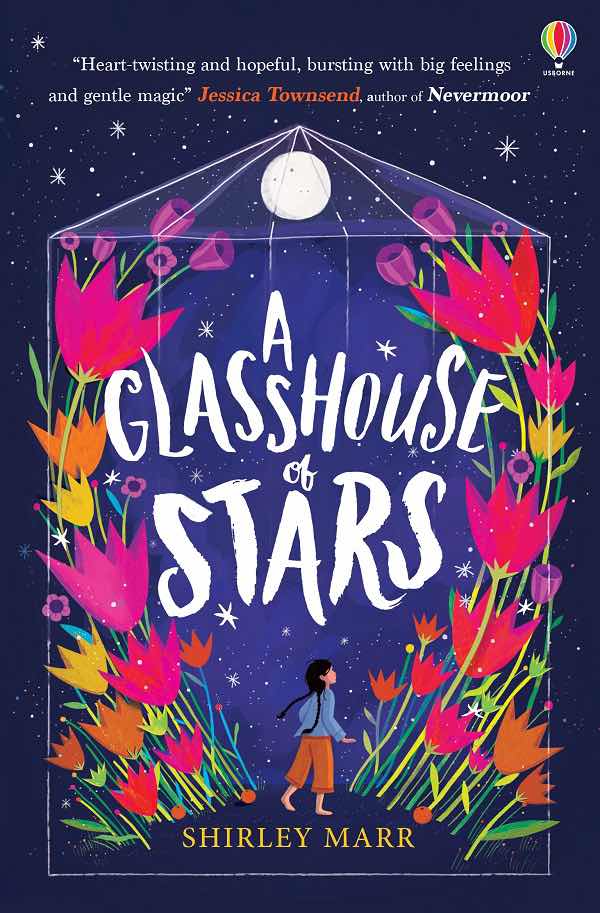
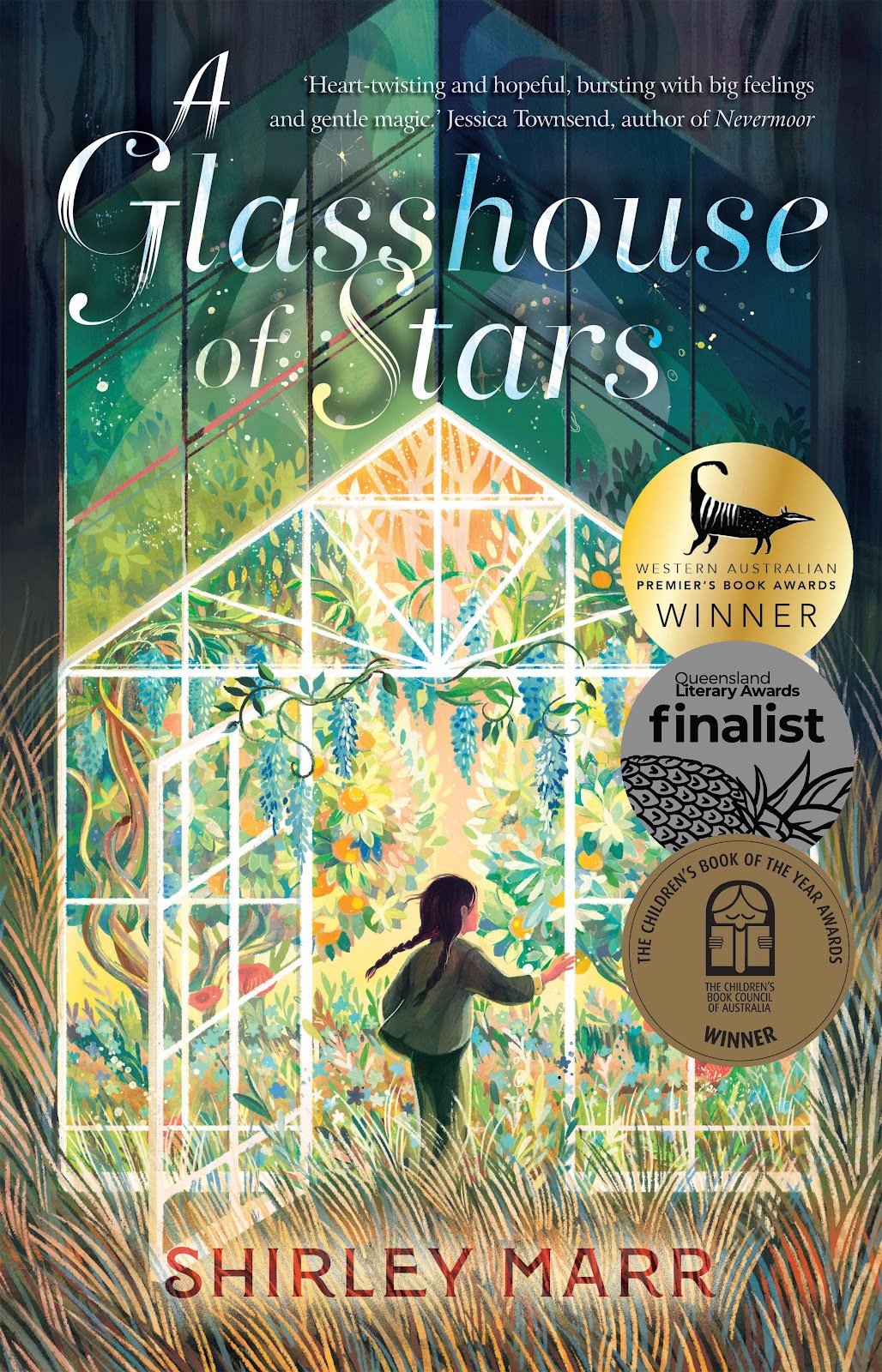
A Glasshouse of Stars by Shirley Marr


‘You are only dreaming of yourself dreaming.’  (p 134)


From the other side (of the world)

Australia has a wonderful tradition of children’s writing, including some very fine contemporary authors. However their books can be very difficult to get hold of here - and prohibitively expensive to ship. So it is always a treat when one of them is published in the UK too; it happens far too rarely. Even then, I feel they do not always attract the attention they richly deserve. Shirley Marr’s A Glasshouse of Stars was nominated for this year’s Yoto Carnegie Medal, which should help. I certainly hope so, because it is a truly lovely novel. I am only sorry (for myself) that it has taken me so long to get round to reading it.

The basic story, a Chinese girl moving with her parents to start a new life in Australia, is probably a long way from the experience of most UK children. But then I think that is a very good thing. Children of Chinese ethnicity are not found as often in this country as they are in Australia or the United States, but, even so, there are quite a few and they deserve to see themselves in books just as much as any other children. However, for others children too it is so valuable to know about their inherited culture and this novel is outstanding in providing a picture of customs and behaviours, indeed of thinking, that can feel very different.

Differently the same

However, more important are the things that children will find familiar; there are many universal themes and emotions explored here too. Moreover, the writing is so strong that it is easy to identify with protagonist Meixing even when her thinking and behaviour seem strange to us. In fact, this deep exploration of what Meixing goes through, as she struggles to adapt to a completely new life in what feels like an alien place, as well as the trauma of a close family bereavement, is quite breathtakingly sensitive. 

‘ . . . all this time you’ve been in survival mode. You’ve been kicking so hard at the deep water you’ve been thrown in, trying to float, that you haven’t thought about swimming, let alone noticed how great the pool is supposed to be.’ (p 130)

Her story is occasionally funny, often deeply touching and always brimming with the level of understanding that supports rich empathy. The couching of her narrative voice in the second person at first feels very odd. However, as the tale develops it seems to work an intriguing magic, emphasising Meixing’s alienation from her new surroundings yet, at the same time, placing the reader vividly into the scenario too.

Dreaming reality 

What makes this novel particularly distinctive though is the way its narrative periodically dissolves into a sort of magical hinterland, a world the author calls ‘somewhere between reality and dreaming’. Amazingly, this does nothing to destroy the credibility of Meixing’s affecting journey. Rather it adds a dimension of imagery that enhances and intensifies her experience and makes visible the luminous potential within her quiet personality. She is thankfully far more resilient than her superficial responses to circumstances imply. She can seem cowed by events and the often unkind, even cruel, behaviour of some of those she encounters. Even her own mother can appear outwardly cool towards her. Yet a combination of the support of those who truly care for her and the strength of her own imagination lift her ultimately into a world of love, life and growth.

Although probably not the right book to tempt reluctant or inexperienced readers, sensitive young bookworms will gain a great deal from its beautiful, imagination-rich writing, its hopeful insights and its life-enhancing vision. It clearly has some basis in the author’s own experience and it is hugely encouraging that she has grown into the wonderful writer she has. Like Meixing she has clearly discovered her glasshouse of stars.

‘. . . humans are so complicated, and this is heartbreaking and heart-mending all at once.’ (p 190)

So is this book.

Looking forward 

Shirley Marr now has a new MG novel out, All Four Quarters of the Moon, and I look forward to reading it with excitement.


Saturday, 27 August 2022

A Time Traveler’s Theory of Relativity by Nicole Valentine


Cover: Julia Henze

‘She looked at him in surprise, like she couldn’t believe someone else understood. They were connected again, by something deep and ancient. It felt like the beginning of a universe.’ (p 175)

Now in paperback 

I missed this US book when it was first issued in hardback  (not hard to do if titles aren’t simultaneously published over here) but, thanks to social media, I caught up recently when the paperback came out. As happens, it was one of those rare books where I started to read the first page or two as soon as it arrived in the post, just to get a feel before adding it to my extensive reading stack, but didn’t put it down until I had read several chapters. By that time I was completely hooked and it leapfrogged the whole pile. As this indicated, it is a very remarkable and hugely enjoyable novel.

A remarkable mash up

One of the many ways it is remarkable, is that it conflates two story elements that might often be considered unrelated, even incompatible.

In part it is a very compassionate exploration of a child’s bereavement, following the loss of someone very close. Of course this is a theme with a with a good many exceptional precedents in American children’s literature.* The story also involves a very intelligent, if intellectually challenging story about time travel. It could well be said that this too is a theme exceptionally well served in earlier US writing.** However, it is more surprising to see both themes combined in the way they are here. 

The novel’s exploration of loss, in fact more than one loss, experienced in more than one way, is handled with great sensitivity. Each iteration through the story rings tragically true and tugs at the heart strings. We feel every moment of sadness, anger and confusion alongside the vividly drawn main character, Finn as the events of the past play out through his present, a present as realistically conjured as the location in which it happens. Through all those moments it it is a story grounded in time, Finn’s time.

No ordinary travellers

Yet alongside this we and he learn about the way the female members of Finn’s family have the ability to travel through time. Now time travel occurs in many children’s books (and adult ones too, of course), but I have to say that, for me at least, even when a story is pure fantasy, I become less willing to suspend disbelief when there is complete disregarded of the logical complexities, potential paradoxes and likely consequences of such interference with time. Recent books that avoid this, seeking the true meeting point between science and fantasy, include Christopher Edge’s wonderful short novels, The Many Worlds of Albie Bright and The Infinite Lives of Maisie Day. And now here is another. Nicole Valentine is fully aware of recent theories of  physics -  relativity, chaos theory, quantum mechanics and such. Although her wonderfully imaginative tale is mind-boggling, sometimes confusing, by implying multiple timelines, even multiple universes, rather that alterations to a single lifetime, she never actually oversteps the bounds of (in)credibility.  

A Traveller like me has to play out versions of history so many times with different choices . . . It’s hard to explain.’ (p 206)

Who, where, when?

The themes of her book are further explored in an important (and entertaining) contrast between science-loving Finn, and his fantasy-reading friend Gabi as they act out their apparently different viewpoints and, maybe, work towards a point where they meet. Their relationship and their dialogue are quite beautifully rendered and add much to the book’s appeal. Yet more intrigue is added by an enigmatic, anonymous  voice that periodically intrudes into the narrative. It too is quite brilliantly handled and your guesses as to whose voice it may be also lurch  back and forth over the course of the cleverly worked story.

That Nicole Valentine manages to weave these apparently disparate elements (real grief and time travel, scientific theory and science fantasy) together so successfully is testament to a fine and original writer. It makes for a most intriguing and compelling read. And when the two main themes of her story collide then the shock is cataclysmic, for Finn and for the reader. His world’s tectonic plates metaphorically crash together.  

Mind blowing

In her thoughtful and very moving book, Nicole Valentine stretches our thinking and our imaginations and helps us towards that potential point where science and fantasy meet.

‘Quantum mechanics is the closest thing to real magic I’ve read about.’ (p 190)

 However, ultimately her novel is as much, if not more, about real life, family and friendship as it is about time  travel. As such it is a book of rich humanity. It is also extremely well written with language that vividly evokes its location (Dorset, Vermont, in New England) as well as the thoughts and feelings of its characters. It will be very well worth readers here in the UK taking the trouble to seek out.


Notes:
*e.g. Katherine Paterson’s Bridge to Terabithia; Doris Buchanan Smith’s A Taste of Blackberries (both unmissable modern classics) and, more recently, Ali Standish’s superb The Ethan I Was Before.

**e.g. Madeleine L’Engle’s deserved classic A Wrinkle in Time and, later, Rebecca Stead’s disturbing gem of a novel When You Reach Me.

***For any young readers seeking an accessible introduction to relativity and some of the other more challenging ideas of recent astro and quantum physics, I strongly recommend Prof. Russell Stannard’s ‘Uncle Albert’ books. (The Time and Space of Uncle Albert; Black Holes and Uncle Albert; Uncle Albert and the Quantum Quest) Although they are now approaching twenty years old, they are still relatively up to date (sorry) and also seem to be still in print.

Monday, 22 August 2022

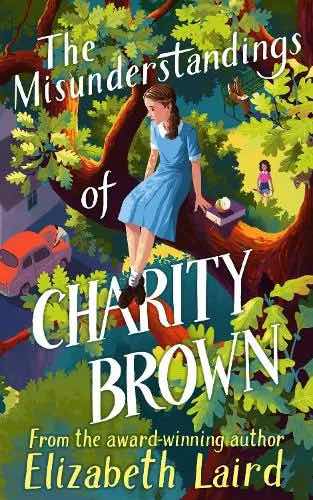
The Misunderstandings of Charity Brown by Elizabeth Laird


Cover illustration: Divid Dean

Established credentials

For over thirty years now Elizabeth Laird has been producing fine novels for older children/young adults, all well worth reading and some amongst the best examples of contemporary children’s literature.* Several times she has been nominated for the Carnegie Medal and won other major awards - and quite right too. Many of her books deal with children in crisis, facing war, displacement, poverty or abuse, often in Africa or the Middle East. She always writes with sympathetic 
realism, underpinned by detailed knowledge and understanding based on her own experience and that of others she has known. Her books are sometimes quite harrowing, but always engaging, affecting, illuminating and deeply compassionate. At very least a selection should be on the shelves of  young readers, or borrowed from school/public library, as well as in the repertoire of their teachers.

However her latest book, although a wonderful read, seems initially so different from her others as to be a remarkable surprise, if not indeed something of a shock. 

Made of memories

Elizabeth Laird is perfectly open that much of The Misunderstandings of Charity Brown is based on her own childhood, although heavily fictionalised. However, it reads very much like a memoir, a detailed slice of domestic life - and a very convincingly authentic one. This being the case, it took me a while to think of Charity Brown as a literary novel, although it most certainly is, and a very fine one indeed. In style and content I found it more reminiscent of the brilliant Hilary McKay than most of my recent reads, although that author’s latest successes were set during World War I and II, whereas Elizabeth Laird’s  new book is set in the post-war period of the 1950s.

Becoming Charity

The story is essentially about a young girl, the eponymous Charity, growing up in a religious family, their behaviour  bound by the narrow doctrines of a small fundamentalist and evangelical Christian congregation. As someone strongly anti-religious, I initially thought I might not take to this theme, but actually the narrative itself does not proselytise, almost the opposite. It strongly promotes the importance of every individual thinking for themselves, and charts Charity’s  gradual questioning of some of the most extreme tenets of her family’s faith, and their biblical base. She is, for example, quite put out at St Paul’s blatant disregard for women, linked as it is with her own church’s practice of denying them an active role in worship.

Charity’s expanding horizons, and gently liberalising thinking, are moved along by the introduction of several interesting subsidiary characters, brought to vivid life by the skilful writing. Principal amongst these is Rebecca, Charity’s neighbour and soon her friend, who comes from a non-practicing Jewish family, who are nevertheless subject to prejudice, even in post-war Britain. Even more pertinently Rebecca’s family still bear the deep emotional scars of close relatives murdered in the holocaust. Others too, subtly influence and develop Charity’s thinking, both positively and negatively, including guests who come to stay in their home, and her own older siblings, who are already starting to live a more liberal life.

Gradually Charity develops into a young woman who can take from her background, filtered through her own quiet but strong personality, qualities of kindness and compassion for all people. Having gone through a period of resenting her name, she actually grows into it and this is a wonderful and encouraging thing. Of course, a religious background is not a prerequisite of such qualities, but is it good to have a model of someone taking the positives from religious thinking, whilst leaving behind much of its negative and constraining doctrine. 

A rich, reflective read

That the shape and content of the novel is a reflective rather that a dramatic one does not stop it from being compelling reading, or charting a strong arc of development through its course. It takes an experienced and skilled writer to achieve the climax of a narrative in a domestic scene where family and friends share a meal of Indian cuisine. But that is exactly what Elizabeth Laird is, and that is exactly what she does. Through this rather chaotic but joyous gathering of people from different backgrounds, different beliefs and outlooks, she is able to demonstrate the potential of kindness and concern to others that is the destination of her story. The meal and her novel are a quiet triumph. And this is, after all, typical Elizabeth Laird. a book that celebrates humanity and compassion for all. That the author herself grew into a person who has these same qualities in abundance is amply testified in her canon of work.

This is certainly not a book for young readers seeking magical fantasy, intriguing mystery or rollercoaster adventure. Yet I am sure sensitive readers, who appreciate a slower, gentler story that allows them to share vicariously the life of another, will enjoy it greatly. It will also mean much, I think, to any young people who are starting to ask the ‘big questions’ about life (and death). It will not, of course, give them answers; there often are none. But it will reassure them that others commonly experience the same doubts and ask exactly the same questions. It will also encourage and support them in knowing that, such unresolved issues notwithstanding, it is possible to find hugely positive routes into and through life.


*Note:
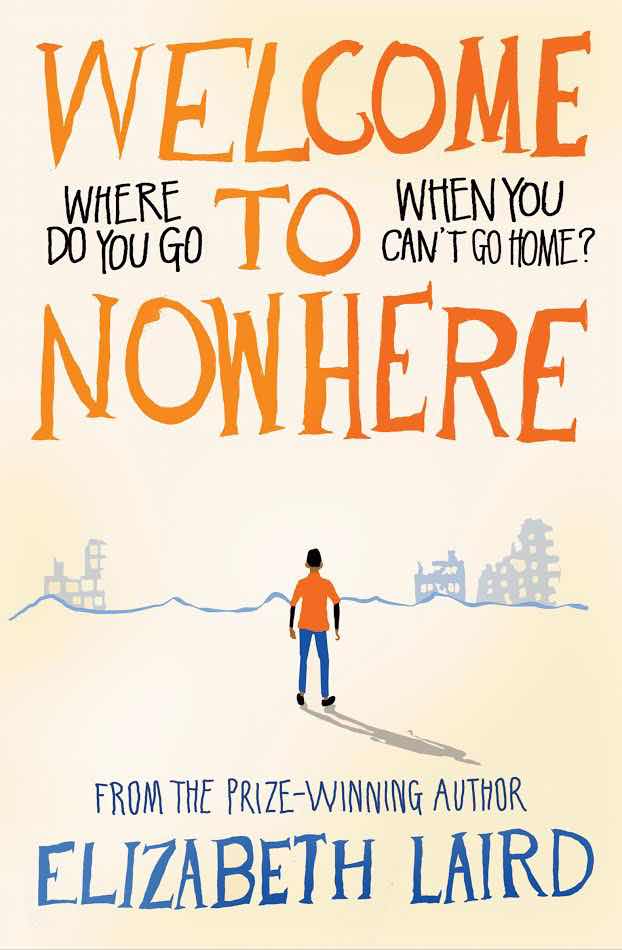
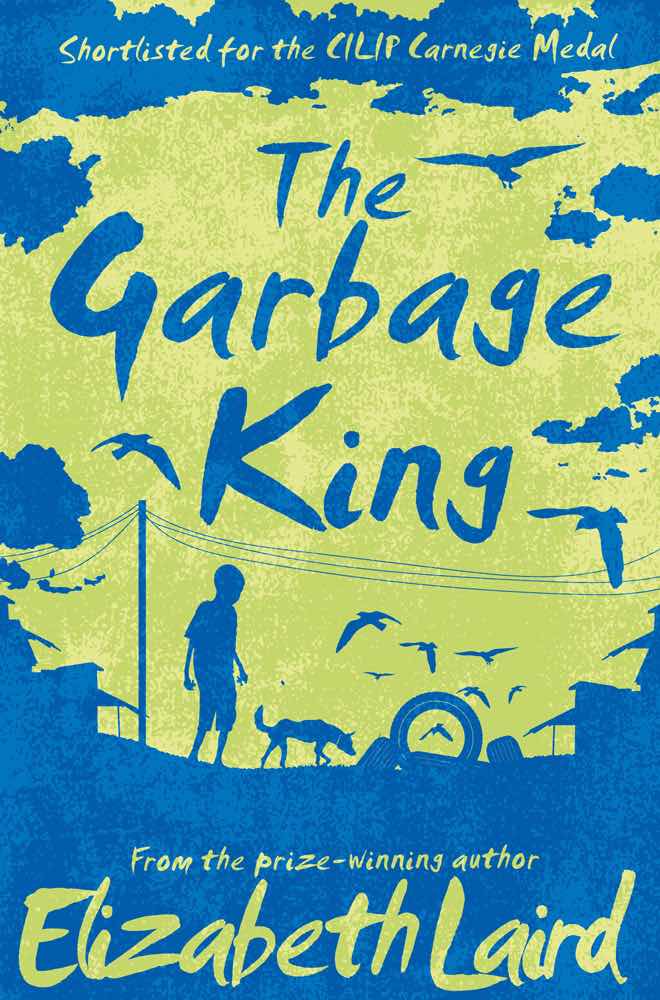
My own particular favourites would probably be Welcome to Nowhere and The Garbage King but, as I say, all are recommendable. 


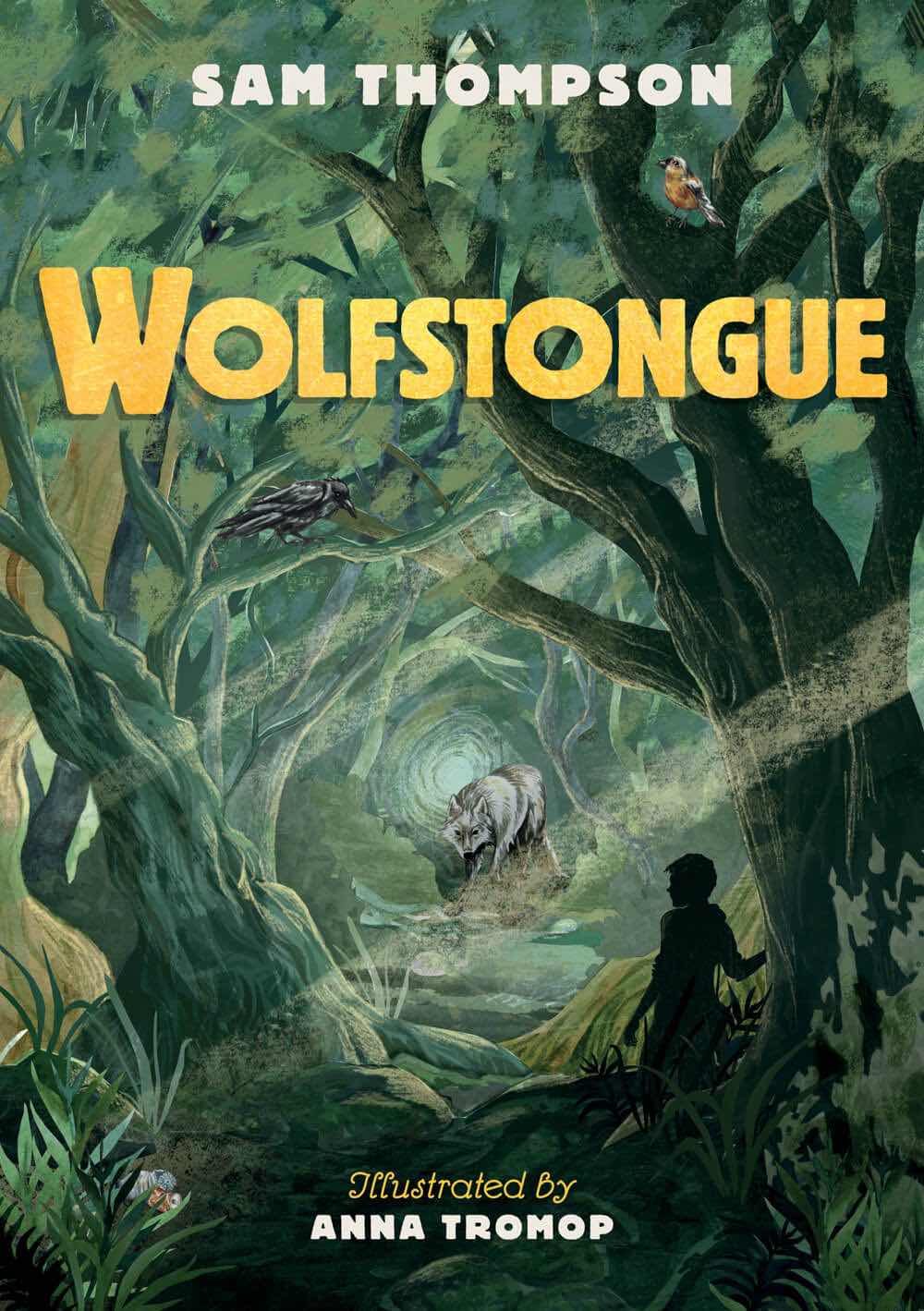
Wolfstongue by Sam Thompson


Late to the party

I somehow missed Wolfstongue when it came out last year, but the impending appearance of a sequel (The Fox’s Tower) made me realise I needed to read the opening novel first. I have missed out far too long. 

Very much it’s own book

Some of the publicity for this book quotes The Times as comparing it to Watership Down, but I do not find this particularly illuminating. True, both are tales about animals that mimic humans in character and speech, but nevertheless retain their natural appearance and some behaviours. However, Sam Thompson’s book is essentially about human/animal interaction in a way that Richard Adams’ undoubted masterpiece is not. Not does this newer book have anything of the extravagant mythologising of the earlier work. This newer book too is a very fine work of fiction, but it is not really mythopoeia; it is true fable. It is also very different, indeed idiosyncratic, in the very best of ways. 

A fabulous fable

Wolfstongue reads like a fable in more sense than one. Many of the animal names are taken from folktale and fable. But that is not all of it. This is not traditional fable, it deliberately distorts the stereotypes that have grown around old tales. It makes fable anew, for our time, Both its language and its narrative structure are magnificently focused, almost condensed. Some of its narrative elisions are brusque, almost disjointed. But it tells what needs to be told and does so with searing  vividness and poetic immediacy. 

‘He leaned against the rugged bark of a tree that reached out to cast its shade on a place where the water ran down a rocky course and plunged into a pool, the flow singing a continuous chord. Further off, galleries of green light hung behind the trunks.’  (p 96)

Without ever distracting from its compelling story, it also invites reflection on its meaning, its parallels, its nature as parable. And it does so on the profoundest of levels. 

It shows the world of the modern city and the world of the ancient forest are closer together than we think. ‘There’s only one world,’ says the grey wolf, after carrying the boy, Silas, from one to the other. 

It digs into the ancient clay from which all creatures are made. It explores the potential of the deep primal matter of creation, the material of potential. It is often enigmatic, perhaps metaphorical.

The whole of Chapter 8, where Silas enters the cave to seek the healing clay ,is one of the high points of contemporary (children’s) literature. It almost ranks alongside the discovering of the imprints of hand and fern in Alan Garner’s Stone Book.

It suggests that we must not expect nature to imitate humankind. The essence of nature is wildness. It has the right to be uncivilised. It also parodies totalitarian regimes; regimes of the terrifying kind, manipulating with words, scorning truth and compassion; regimes that we currently know all too well, both in the wider world and in the playground. More terrifying still, it points a finger to the instigators of those words, those names, those distortions.

Silas, the human protagonist of the story, has difficulty with language, he is tongue-tied, except when he is with the wolves, when he almost becomes a wolf. Whilst language  (alongside the opposable thumb) is the tool that fashioned civilisation, it is also the mechanism of control, of domination, of oppression. Here, it is the bully and the tyrant who have the language, the ‘hero’ is silent (in name and nature). The Wolves want to be rid of language, of names, because naming things conjures them into reality. The language of (corrupted) civilisation is set against a wildness that can know no names, Wildness must be free of language. Language can be set free by wildness. And then just perhaps, we ourselves can be more free. 

‘. . . what we were isn’t what we’re going to be.’ (p 179)

Perhaps.

We must listen to the silence. 

Captivating images

Wolfstongue  is another example of wonderfully illustrated fiction. Anna Tromop’s images  are somewhat gentler than, say Jason Cockroft’s in Running With Horses or Levi Pinfold’s in The Worlds We Left Behind, but they still complement and extend the text tellingly. This is very human drama dressed as fable and that’s exactly what these drawings are, fabulous. I find particularly affecting the ones from the very beginning and the very end of the book, Silas’ meeting with and parting from the wolves. Equally, the magical light and affecting detail on the magnificent cover make me wish that more of her illustrations were in colour. 

The biggest advantage of having read this fine first book so late, is that it is not very long to wait for the next, this October. 


Footnote:

Unintentionally, I seem to have fallen into something of a summer reading theme around wolves. Even more serendipitous, I have discovered a whole run of wonderfully illustrated fiction.

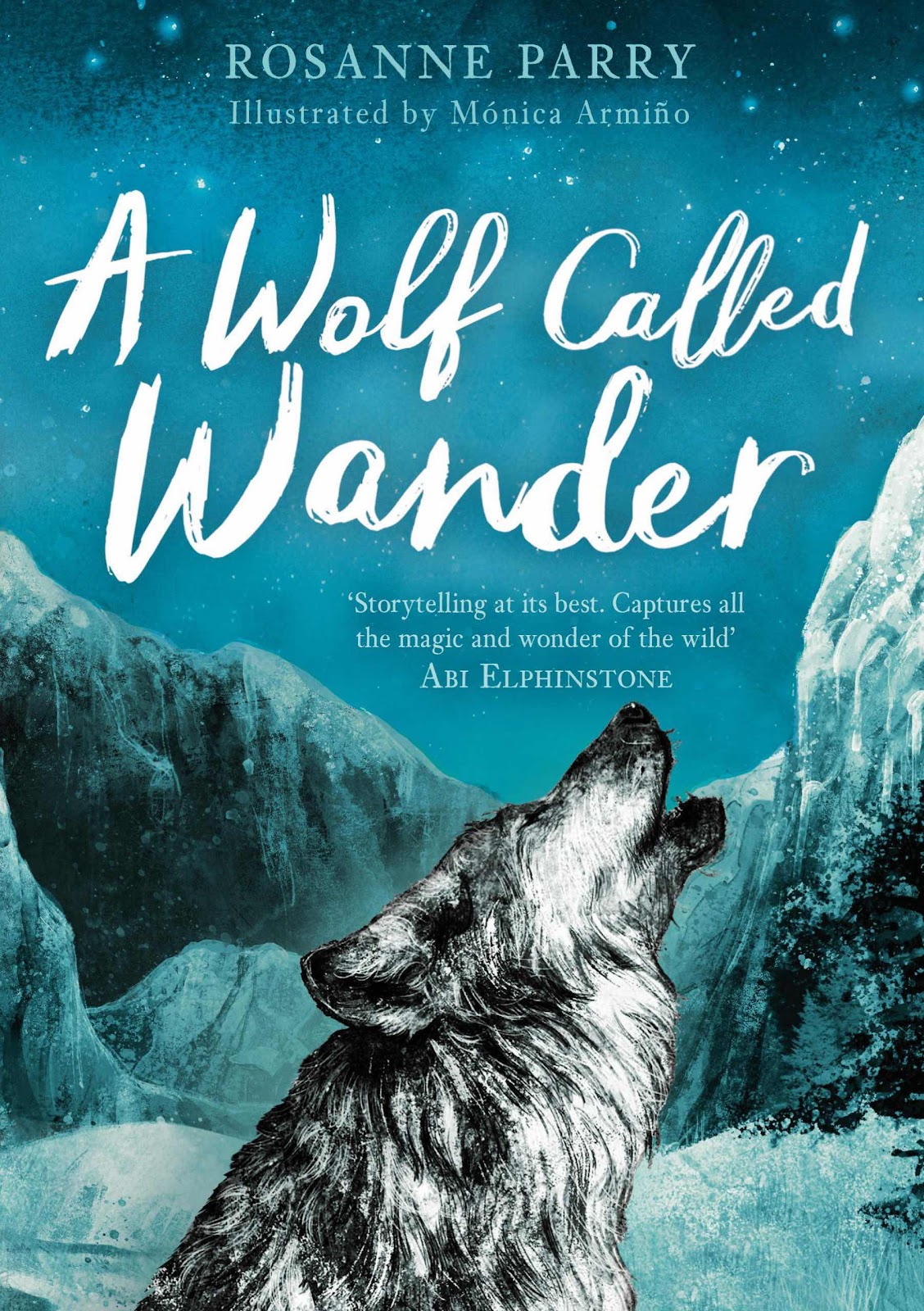
For any others who are into wolves, or animals generally (or indeed illustrated fiction) I strongly recommend A Wolf Called Wander by American author Rosanne Parry. It was published in UK in 2019 by Andersen Press and, thankfully, still seems to be available. It is a straightforward, get-what-you-see-on-the-tin, animal saga bursting with wonder and wildness. It is quite beautifully written, often lyrical, but powerful too and emotionally involving. It is stunningly illustrated throughout, in naturalistic style, by Mónica Armiño. Many of its images I would love to have on my walls. All in all, it is a wonderful book. 


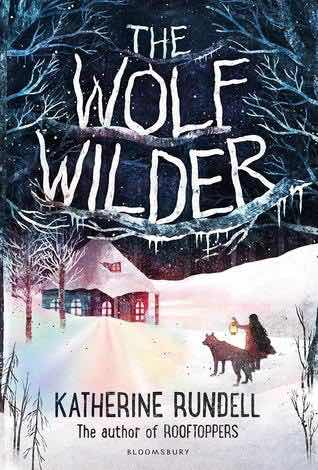
Against these same criteria, I almost hesitate to mention Katherine Rundell’s The Wolf Wilder because I expect almost all of you, interested in children’s fiction as you are, will already have read it. But there are probably many young readers who haven’t. It is very different from both the above books, but is a truly wonderful novel, to me Katherine Rundell’s best to date. 

Thursday, 18 August 2022

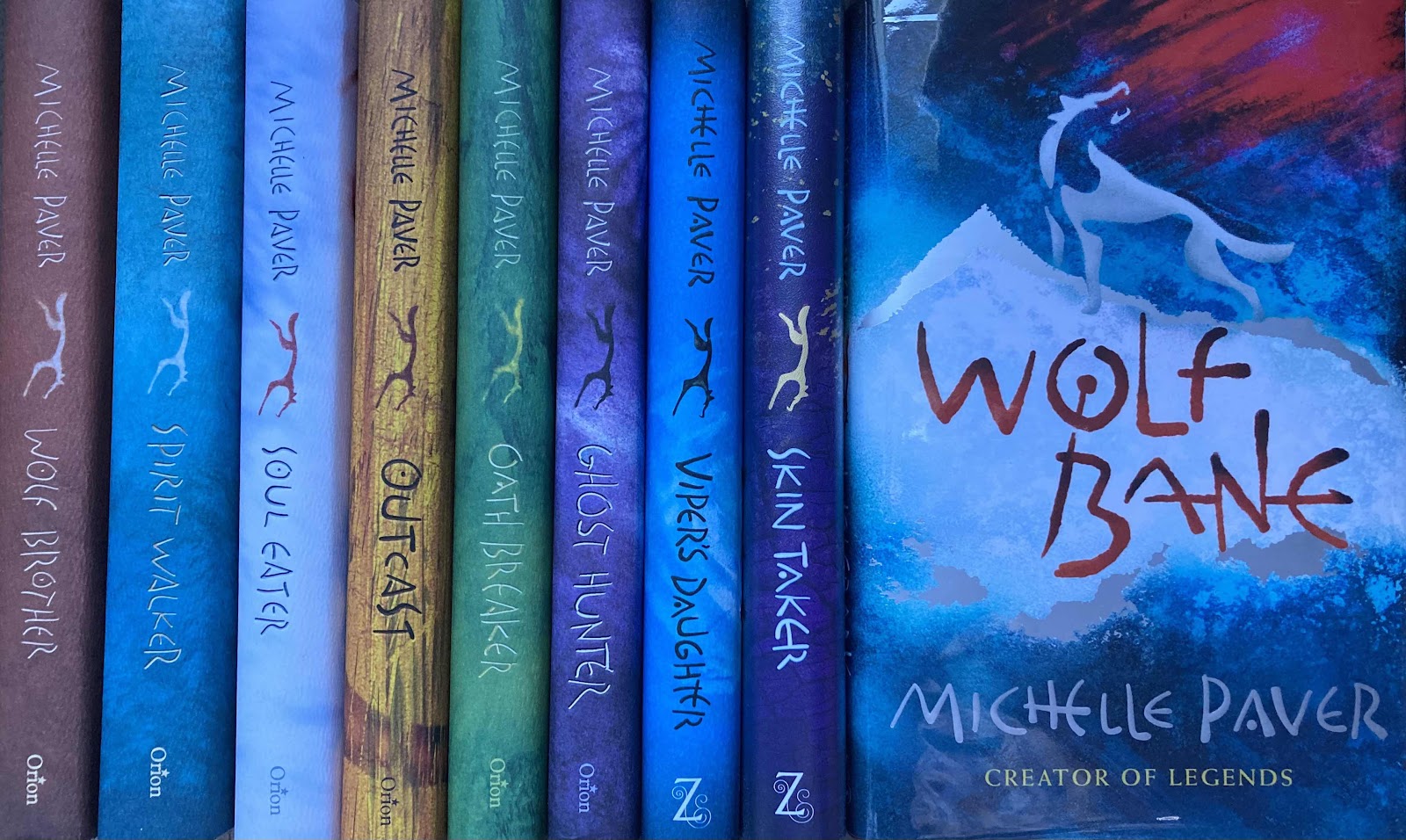
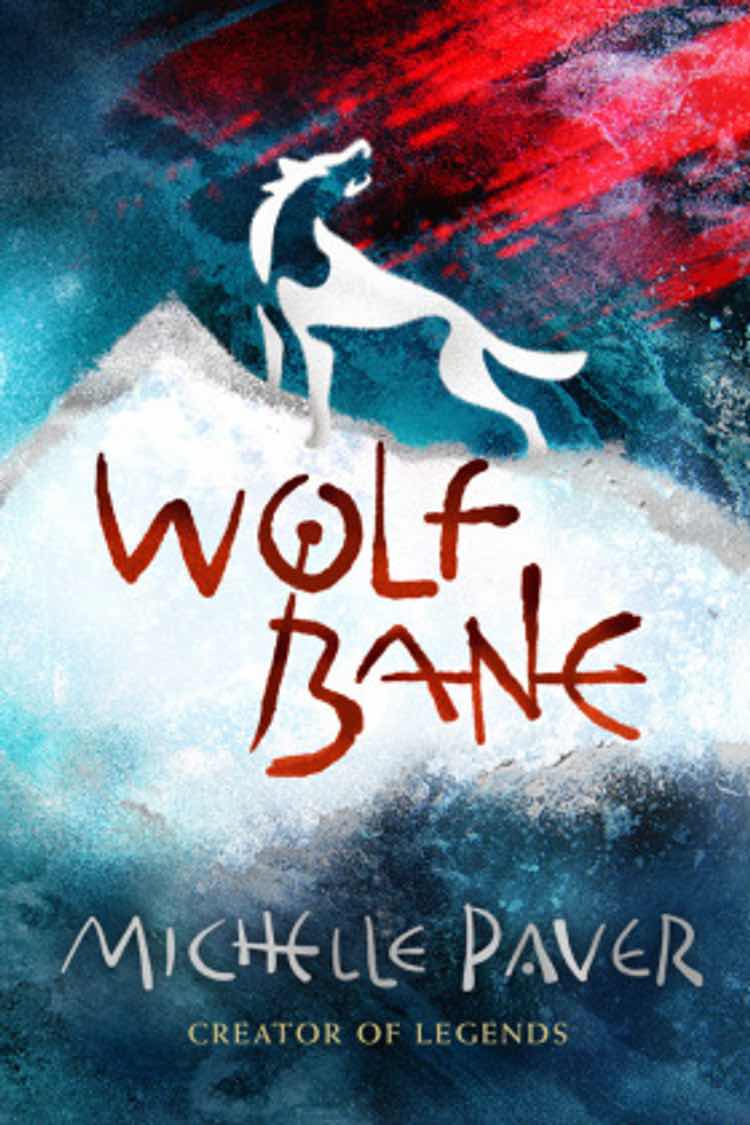
Wolfbane by Michelle Paver


Illustrations: Geoff Taylor

And last

Now we have the final instalment of Michelle Paver’s Wolf Brother sequence (earlier called The Chronicles of Ancient Darkness). It has been a long time coming, the first volume was published in 2004. But some things are well worth waiting for. And, in any case, the journey in-between has been quite something.

This series of novels is very possibly one of the finest contributions to contemporary children’s literature. Set in the New Stone Age it is necessarily very largely imagined, but is based on deep knowledge and understanding of prehistory so that its vivid world is both convincing and compelling. Its evocation of the natural landscape, as it must have been at that time, including its humans and its wild creatures is just stunning. Elements of fantasy are added, but these too are based firmly on what can be deduced about the spiritual beliefs and practices of the times, so that the ‘magic’ too enriches the potently convincing world-building. Then, on top of all this, the books contain some of the most powerful and moving explorations of the intense relationship that can form between humans and animals, specifically here between protagonists Torak and Renn and wolves

Over the course of eight existing titles, it is inevitable that the effectiveness of the narratives varies slightly. However, Michelle Paver is such a skilled writer than none of these books is less than gripping and most are breathtakingly compelling, combining visceral excitement with deep emotional pull, and a fair amount of thought provocation too. Unlike the characters in some book series, the protagonists here do get older, so there is a through line of development across the series as well as a degree of completeness in each of the separates stories. And after so much thrilling  time spent growing with them, the commitment to these particular protagonists, human and animal, is now total. 

So will this final instalment live up to expectations?


By no means least

The answer of course is a resounding yes.

From the outset, the tension of the tale is drawn taught as a gut bowstring. Michelle Paver quickly and vividly reestablishes her familiar wild topography and the jeopardy that stalks it, threatening the heart of our beloved characters. And when it is Wolf that is initially in danger, what better to pull us headlong into this final story.

One of the many things Michelle Paver has always done particularly convincingly is to capture the voice of the wolf, using mainly standard English, but adding in some distinctive vocabulary to reflect the different lupine view of the world. This enables her to give the creature a readily understood role in the narration whilst maintaining its credibility as a wild creature. Consequently, she is able to construct a narrative alternating between human and animal perspectives, with intense reading momentum. 

As Torak and Renn set off in desperate pursuit of missing Wolf, not to mention Renn’s demonic half-brother, across the terrifying open ocean, neither they, nor we Michelle Paver’s readers, have ever felt so close to nature. This has always been one of the elements making these stories so powerful, but when Torak takes the drastic step of ‘spirit walking’ in the body of a killer whale, so desperate is he to be reunited with his Wolf, the intensity of the natural world in which they all live so  intimately becomes almost overwhelming. This is nature in all its utter wildness, red in tooth and claw. But this is no longer the bold, innocent young Torak of the Wolf Brother days. This is Torak torn apart by all his intervening experiences, Torak whose very soul is in mortal and immortal danger. Almost unbearable tensions develop as it looks like so many of the characters and relationships built beautifully over the whole series are horrendously threatened. 

Michelle Paver again imagines the customs and spiritual beliefs of these ancients wonderfully, giving them intense expression that feels completely authentic. Here she develops them even further than previously and weaves them beautifully into one of the most compulsive narratives of the series. The climate, environment, creatures, peoples and demons of this distant age are all conjured with the most vivid and affecting life and when the story reaches its gut-wrenching climax, with what might be called ‘Wolf love’ pitted against the deadly ‘Wolfbane’, the reader can do nothing but hurtle through the pages looking desperately for a resolution. It would be so wrong of me to give more away, but suffice to say that I cannot imagine a more fitting ending for this stupendous series.

With so many stunning vignettes 

In trying to communicate Michelle Paver’s  gripping, epic storytelling, I would not wish to neglect the contribution made throughout the series by Geoff Taylor’s stunning illustrations. Consistently his chapter head vignettes have caught to perfection the creatures and landscapes of this distant world, bringing it even more poignantly to life. His drawing of a whole range of animals, but especially the wolves, help to capture their feelings as well as their form, without for a moment every detracting from the reality of their wild nature. It is remarkable how such relatively small drawings can be simultaneously so sensitive and so majestic, or so deeply affecting. And now, in this latest volume, we are also treated to a handful of highly atmospheric double page spreads that we have not had before. His contribution to this whole series is considerable and has not, I think, always had the full accolades it so richly deserves. 

A true legend

The cover calls Michelle Paver ‘Creator of Legends’ and for once the hype is justified. She is now herself a legend and her Wolf Brother chronicles will live long, ancient and darkly fearful, but warm and comforting too. They bring our distant past intensely alive, with a richness and power that will hold countless readers in thrall.


Note:
Particular thanks are due first to Orion and then to Zephyr for maintaining the presentation style throughout, so that the nine books also make a beautiful physical set.