Here are the occasional reflections of a joyful traveller along the strange pathways of fantasy and adventure. All my reviews are independent and unsolicited. I read many books that I don’t feel sufficiently enthusiastic about to review at all. Rather, this blog is intended as a celebration of the more interesting books I stumble across on my meandering reading journey, and of the important, life-affirming experiences they offer. It is but a very small thank you for the wonderful gifts their writers give.

Tuesday, 14 March 2023

Wilder by Penny Chrimes


Illustrations: Manuel Ĺ umberac

Synchronicity? 

I do not know if I actually go along with Carl Jung’s belief in Synchronicity, but I have somehow always wanted to.

I recently picked up a first  edition hardback of Siobhan Dowd’s Bog Child from a second hand bookseller. It is a truly great novel, that I had not read for several years. Rereading it now reminded me just how wonderful a writer she was and what a loss to children’s literature her untimely death. 

Shortly after, I received a longstanding pre-order of the latest book, The Winderby Puzzle,  by one of the USA’s finest children’s authors Lois Lowry, a book also inspired by the discovery of a prehistoric ‘bog body’. 

Now I have just finished this new book, Wilder by Penny Chrimes, a story about a strange child emerging from what was, if not quite a bog, then at least a muddy marsh.
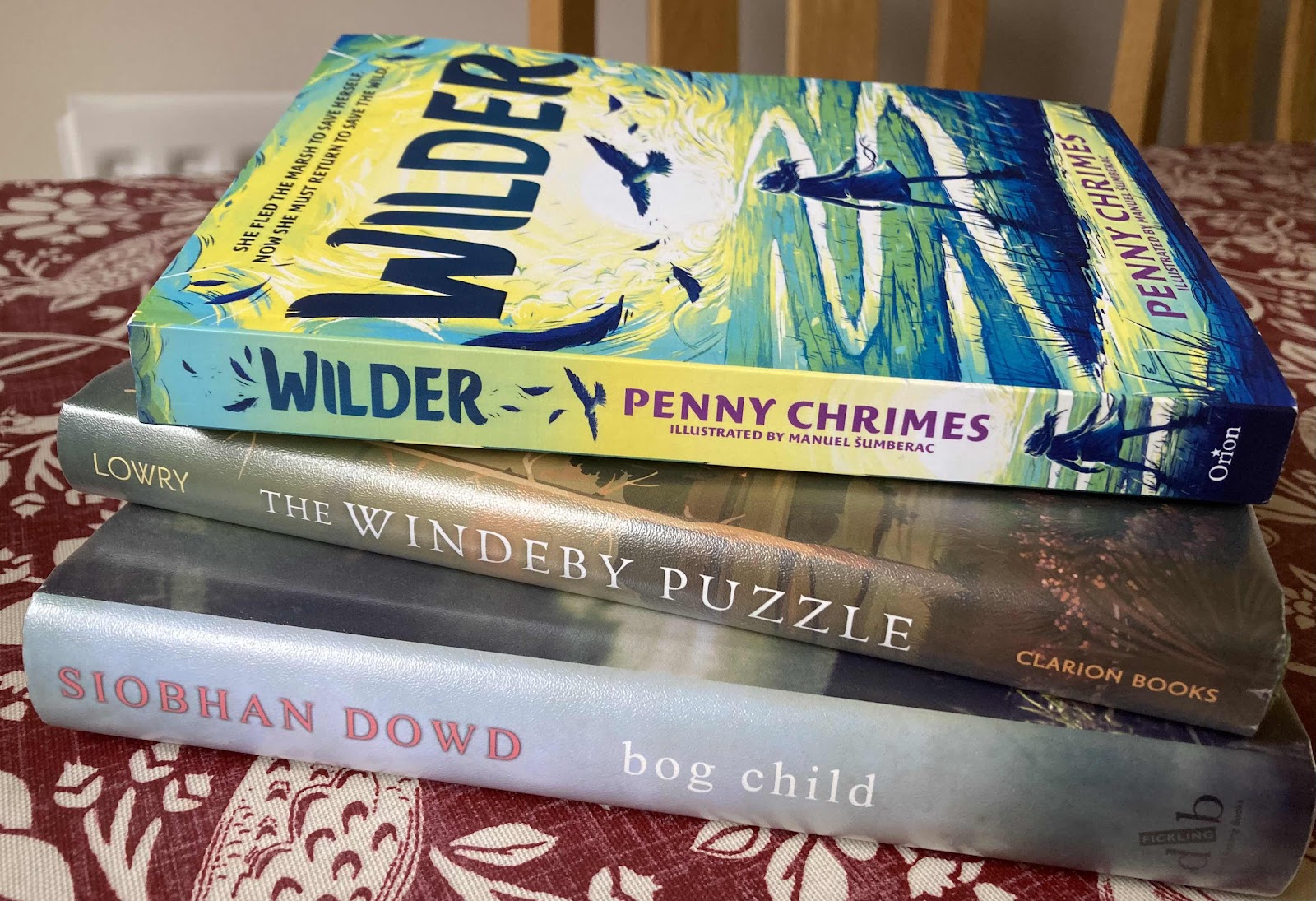


It struck me as at least surprising that even though I read a vast, eclectic range of books, I unintentionally ended up reading three together that are so markedly linked. Was it Synchronicity? Perhaps that’s stretching it. But, whatever, it was at least serendipity, because Wilder is an exciting new find; another very fine book to lie on top of this special little pile. 

 Painting with words

Rewilding is not just a series of actions, it is a state of mind, and Penny Chrimes book not only epitomises this in its story, but embodies it in Rhodd, its strange but endearing protagonist.

Wilder is was of those rare books that I knew I was going to respond to within the first few pages. When this happens it is more often that not the quality of writing that entrances me, and this was certainly the case here.. Early on in this book with a dominant theme of rewilding, Penny Chrimes ties the notion into a physical description of her young protagonist:

‘Rhodd . . . shook her tousled head impatiently, rewilding the sun-bright mane that Ma tried daily to tame into plaits.’ (p 8)

If, like me, this type of clever, writerly conceit makes you tingle with pleasure, then you will love this book. Regardless, there is much else about it to love too.

Penny Chrimes’ use of ravishing language in evocative descriptions, her striking, poignant images and her challengingly powerful vocabulary choices (‘susurration’, ‘skirling’) continue throughout this wondrous piece of writing. At one point  she says Cerys, Rhodd’s adoptive mother, ‘grew still. She gathered stillness about her, as if she were weaving a web every bit as fine as the spiders’, yet a thousand times more secret.’ (p 66). Just wonderful.

Rewilding 

However, Penny Chrimes also entrances and engrosses us in an involving story.

Seemingly born as a creature of the wild, Rhodd has the amazing ability to communicate with other wild creatures, not in words as such, but through mind pictures. So strong is her identification with them that she can also sometimes ‘borrow’ and actually see through their eyes. Foremost amongst these creatures is a perigrine falcon, who often hovers in the skies above her and with whom Rhodd has a very particular bond. 

Emerging fugitive and alone from the marsh and taken in by widowed Cerys, her ability to connect with the wild seems gradually to diminish as she is encouraged to try to fit is with her new surroundings. To the reader Rhodd’s loss of oneness with the creatures of the natural world, and indeed with her own true nature, is felt as almost heartbreaking.

The village in which Rhodd finds herself was once a thriving fishing port, but has now been abandoned by the river which joined it to the sea. Since the river somehow receded, to be replaced by a stagnant and lifeless marsh, its inhabitants have become bitter and resentful. Although Rhodd is welcomed with warmth and care by Cerys herself, she is treated with suspicion, fear and even hatred by the rest of the community. They already have a paranoid dread of the marsh; not only has it destroyed their livelihoods, but taken the lives of some of their children too. Now all their resentment seems to transfer to Rhodd herself.

The situation worsens as deadly sickness seeps from the marsh, not only killing all the wild creatures, but some of the villagers too. Worst of all, Rhodd’s  beloved ‘Ma’ succumbs to the illness and seems close to dearth. Further catastrophe is precipitated when landowner, Lord Stanley, arrives to evict all the villagers from their homes at heartlessly short notice. Rhodd becomes convinced that she alone can save what she loves and that she can only do that by rediscovering her own wildness. She feels that she is somehow linked with the disappearance of the river and determines to bring it back.

Once again Rhodd’s hair provides an image of her transformation, her new, wild energy:

Not even the rain could flatten her wild mane. Her bright hair drew the electrical charge to itself like a lightning conductor: it channelled and tamed its force and became a torch that channelled the brilliance of each strike’  (p 

Her transformation back into her true self is rivetingly exciting.

She was Peregrine. The face that stared back at her was savage, merciless. She did not know this Rhodd. But she liked it better than the tame, timid Rhodd who had hidden away for so long.’  (p 135)

And suddenly a story of people suffering the consequences of environmental disaster segues into that which had always been hinted at. It plunges into fantasy, into metaphor, into myth. And Rhodd and her story return to what she and it always truly were - something wilder more elemental.

Making myth

The strength of this book is not as an authentic geo-environmental case study, but as an aesthetic, an extended metaphor, an often poetic exploration of the concepts of the the wild, wildness and rewilding. Its characters become something nearer to archetypes.

Nemesis of the wild is landowner and industrialist, Lord Stanley, trying to contain nature, to force it into the service of his  own ends, out of greed for both money and power. Then there is Rhodd’s ‘Ma’, the ‘Wise Woman’, the seer, still in touch with nature and the healing property of plants, but always threatened by of accusations of witchcraft. There is the boy Gar, Rhodd’s  only human friend from the village, but who turns out to be the abandoned child of Lord Stanley, bloodline of the perpetrator, the inheritor of shame, yet determined to grow-up different, to make amends.There is the ever-faithful dog, Red, distant (thankfully luckier)  cousin of Gelhert. There is Hafren, the elemental river, lost, imprisoned  but in need of rediscovery and liberation. And over them all is Rhodd, wild-child, falcon, reconnecting with the voices of nature, seeking to reverse the sickness, the emptiness, the death of the land. 

‘Rhodd reached her arms to the sky. For anyone watching it would have been impossible to tell whether this scarred and ragged creature was praying or preparing to fly. Perhaps for her they were the same thing.’ (p 206)

Wilder is a myth for our times and, as such, is crafted beautifully, meaningfully, movingly. The climax of its story is cataclysmic, magnificent. It is an exceptional read that children will not only lap up; they will take imprint from its images and messages in a way that may just help to make our world better in the future.

Manuel Ĺ umberac’s wonderful illustrations are a perfect complement to the text and evoke girl, falcon and marsh with a fitting power and potency. 

Friday, 10 March 2023

The Way of Dog by Zana Fraillon


Brilliantly illustrated by Sean Buckingham


This novel written in poems has promoted (a feeble attempt at) a similarly constructed review. So here goes . . . . 


TRAGEDY AVERTED


Why have I never
                                                  before

discovered books
                                by
Zana Fraillon              ?

She’s Australian, sure
but that’s no excuse.
So many of her books are published here.

I think
I’ve even heard of some of them.
The Bone Sparrow 
rings a certain bell.
I can tell. It has a familiar ring.
Even 
The Lost Soul Atlas
seems to have found its way
                                                        (somehow)
as a title 
into my library
of the half-remembered
                            half . . . 


             forgotten.

But I have never read them.

Shame.
                                No. 
                                                               Tragedy.

For now I know
just how much 
I’ve been missing out.


But thank goodness 
here          is
                                The Way of the Dog
read 
         closed
                    finished
and on my shelves.

Chance brought to it me
serendipity
my lucky day
I’d certainly say.

And it was
                                 reading heaven.


ON TREND

It seems that

fiction                
            written in                                                       V
                                                                                   E
                                                                                   R
                                                                                   S
                                                                                   E.                   (quite often terse)
has become a bit of a THING.

But 
IMHO            (as we seem to have to say these days)

its effectiveness, you see
can vary quite considerably.

Sometimes the ‘verse’ is so darned free
amounting to not much more than prose
divided into short lines                                          (Much like this, IHTS.)
so that it leaves you asking
what is the point?

At the other extreme are works like those by Joseph Coelho 
The Girl Who Became a Tree
The Boy Lost in the Maze.
The finest poetry 
in its own right
so cleverly shaped
to tell a profoundly moving tale
and tell it (breath)taking
ly.

If this is a spectrum
Pointless __________________________to___________________________Coelho
then
                                                                                                        The Way of Dog
                                                                         comes well towards the Coelho end.


VERSE NOT WORSE

Its all about a dog
for sure
but no way is this  . . . . . . .  DOGGEREL.

(Sorry!
 That was cheap at best.
  Not even 
  particu                larly                                funny :-)

It’s true enough though.
This is your actual poe          TREE
                                                           in full and verdant leaf.

It enchants the ear
                                delight the eye
provokes the occasional
                                 chuckle
evokes a genuine sigh.

Here are
rhythms
                  different rhythms 
                                                                      multiplemultiplemultipe rhythms 
                   co     m            Pl        eX  and
simple 
rhythms.

The rhythm of words
of
lines
and                                             spaces.


Language
and                      TY pog ra phy

Calligrams (sorry that’s too difficult)

dance and SING.

Each poem 
captures perfectly
a mood
               a moment
                                  a thought
                                                         a feeling

amusing
charming 
enchanting
H.           E.     A.                       R.  
                                     

                                  T.     breaki
                                                      ng

HEART mending
 

TELLING TAILS

But do all these poemspoemspoemspoemspoems
all these so clever words
Add + up + to = a coherent narrative 
amount to a story
worth telling               
                                              worth reading?

They surely dodododododoDO.

Here is a simple tale
that has been
told many times
before

Finding  - Loving - Losing - Grieving - Enduring - Surviving - Finding

Yet here it is
told with such deep truth
such honesty
such compassion

Here is the true doggy voice 
the voice a dog would have 
if dogs had voices.

Here is the yipping-yapping of the heart.

Here is the human in the animal 
the animal in the human and
It                                       S.
                                    D
                              N
                         E
                   C
              N
         A
    R
T

Its words move                                                                      beyond words.


TAO


And does
                    The Way of the Dog

sound (just a little bit)
like your old Buddhist philosophy
a relic from your hippy days (for those of us who ever had them)?

Then so it should.
This is ‘the way’ for today. 

A certain Benjamin Hoff  wrote The Tao of Pooh
and now we have The Tao of Dog
by Dog
by yipping-yapping-whimpering-bouncing-spinning
                                                                                    DOG
Just helped a little
by the aforesaid Zana Fraillon
who knows dog well.

For this doggy way is               
                                    love

one love

animal human 
gender race religion sexuality

ONE.


READITREADITREADIT

Read it.
                                         Just read it
            
For adults
the                       lure of                 poetry
will entrap them in a story
they might have thought
sentimental 
but which teaches them what children already know
that life           like  Christmas          is often
sentimental

and a dog is not just for Christmas
but for life.

For children
the                deeply captivating                tale 
of a dog
will draw them into poetry

its look on the page 
its sound in the ear
its feel in the heart.

Whoever

Read it ALOUD                          (It will read aloud quite magically.)

Read it aquiet                                                                 (Just for yourself.)

Like all good fiction
it will take you to 
                                   SOME . . . . . . ONE
you’ve never been
before 

Someone
not like you
and
               just
               like
               you

and return you not the same.

Just read it                                              or

MISS OUT.


POEM WRITTEN ALL ON ONE LINE, IF IT WOULD FIT, WHICH SADLY IT WON’T
(To be read all in one breath instead)

And now I’m off to an independent bookshop to buy The Bone SparrowThe Lost Soul AtlasThe  Raven’s Song and all Zanz Fraillon’s other books they’ve got and order any they don’t have in stock and rush back home and put my life on hold and read them all as soon as ever I possibly can because I’ve already missed out for far too long. 


Wednesday, 8 March 2023

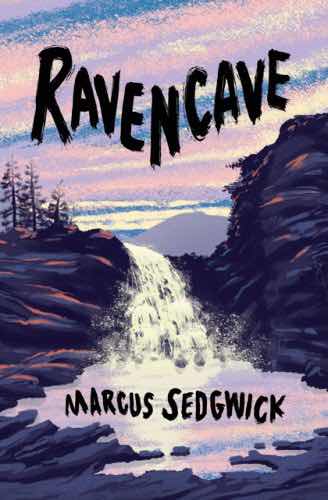
Ravencave by Marcus Sedgwick


Cover illustration: Paul Blow

A remarkable body of work

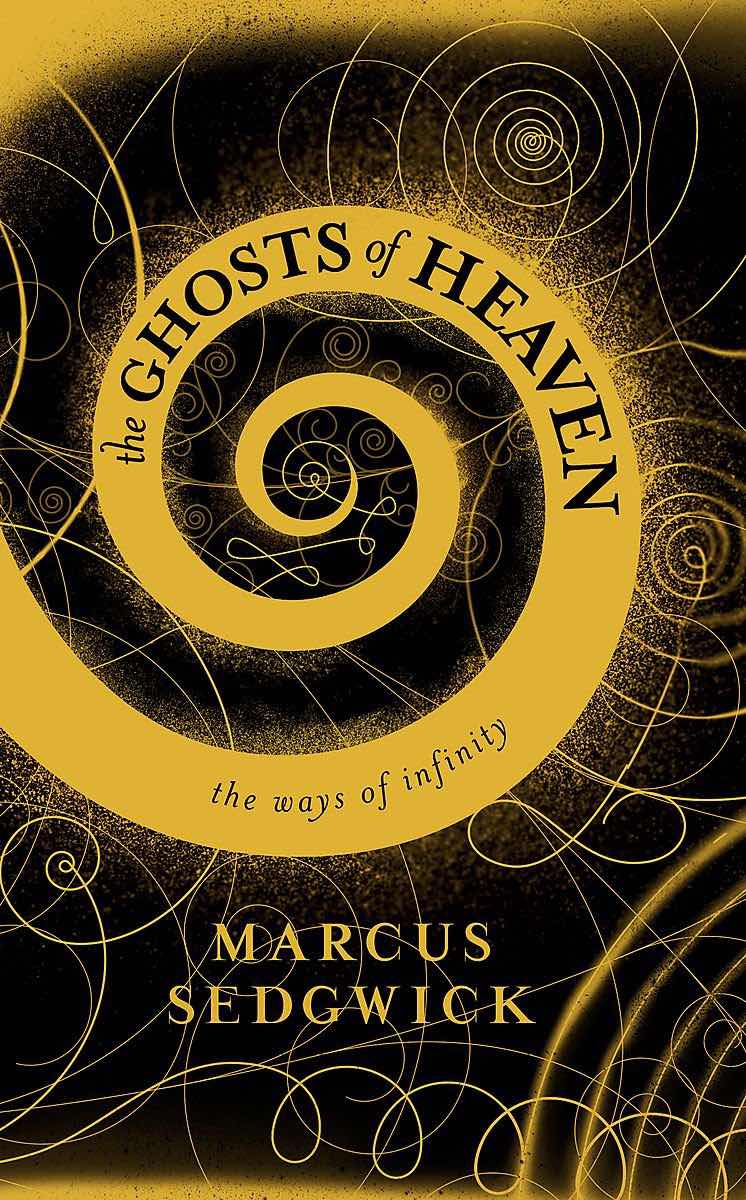
It was a very major loss to writing for young people when bravely original, award-winning author Marcus Sedgwick died last year, tragically all too young. I was a huge admirer right from his first novels in the early 2000s. (See my post from November 2014). Subsequently he wrote prolifically producing work for a range of audiences, including both adults and younger children, but his finest works were almost certainly his YA titles, including what I, and many, consider his towering masterpieces, the chilling Midwinterblood and the challenging, but devastating, The Ghosts of Heaven. (See my review, again from November 2014.) Amongst many other titles, Voyages in the Underworld of Orpheus Black, a collaboration with his brother, Julian*, and one of my favourite graphic artists, Alexis Deacon, is also umissable.

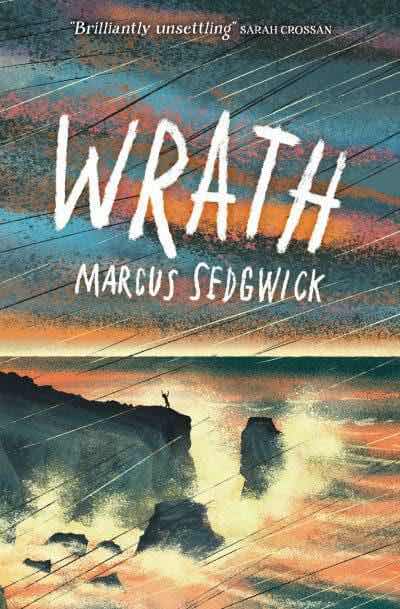
In more recent years Marcus Sedgwick has struggled with serious illness in the form of debilitating CFS (or ME). He has nevertheless completed some further remarkable writing. His three most recently published works of fiction have been in the ‘accessible reading’ format, Dark Peak for OUP’s ‘Super-Readable Rollercoasters’, Wrath for the brilliant Barrington Stoke, and now the posthumously published Ravencave, also from Barrington Stoke.

Easy to read, but with depth too

His writing suits this style of book, with its comparatively short length and straightforward language, rather well. Although, actually,  it is more the case that his writing ability is such that he can create multi-layered, high quality fiction  whilst still meeting the requisites of readability. In fact, he demonstrates wonderfully that there is no need whatsoever to patronise young readers simply because they lack confidence in actually accessing text. Further, he is able to create a context where the economy of language use, its terse directness, actually enhances the effectiveness of the story being told, bringing both setting and characters to life with vivid starkness. He also succeeds in communicating deep feelings with affecting and often beautiful simplicity, creating telling images that will live long in the minds of readers.

The best of Barrington Stoke titles (of which there are many) make excellent choices for any reader, as well as fulfilling their brief of access for the less confident. But Ravencave is one of the supreme examples, alongside titles like Anthony McGowan’s Lark and Mal Peat’s The Family Tree. These are fine works of literature in their own right, 

What is it all about?

It is hard to discuss the many merits of Ravencave without spoilers. And this is to be avoided at all costs, since it is the gradual, and very clever, build up of revelations that provides the compulsive grip of this story.

Suffice to say that the basic action of the story involves the events of a single day, although extensively suplementsed with recalled accounts from the past. It centres on a young boy, Jamie, during an outing in the Yorkshire Dales with his father, mother and older brother, Robbie. The prime objective of their hike is to scatter the ashes of his recently deceased grandmother in the area where she was born. It features several (actual) locations in the Dales, which, in the story, are associated with previous generations of his family. It is a place of ghosts. However, what startles from the very first words is the way in which Jamie seems strangely distanced from the rest of his family, as indeed they are from each other. They are:

‘ . . . four souls spread across the Yorkshire landscape.’ (p 9)

Clearly this is a book very much about family, about their relationship to each other, but also about their links to the past, to heritage, to their an ancestry. Jamie needs very much to discover exactly who he is, and where he fits.

It is obvious that particular place meant a great deal to Mark Sedgwick. Each of these last three of his books relates strongly to a very singular and affecting location. And this certainly applies to Ravencave; it is not only about its characters’ relationship with each other and to the past, but also very much to the land, to the place where they do, or don’t, belong. It is a novel of both landscape and inscape.  

The author clearly had strong socio-political views too and a thread of socialism runs through his narrative. This is linked particularly to working people displaced from their livelihood by a minority of rich, powerful owners who want to get even richer by reducing their workforce and embracing allegedly more efficient, but essentially cheaper, ways of doing things. He was very much on the side of the dispossessed, and admired their resilience.

‘How do people keep on going, even when everything seems to be against them?’ (p 9)

Ultimately, however, what comes through most strongly of all from Marcus Sedgwick is a basic confidence in the kindness and caring nature of ordinary human beings.

‘In both big things and small things, most people are good. They care for each other - it’s what people do.’ (p 110)

Last book and testament

This is a story about being reconciled with death but also about embracing life. It is a  story all the more poignant being written by a seriously ill author, who must have realised he could be coming towards the end of his life. It is perhaps a last testament.

In the story, Robbie’s mum ‘ . . .  wants there to be, well . . . more. 
More to all of this, this life we fall into and fall out of . . . . (She) wants to believe the world means something. ‘ (p 44)

So I think did Marcus Sedgwick. And through his remarkable writing he showed us that it does.


*There are also other excellent YA reads from Julian Sedgwick, the latest of which, Tsunami Girl, is another outstanding collaboration, this time with manga artist, Chie Kutsuwada.

Monday, 27 February 2023

Promise Boys by Nick Brooks


Cover illustration: Ken Nwadiogbu

‘ . . . even when you do what they ask, they still don’t see you as a somebody.’ (p 264)

Murder and more 

My reading for this blog only occasionally strays into YA rather than MG, and even more rarely into murder mystery, but I am hugely grateful that chance brought me to this book by US author and filmmaker Nick Brooks. It is not only the cleverest and most engrossing whodunit I have encountered for quite some time but it is so much more too.

In style, although not in location, characters or language, Promise Boys reminds me most of the recent adult mysteries by Janice Hallett. That is to say, the reader is left to piece together events from the accounts of a wide range of characters, not all of whom are necessarily reliable or trustworthy. Their often brief testimonies are interspersed with mobile and text communications, news reports and other information, so that the reader has to work towards an understanding of the mystery, following a route strewn with clues and red herrings, in a way that is deeply intriguing and utterly compelling. And, as the story unfolds, what comes to fascinate just as much as the mystery itself is what we discover about the lives, characters and motives of those involved.

Set around the ‘Urban Promise Prep School’, an institution which purports to improve the education and life chances of inner-city Black boys through extreme discipline, the central mystery is who shot and killed the school’s founding and domineering principal - and, of course, why. The book’s protagonists are three boys (two Black and one Hispanic) who rapidly emerge as the principal suspects, readily targeted because of their skin colour and background.  The complex narrative develops as they desperately work to try to prove their innocence- if, indeed, they are guilt free after all.

USA to UK

The cultural setting of the story and the voices of the characters, especially of the three boys, are brought vividly and sympathetically to life. It is consequently easy to identify with them.We understand who they are, how they think, why they  behave as they do. The clever format of Nick Brook’s book, the skilled precision of his writing and his masterful manipulation of our feelings, make this a most immersive read.

I am delighted that this US book is now published here in the UK, where it should attract a large audience. I sincerely hope this will include many white as well as black kids. I am sure all will enjoy it enormously. The writing does contain an amount of vocabulary and slang which is an absolutely essential to its authentic feel but which may be unfamiliar to UK readers. However, meaning can generally be inferred from context, or quickly Googled where necessary. (Just what are ‘pupusas’? Well, that’s another thing I didn’t know before, but do now.) Black kids will I am sure delight in finding themselves reflected so recognisably in a book, but Promise Boys offers a great deal to all readers, and on more than one level.

You could say that Promise Boys is a YA equivalent to Sharna Jackson’s recent excellent  MG mysteries featuring Black protagonists*, but it is, of course, much deeper and richer, as befits its older audience. (This one, I would think, is best suited to readers from around 13 onwards.)

All that matters

Some time ago, poet W.H.Auden wrote: ‘There must always be two kinds of art: escape-art, for man needs escape as he needs food and deep sleep, and parable-art, that art which shall teach man to unlearn hatred and learn love.’  Written in the early 20th Century I think we can accept that his word choice was of the period. (Today I would strongly want to replace each of the uses of ‘man’ with ‘people’ and ‘he’ with ‘they’.) However, I think the sentiment holds true and is most certainly applicable to books. I particularly like the expression, ‘ . . . to unlearn hatred and learn love.’

What is especially remarkable about Promise Boys is that it fulfils quite wonderfully not just one but both of Auden’s essential functions. It is a totally compelling, intensely involving narrative that transports the reader out of their immediate reality. Yet it also reminds me of another quote, this time from UK comedian, broadcaster and podcaster,  Robin Ince, who writes, ‘I don’t retreat into books, I advance out of them.’** I finished reading Promise Boys with greater awareness, greater understanding and, I hope, a little more humanity than I started. For it is ultimately far more than a clever, wonderfully crafted whodunit. Nick Brooks tellingly contrasts the false promise of the school with the true worth of its pupils. It is a testament to Black boys (as well as girls and others from minorities and areas of socio-economic deprivation) who cannot, must not, be stereotyped as delinquents or continually forced to toe the line of white expectations. They do not deserve to be to criminalised without cause, or dismissed as invisible, worthless and inconsequential, as ‘nobody’. They are most certainly somebody, extraordinary individuals with hope and potential. They are members of our community with much to give, with lives, with futures  - and yes, with genuine promise.


* High Rise Mystery, Mic Drop, Sharna Jackson, Knights Of, 2019, 2020
** Bibliomaniac, Robin Ince, Atlantic Books, 2022

Wednesday, 22 February 2023

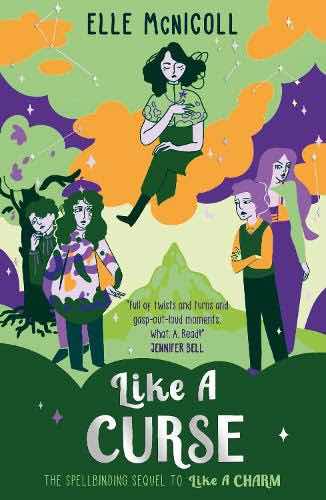
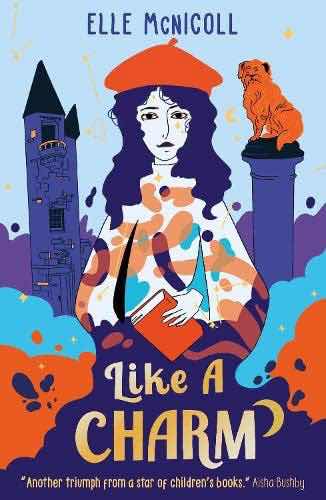
Like a Curse, Like a Charm by Elle McNicoll

  
Covers: Kay Wilson

Alike and different

It is brilliant that more neurodiversity is now being represented in children’s fiction, and in some very fine books too. The real potential of children who think differently is at last being promoted. Undoubtedly one of the trailblazer in this field has been Elle McNicoll. We must celebrate her as a writer just as she so effectively celebrates neurodiversity and inclusion in her books.

I hugely admired her first titles which fully deserved their many awards. But, for some bizarre reason I hadn’t caught up with Like a Charm until I picked up its newly published sequel, Like a Curse, the other day. So I tried to make amends and read them both together. (Well one after the other, to be strictly accurate!) And what a joy they were.

In this new duology Elle McNicoll has pulled off a very clever coup. She has combined her trademark promotion of neurodiversity with the sort of light fantasy that is so popular with many MG readers. She has added magical creatures to her evocative setting of contemporary Scotland, whilst ensuring that the quest of her highly entertaining novels is still for a kinder, more inclusive society.


LIKE A CHARM

When no one has any expectations of you, it’s easier to disappear. A bad reputation works like a charm. It keeps everyone from looking too closely.’  
(p 109)


In her dyspraxic protagonist, Ramya Knox, Elle McNicoll has created is a kind of badass, female, beret-wearing Harry McPotter - with a heck of a lot of attitude.. But then Ramya has reason. As someone diagnosed with Dyspraxia she has had a lifetime of put-downs. 

‘There’s a price to being unlike other people. People can sense it. I grew up with faces frowning down at me in confusion and frustration. I became a measuring stick for people’s characters. For their patience, their compassion, their empathy.’ (p 91)

It seems most people around her didn’t measure up and her attitude is in direct response.

‘A flower grows thorns once it’s been snapped out of the ground too many times.’ (p 91).

Elle McNicoll’s great talent is in capturing the thoughts and feelings of her neurodivergent character, her resentment, her isolation. And she  communicates this in language and images that are at once straightforward, yet so telling:

‘They are a village. All linked together, overlapping and reaching across minor walls. . . I’m an island. Across the water. Watching the tide.’ (p 93)

Other characters too, are beautifully drawn to foil Ramya. Relationships are often sensitively and meaningfully developed, especially that with her grandfather, before and after his death, and with her cousin, Marley. The rest of her family and, indeed, many of the fantasy characters, the fae, vampires, sprites, trolls and the like, also spring vividly to life from the page.  

Like magic

Elle McNicoll also cleverly uses those fantasy characters to further her vital inclusion messages. Many of the ‘Hidden People’ are themselves shunned, feared, marginalised and outright dismissed by human society. The quest that Ramya inherits from her grandfather is to promote understanding and acceptance of their ‘difference’. Nor does Elle McNicoll ignore other issues of the real world. Her themes extend to both family tensions and wider political ones, some of which chime very potently with our current society. Her sensitive handling of the experience of loss and bereavement is balanced by hints of the the support and consolation to be found in friendly community.

The tale’s setting of Edinburgh, vividly and atmospherically evoked, is wonderfully apt as the context of her story; history, tradition, and ancient magic seem to seep from its very stones. And, even with so many crucial messages embedded within it, Like a Charm is a stonking good story, keenly exciting, with several surprising twists. With the help of the magnificent Kelpies, and Ranya’s own very special abilities, its climax is truly exhilarating, whilst humorous comeuppance and future promise round everything off very pleasingly indeed.

As a former school adviser, I even tried to forgive Elle McNicoll her obvious antipathy for the species, hoping all the while that I was never as lacking in empathy and understanding as the one she so entertaininglylampoons. 


LIKE A CURSE

‘I’m different. I should be allowed to celebrate and bask in that glow, but the whole family wants me to be quiet and cautious. And hidden. Just like other magical creatures. I don’t want to be hidden.’ (p 22)

Perhaps even more that the first book, this second majors on story, and what a story it is. It is of the most original and creative children’s fantasies I have come across for a good while. 

Here the narrative, switching between Edinburgh and the misty shore of a wintry Loch Lomond, pulses with  myth, folklore and tradition, but transfigured through wonderful imagination. Here are Selkies and Dryads, Witches and Sirens, in fact a whole host of magical creatures, but not as you have probably quite thought of them before. Even the much-hyped Loch Ness Monster turns out to be real (in a way) but is actually . . . Well I won’t say what it actually is, as that would be a terrible spoiler, but believe me it is both completely unexpected and utterly wondrous. There is mystery aplenty, and enigma too, not least in such wonderful conjurings as the shape-shifting ‘Ripple’ and the never named, elusive ‘Stranger’.  This  writing is so clever - and spiked with sharp, self-aware humour too

Marley . . . worries over everything in life. Not just where the commas go.’ (p 32)

Yet this same Marley gently teaches us how to relate to neurodivergence.

‘Marley and I view the world through entirely different lenses. It frustrates and isolates both of us, sometimes. Yet Marley always tries to understand what I’m seeing, and never tells me I’m insane.’ (p 40)

Indeed this whole book is suffused with the perspective of the neurodivergent in a way that almost subliminally seeds understanding in the mind of the reader. And defiant, sassy Ramya is undoubtedly its hero, in her everyday life as on a fantasy level..

‘I’m neurodivergent. No moulding, no occupational therapy, no tough love or extra help or special education is going to change that. I’m never going to be a neurotypical child.’ (p 115)

Both Ramya and her creator have a wonderful ability to tell it straight. And to put us straight. 

Like character like author

Like a Curse is a deliciously engrossing story, a story of twists and turns, of discoveries and betrayals, of tender relationships and of thrilling confrontations.  As it moved on I felt more and more pleased that I had read these two books together. Rather than a novel and sequel they began to feel like two parts of the same story. But in the end,  I felt that it was not the exciting denouement of narrative strands, introduced in Book 1, that made this second book so important. It was the development of Ramya’s  character. What she learns, what she grows into, is a kind of resolution for those individuals who’s thinking is different from the ‘norm’, but also for all who are struggling to grow into themselves.

‘I have finally understood the need to control myself, to preserve my peace instead of rising to other people,’ (p 230) says Ramya towards the end of the narrative. But it is not simply about anger and control. Ramya discovers that she has remarkable, magical potential (and may well one day develop and use it) but she does not need it to be special. All that she needs for that is to be who she is. That is specialness itself. 

What Ramya has, and has in spades, is not is not angry resentment. It is not even magic as such, it is resilience.

I go back to the first of the two books for a quote that is, in context,  about Ramya, but that I believe applies equally to Elle McNicoll herself:

‘If I have to fail one hundred times inside a world that was never designed for me, then so be it. It will make winning all the more glorious.
Magic is easy to me. Magic is just the art of letting all that resilience sing.’ (p 304)

Elle McNicoll is a glorious, magical winner. She is a hugely successful neurodivergent writer, who communicates tellingly what it means to be neurodivergent. That makes her very special. But she is also a very fine writer, period.

 This duology is a triumph on so many levels. . . . and it sings.

Friday, 17 February 2023

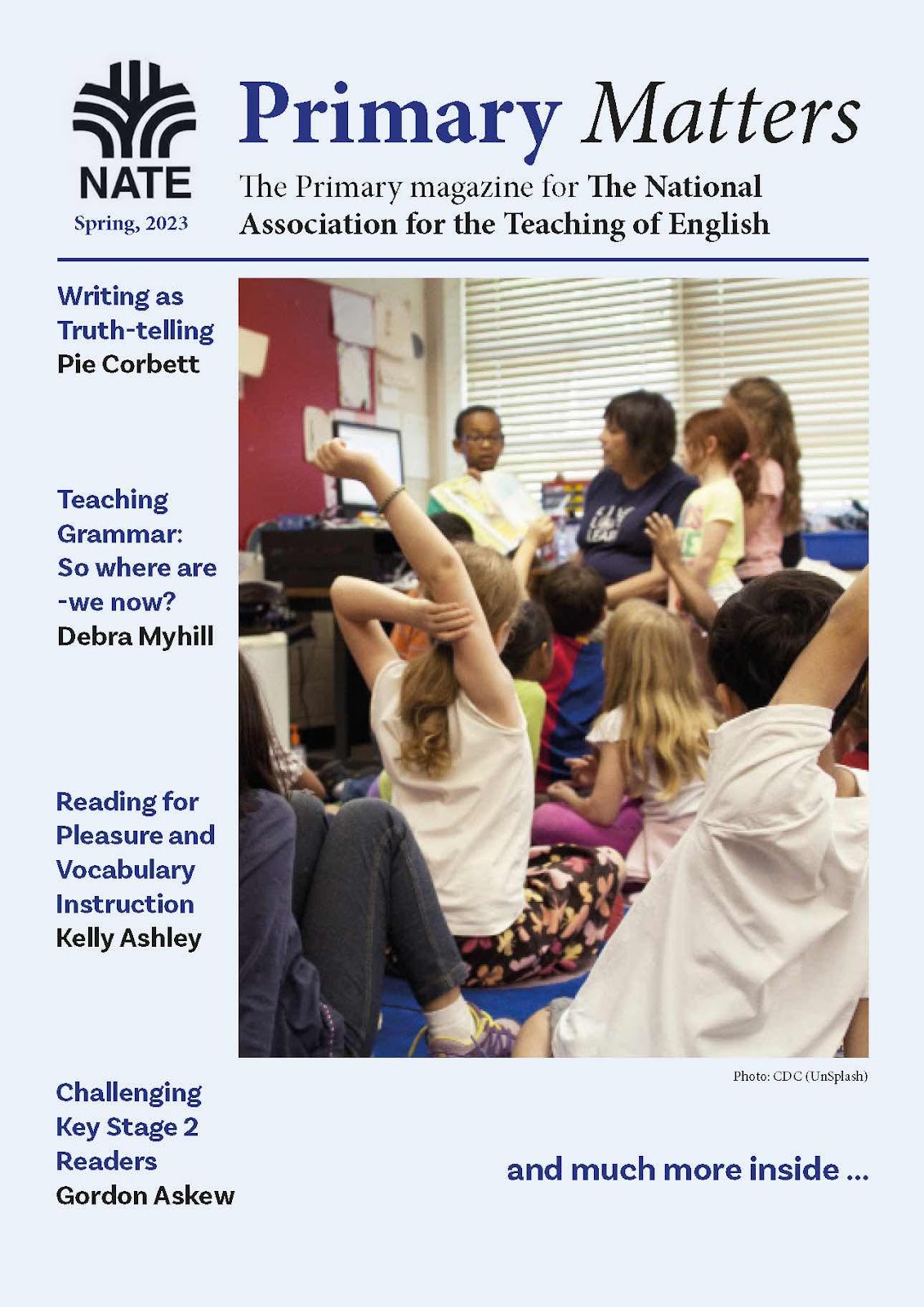
My article for NATE Primary Matters


Challenging Key Stage 2 Readers - Part 1: Fiction

My article for the Spring 2023 edition of NATE Primary Matters magazine discusses the importance of books that challenge children’s language, intellect and emotions; books that not only entertain, but also broaden experience, stimulate imagination, develop empathy, challenge stereotypes and help their readers to grow as individuals.

The piece contains numerous recommendations of brilliant fiction for 7-11 year olds, including many books already reviewed on this blog. It also suggests some inspirational support books for Primary teachers.

NATE members can access the full online magazine here: 

Anyone else interested can view a pdf of my article via One Drive:


Wednesday, 25 January 2023

Pony by R.J.Palacio

UK paperback

‘People see the world they believe in. And you see the world they believe in.’  (p 85)


The Wonder that is Wonder

R. J. Palacio’s Wonder is a major phenomenon of contemporary children’s fiction. When published ten years ago it was an international success. It has remained hugely popular ever since, selling copies in the multi-millions and held in deep affection by a broad spectrum of readers. 

Over recent years there have been many novels dealing with children’s issues, physical, mental and emotional, and the best are outstanding books, playing an important part in promoting understanding and developing empathy. But Wonder is undoubtedly an archetype. Perhaps it is because the courage, resilience and humour of Aggie, a boy who has to live with severe genetic facial distortion, is so deeply moving. However it is also because the simple but effective writing of its author not only communicates the thoughts and feelings of Auggie himself, but also opens for readers the impact his life has on others around him. R. J. Placio has a genius for getting into the minds of young people and a deep, compassionate understanding of the issues she explores. Yet she does this with a light, readable touch that is truly exceptional.

And now Pony

In the intervening period she has written a number of spin-offs from Wonder, understandably so, as her many readers were clamouring for more of the same. These books too have turned out to be most valuable additions to the children’s shelves, both entertaining and enriching, However, in 2021 she published a new and completely different book, Pony, and thankfully this had just come out in paperback here in the UK..

And completely different is no understatement. Were it not for the name and the references on the cover, I do not think I would have recognised Pony and Wonder as being by the same author, at least initially. However, this statement is not intended to the detriment of either book. Indeed, whilst Wonder is a deservedly popular, emotional read,  Pony is an outstanding, more literary, novel.

Two worlds, one world

The story of Pony has a historical setting in the American West of the 1800s. It is a gripping tale of a father’s kidnap and a son’s courageous journey to rescue him, of desperate counterfeiters and dedicated lawmen, of dramatic shootouts and of hidden loot. For young protagonist, Silas, it is a long journey through deep forest, for part of the time accompanied by a highly taciturn and cantankerous old Marshal, later by a young Sheriff and his sarcastic Deputy, and always by his loyal mount, named simply, Pony. Within this frame is developed the classic children’s fiction trope of a young person’s journey towards discovery of themselves and their true family. However, the setting here is so different and compelling that, even if this were all there were to the novel, Pony would be a very fine book. 

Yet Pony is far more than this. Silas, a boy physically scarred by an earlier lightning strike, sees and talks to ghosts. Indeed, the constant close companion and interlocutor of all his years to date has been the ‘apparition’ of a slightly older youth he calls Mittenwool. The few adults who are aware of this dismiss Mittenwool as an imaginary friend, but this is open to question for much of the book as it becomes clear that Silas is aware of a number of other spirits too. 

This blending of historical setting and apparent fantasy is surprising, even shocking. The intrusion of Silas’s paranormal perception disrupts the classic Western movie scenario, forces the reader into awareness that this something other than a straightforward narrative: it expands the novel’s  ‘reality’ to embrace more than the physical world.

Silas’s particularly sensitive character is very cleverly drawn, and emerges subtly, but most affectingly,  as the story unfolds. There is depth and much tenderness too in his gradually revealed relationship with his father, and indeed with the other principal adults he meets on his journey. Silas’s world, and his relationships, extend beyond the tangible, beyond the here and now.

‘ . . . The feeling I had while riding. A feeling like I had done this before, like I had dreamed this once upon a time. Something familiar in the colour of the light maybe. In the sound of the hooves trampling the earth.’ (Silas, p 138)

And later,

‘Half my face was smeared with dried blood . . . I remember thinking: My face, half red, for I live half in this world and half in the next.’ (p 220)

Multi-levelled

Without once sacrificing the cohesion of a fine novel, Pony is a something-for-everyone book. For the seekers of high excitement, there are horseback chases and gunfights worthy of any Hollywood Western. For fans of mystery, there is the compelling intrigue of the true identity of Silas’s father., as well as other perplexing issues, including the actuality or otherwise of the  ‘ghost’ Mittenwool himself, and an old violin, obsessively carried around by Silas, but never played. For those many whose emotions are engaged by animals, there is the eponymous Pony, completely dedicated to Silas and with almost magical abilities, as well as a loyal mutt of a dog. For those aware of archetypal resonance, there is a journey into a dark, forbidding forest that is worthy of any ancient legend. For the Romantics, there is warm, Dickensian resolution of fortunes and relationships. For the academically minded, there is an overarching metaphor that sees Silas’s journey to find his father in the story of Telemachus, pointed in quotation, as well as in narrative allusion. For those concerned with the world and society we live in, there are important messages about the appalling atrocities inflicted on Indigenous peoples by white colonists. It also points up the courage and conviction of individuals prepared to go to great lengths to combat the grotesque practice of slavery.

Pony is a potpourri of ideas, cleverly linked into coherent whole. It is even more clever when the link between ideas and people is what story is really about.  Here the wonder of early photographic images, caught both as a key element of the narrative and in the reproductions used as chapter openers, reflects and refracts the lingering of dead spirits as ‘ghosts’ from the past. In this we are getting close, I think, to the heart of this book. Ultimately, this is not simply an adventure in the historic American West. Nor is it a simply a ghost story. It is a thoughtful novel about connections, connections between the living, but especially between the living and the dead. It is  not specifically religious, nor even spiritualist, but it is deeply spiritual, humane and compassionate. It explores the way we keep the dead with us and take them into our lives. It is a richly comforting book.

‘The connections that bind us are astounding, as I’ve noticed. The invisible threads weave in and around us, and tug us in places and at times that we may not see, or that only make sense over time. This is what I have found.’ (Silas, p 249)

So differently the same

After starting off thinking this new book felt very different from its predecessors, by the end the author’s signature hand, or at least her heart, was unmistakable. Here, after all, is the same understanding, the same deep humanity, that R. J. Placido has always shown in her writing. But it is now expressed with a refinement, a subtlety that is more reflective, more poetic if you like, but no less rich, and, ultimately, perhaps even more affecting. It is essentially the same wonder, but extended beyond the present.

‘The fathers and the mothers and the ghosts, the living and the dead, spinning butterflies out of thin air. Holding them gently in their hands, for as long as they can. Not forever, but infinitely. Beckoning the wondrous. But never for themselves. Just for us. If only for a little while. It’s not the fantasy of it, but the trying of it that matters.’ (p 186)

I cannot think that Pony will garner quite the mega popularity of Wonder.  HoweverI do hope that many readers of that earlier book will be encouraged to try this one. Children will find a different, but thoroughly engaging, life-enriching story. Others will discover a very fine work of fiction, one that demonstrates how a children’s book can be a true work of literature, in the hands of a great writer. 


Hardback edition

R.J.Palacio, like C.P. Cavafy, in his poem, gently reminds us that the gift of Ithaca is a journey, not an arrival.